
How a UAE Spine Surgeon Uses Anti-Inflammatory Drugs for Back Pain
Are COX-2 inhibitors available over the counter in the UAE?
This varies by specific medication and current regulatory status. Some COX-2 selective inhibitors require a prescription, while certain formulations may have different availability. Consult your doctor or pharmacist for guidance on the specific medications available and appropriate for your situation.
How long is it safe to take anti-inflammatory medication for back pain?
This depends on the specific medication, dose, and individual patient risk factors. As a general principle, the shortest duration necessary to manage an acute pain episode is preferred, with any prolonged or ongoing use ideally reviewed regularly by a doctor to reassess the ongoing risk-benefit balance.
What are the signs that an NSAID might be causing a problem?
Gastrointestinal warning signs include indigestion, stomach pain, black or tarry stools (suggesting bleeding), or vomiting blood. Signs potentially related to kidney or cardiovascular effects can be less specific and may include changes in urine output, swelling, or new or worsening chest pain or breathlessness. Any of these symptoms while taking an NSAID should prompt medical assessment.
Can I take paracetamol instead of an NSAID for back pain?
Paracetamol works through a different mechanism and does not carry the same gastrointestinal, cardiovascular, or renal risks associated with NSAIDs, though it also generally provides less anti-inflammatory effect. It is often used as an alternative or in combination with NSAIDs, depending on the specific clinical situation, and your doctor can advise on the most appropriate approach for your pain.
Is it safe to take NSAIDs with other medications I am already on?
NSAIDs can interact with several other medication classes, including blood thinners, certain blood pressure medications, and other drugs affecting kidney function. Always inform your doctor or pharmacist of all medications you are taking before starting an NSAID, whether prescribed or purchased over the counter.
Are there alternatives to NSAIDs for managing inflammatory back pain?
Yes, depending on the specific cause and severity of pain, alternatives or complements to NSAIDs include physiotherapy, targeted corticosteroid injections (as discussed in the earlier article on facet joint pain), topical anti-inflammatory preparations with reduced systemic absorption, and other classes of pain medication where clinically appropriate.
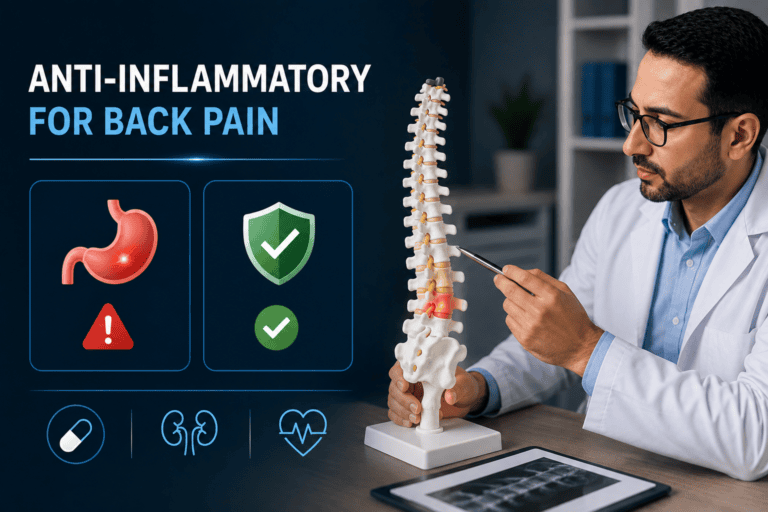
Non-steroidal anti-inflammatory drugs are among the most commonly used medications in spine care, available over the counter and prescribed daily for back and neck pain across the world. Yet the specific choice of which anti-inflammatory to use, and how it is used, involves genuine clinical reasoning that most patients never see, based on real differences in side effect profiles between different medications within the same broad category.
Dr. Sherief Elsayed, Consultant Spine Surgeon in Dubai, explains his specific approach to anti-inflammatory prescribing and the reasoning behind it.
The Medication Category: NSAIDs
Dr. Sherief Elsayed introduces the broad category: “One of the commonest groups of medications I use are non-steroidal anti-inflammatory medicines.”
Non-steroidal anti-inflammatory drugs, universally abbreviated as NSAIDs, work by inhibiting the cyclooxygenase (COX) enzyme system, which is responsible for producing prostaglandins, the chemical mediators that drive inflammation, pain sensitisation, and fever throughout the body. By reducing prostaglandin production, NSAIDs reduce inflammation and provide effective pain relief for a wide range of musculoskeletal conditions, including much of the back and neck pain that presents to spine specialists.
Understanding the COX-1 vs COX-2 Distinction
The cyclooxygenase enzyme system, the target of all NSAIDs, actually exists in the body as two distinct forms, and this distinction is central to Dr. Sherief Elsayed’s specific prescribing approach.
COX-1: This form of the enzyme is present throughout the body under normal physiological conditions and serves several protective functions, most notably maintaining the protective mucous lining of the stomach that prevents gastric acid from damaging the stomach wall itself.
COX-2: This form of the enzyme is primarily induced at sites of inflammation and injury, meaning its activity increases specifically in response to tissue damage, infection, or inflammatory conditions, making it the primary driver of the pain and inflammation that NSAIDs are intended to treat.
Dr. Sherief Elsayed explains his specific choice: “Specifically, I use COX-2 inhibitors.”
Traditional NSAIDs: The COX-1 Problem
Dr. Sherief Elsayed identifies the more familiar, traditional category of NSAIDs: “COX-1 inhibitors are like ibuprofen, diclofenac, which you may know as brufen, nurofen, voltarol, etc.”
The traditional NSAIDs that most patients are familiar with from over-the-counter use, ibuprofen and diclofenac being among the most common examples, are non-selective, meaning they inhibit both COX-1 and COX-2 enzymes simultaneously. While this dual inhibition effectively achieves the desired anti-inflammatory and pain-relieving effect through COX-2 inhibition, it also inhibits COX-1 as an unavoidable side effect of the medication’s mechanism, removing the protective stomach lining function that COX-1 normally provides.
This is the direct pharmacological reason why traditional NSAIDs are well known to carry a risk of gastrointestinal side effects, ranging from mild dyspepsia (indigestion) through to more serious complications including gastric ulceration and gastrointestinal bleeding, particularly with prolonged or high-dose use.
Why COX-2 Inhibitors Were Developed
Dr. Sherief Elsayed explains the specific rationale behind this newer category of medication: “COX-2 inhibitors were created because they have a better GI safety profile. You’re less likely to end up with a stomach ulcer or bleeding, for example.”
Selective COX-2 inhibitors were developed specifically to address the gastrointestinal risk associated with traditional, non-selective NSAIDs. By preferentially inhibiting the COX-2 enzyme responsible for inflammation while largely sparing the COX-1 enzyme responsible for protecting the stomach lining, these medications were designed to provide comparable anti-inflammatory and pain-relieving efficacy to traditional NSAIDs, while significantly reducing the risk of gastrointestinal ulceration and bleeding.
For a spine surgeon managing patients who frequently require anti-inflammatory medication over an extended period, whether for acute post-operative pain, chronic degenerative conditions, or inflammatory components of conditions such as facet joint disease as discussed in earlier articles in this series, this improved gastrointestinal safety profile represents a genuinely meaningful clinical advantage, particularly for patients who may require repeated or prolonged courses of anti-inflammatory treatment.
The Trade-Off: Why COX-2 Inhibitors Are Not Without Risk
Dr. Sherief Elsayed is careful to balance this benefit with an equally important caution: “That said, it’s also important to use it for as short a time as possible because prolonged use can cause issues with cardiovascular health and renal health, kidney health.”
This is a critically important piece of balanced clinical guidance. A Spinal Health Doctor in Dubai weighs these trade-offs carefully for every patient prescribed anti-inflammatory medication. The development of COX-2 selective inhibitors did not create a risk-free anti-inflammatory medication. It shifted the risk profile from the gastrointestinal system toward other systems, specifically the cardiovascular and renal systems, and these risks become particularly relevant with prolonged use.
Cardiovascular risk:
COX-2 selective inhibitors have been associated with an increased risk of cardiovascular events, including heart attack and stroke, particularly with prolonged use and in patients who have pre-existing cardiovascular risk factors. This association led to some COX-2 selective medications being withdrawn from the market entirely in the early 2000s, and remains a significant consideration in current prescribing guidance for the medications that remain available.
Renal risk:
Prostaglandins, the molecules that NSAIDs reduce the production of, play an important role in maintaining adequate blood flow to the kidneys, particularly under conditions of physiological stress such as dehydration or reduced blood volume. Both traditional NSAIDs and COX-2 selective inhibitors can impair kidney function, particularly with prolonged use, in patients with pre-existing kidney disease, or in combination with other medications that affect kidney function, such as certain blood pressure medications.
The Clinical Principle: Right Medication, Shortest Necessary Duration
Dr. Sherief Elsayed’s approach reflects a broader and important principle in modern anti-inflammatory prescribing: selecting the medication with the most favourable risk profile for the individual patient’s specific circumstances, while using it for the shortest duration genuinely necessary to achieve the clinical goal.
Why duration matters so much:
Both the gastrointestinal risks of traditional NSAIDs and the cardiovascular and renal risks of COX-2 selective inhibitors are dose- and duration-dependent to a significant degree. Short courses of either medication category, used for acute pain flares or the initial management of an acute injury, carry meaningfully lower absolute risk than prolonged, ongoing use extending over months or years.
Individualising the choice:
The decision between a COX-2 selective inhibitor and a traditional NSAID, or indeed whether an NSAID of either type is appropriate at all, depends on the individual patient’s risk profile. A younger patient with no gastrointestinal history but some cardiovascular risk factors might be better suited to a different choice than an older patient with a history of gastric ulceration but no significant cardiovascular disease. This individualised risk-benefit assessment is precisely the clinical reasoning that underlies Dr. Sherief Elsayed’s specific prescribing approach.
Where Anti-Inflammatory Medication Fits in Spine Care
NSAIDs, whether COX-2 selective or traditional, are typically used as part of a broader, multimodal approach to managing back and neck pain, rather than as a standalone solution. As discussed throughout this blog series, conditions such as facet joint pain, discogenic pain, and the inflammatory component of many degenerative spinal conditions can benefit from the anti-inflammatory effect of these medications, used alongside physiotherapy, activity modification, and, where appropriate, more targeted interventional treatments such as the diagnostic and therapeutic injections discussed in the earlier article on facet joint pain.
For post-surgical pain management, appropriately timed and dosed anti-inflammatory medication, alongside other analgesic strategies, is a standard component of the multimodal pain management approach that reduces reliance on opioid medications and their associated risks, a theme also explored in the article on precision medicine and pain management elsewhere in this series. A Spine Pre-Op Specialist in Dubai will plan this alongside other analgesic strategies before and after surgery.
A Back Pain Doctor in Dubai prescribing anti-inflammatory medication will take into account the individual patient’s full medical history, including any gastrointestinal, cardiovascular, or renal risk factors, before determining the most appropriate specific medication and treatment duration.
UAE-Specific Considerations
NSAIDs, including both traditional and COX-2 selective formulations, are widely available in the UAE. A UAE Spine Surgeon will guide appropriate medication choice and duration based on individual patient risk factors. in the UAE, both by prescription and in some cases over the counter, depending on the specific medication and formulation. Given the ready availability of these medications, patients should be aware that even commonly used, apparently simple pain medications carry genuine risks that increase with prolonged, unsupervised use, and that consulting a doctor for guidance on appropriate medication choice and duration, rather than self-managing chronic pain with extended NSAID use, is an important safety consideration.
Expert Summary
Dr. Sherief Elsayed’s specific use of COX-2 selective inhibitors reflects a deliberate clinical choice to reduce the well-established gastrointestinal risks associated with traditional NSAIDs. However, this benefit comes with a specific and important trade-off: an increased cardiovascular and renal risk profile with prolonged use. The clinical principle that emerges is not that one category of medication is simply “safer” than the other in an absolute sense, but that the most appropriate choice depends on individual patient risk factors, and that whichever medication is chosen, using it for the shortest duration genuinely necessary is an important safety principle that applies across the entire NSAID category.
Table of Contents
Recent Articles
Which Surgeon Should You See for Your Spine Problem in Dubai?
Which Surgeon Should You See for Your Spine Problem in Dubai? Is a neurosurgeon always more qualified than an orthopaedic surgeon for spine conditions? No. Both pathways, when combined with
Can Calcium Supplements Cause Kidney Stones?
Can Calcium Supplements Cause Kidney Stones? If I have osteoporosis, should I take calcium supplements? This should be discussed specifically with your doctor, who will assess your individual dietary calcium

What Precision Medicine Means for Pain Management in Dubai
What Precision Medicine Means for Pain Management in Dubai How accurate is pharmacogenomic testing? Pharmacogenomic testing for well-established genetic variants, including CYP2D6 metaboliser status, is highly accurate and based on