
Cervical Disc Replacement in Dubai (Artificial Disc Surgery)

Who you'll see
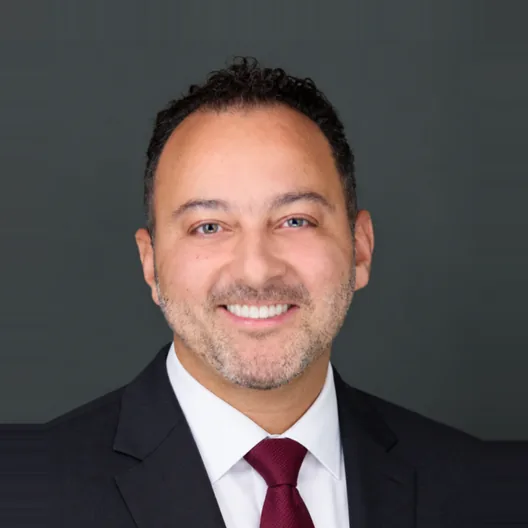
Dr Sherief Elsayed
Consultant Spinal Surgeon, FRCS (Tr & Orth), UK-trained
Clinics: OrthoPro Clinic, Dubai Science Park, and UPANDRUNNING, Al Wasl Road
Most major insurance accepted. Please check with reception.


Medically reviewed by Dr Sherief Elsayed, UK-trained Consultant Spinal Surgeon, FRCS (Tr & Orth). Last reviewed 15 October 2026.
Cervical disc replacement, also called cervical arthroplasty or artificial disc replacement surgery, removes a worn or slipped neck disc that is pressing on a nerve or the spinal cord and replaces it with an artificial disc that keeps that level moving. This page explains who it suits, what happens, recovery, risks and the long-term evidence. Dr Sherief Elsayed performs cervical disc replacement in Dubai, as well as ACDF (fusion), so both options can be discussed at one appointment.
At a glance
- It treats arm pain from a trapped nerve, or spinal cord compression, caused by a disc or bone spur at one or two levels of the neck, when symptoms have not settled (Epstein and Agulnick, 2022).
- It suits fewer necks than fusion. Weak bone, instability, severe arthritis of the small joints at the back of the neck, a badly collapsed disc and bone forming in the ligament behind the vertebrae all point away from it (Epstein and Agulnick, 2022).
- For people who suit both operations, 10-year results show similar relief to fusion and fewer repeat operations (Quinto et al., 2024).
- Bone often forms around the implant over time (heterotopic ossification): in pooled studies it was severe in 37% of patients at 10 years (Sheng et al., 2023).
What is a cervical disc replacement?
The neck (cervical spine) has seven vertebrae, with a cushioning disc between each pair. A disc can bulge or split (a disc prolapse), and the vertebrae can grow bony spurs; either can press on a nerve root or the spinal cord. Through a small cut at the front of the neck, the surgeon removes the disc and any spurs to free the nerve or cord. In a fusion (ACDF), a spacer then lets the two vertebrae grow into one block. In a disc replacement, an artificial disc is fitted instead. Most designs have two metal plates that grip the vertebrae above and below, with a bearing surface between them, so the level can still bend and turn.
The aims are to free the nerve or spinal cord, as fusion does, while keeping movement at that level, which it is hoped will also protect the neighbouring discs (see the evidence below).
Implant designs differ, and trial results for one design may not apply to another.
Lumbar disc replacement, in the lower back, is a different operation with different evidence. Dr Elsayed also performs it in carefully selected patients, and discusses it case by case.
Who cervical disc replacement suits
A review summarising guidance from the North American Spine Society (NASS) describes the typical candidate as someone with (Epstein and Agulnick, 2022):
- arm pain, numbness or weakness from a trapped nerve (cervical radiculopathy) that has not settled with non-surgical treatment; or
- spinal cord compression (cervical myelopathy) caused by a disc or bone spur;
- at one or two levels, between the third and seventh neck vertebrae.
Because the treated level keeps moving, the rest of that level must be in good condition. In practice this means:
- healthy facet joints, the small joints at the back of each level;
- a stable, well-aligned neck;
- good bone quality, so the implant sits firmly;
- a disc that still has reasonable height and some movement.
Two-level disc replacement, and hybrid surgery with a disc replacement at one level and a fusion at another, can be considered in suitable patients. Age alone does not decide it, although younger adults are more likely to have healthy facet joints and good bone. Many people with arm pain from the neck improve without an operation, so surgery is considered only when symptoms persist, weakness is significant or worsening, or the spinal cord is under pressure.
Who it does not suit
The same NASS criteria list these as reasons not to use a cervical disc replacement (Epstein and Agulnick, 2022):
- Infection, at the site or elsewhere in the body.
- Osteoporosis or osteopenia (thin bones), because the implant needs firm bone to sit on.
- Instability: abnormal movement between the vertebrae.
- Allergy or sensitivity to the implant materials, including metal allergy.
- Severe disc wear: a badly collapsed disc, large bridging bone spurs, or no movement left at that level.
- Severe facet joint arthritis.
- Inflammatory arthritis, such as rheumatoid arthritis or ankylosing spondylitis.
- Deformity after a previous fracture.
- Ossification of the posterior longitudinal ligament (OPLL): the ligament behind the vertebrae turning into bone.
- Active cancer in the neck.
Fusion or another operation is also usually preferred when there is a fixed forward curve of the neck (kyphosis), previous surgery at the same level, pressure mainly behind the spinal cord, or problems at three or more levels. Widespread wear from cervical spondylosis tends to favour fusion. With cord compression, protecting the spinal cord comes before keeping movement.
Disc replacement or ACDF?
Both operations remove the disc the same way; the difference is what goes into the space. ACDF suits a wider range of necks, including arthritic, unstable or osteoporotic necks and several levels. The two are compared side by side on ACDF or cervical disc replacement? More on ACDF surgery in Dubai.
Assessment and tests
Suitability depends on detailed imaging as well as your symptoms and examination:
- MRI scan: shows what is pressing on the nerve or cord, and where.
- X-rays, including bending views, to check alignment, stability and how much the disc still moves.
- CT scan: shows bone spurs, the facet joints and any OPLL.
- Bone density scan or nerve conduction studies, when needed.
What happens on the day
Dr Elsayed performs cervical disc replacement at American Hospital Dubai (Oud Metha and Dubai Science Park) and Emirates Hospital Jumeirah.
- Before: you meet the anaesthetist and sign a consent form once the risks and alternatives have been explained again.
- Approach: under a general anaesthetic, a short cut is made in a skin crease at the front of the neck, and the windpipe and gullet are gently moved aside. An X-ray confirms the level.
- Decompression: the disc and bone spurs are removed under magnification, freeing the nerve root or spinal cord.
- Implant: trial sizes are checked on X-ray, then the artificial disc is fitted and secured to the vertebrae above and below.
- Closing: the wound is closed with stitches under the skin.
Recovery after cervical disc replacement
- Hospital stay: usually one night.
- The first weeks: a sore throat and some difficulty swallowing are expected; soft food helps. Walk every day.
- Your symptoms: arm pain often eases early; numbness and weakness can take longer, and long-standing nerve damage may not fully recover.
- Collar: not needed after disc replacement.
- Work: desk work is usually possible after about 2 weeks; when to return to manual work and lifting is decided at your consultation. In one US trial, 49% of people were back at work 6 weeks after disc replacement, against 39% after ACDF, with no difference by 6 months (Badve et al., 2020).
- Driving: usually after about 2 weeks, once you can turn your head freely to check over your shoulder and are not taking painkillers that make you drowsy.
- Follow-up and physiotherapy: decided at your consultation. X-rays at follow-up check the implant position and movement. More on post-operative care.
Risks of cervical disc replacement
These figures come from published studies; your own risks depend on your health and the problem being treated.
Shared with any operation from the front of the neck
- Swallowing difficulty (common), usually mild and improving: in 249 people after anterior neck surgery it was reported by 50% at 1 month and 12.5% at 12 months, and was moderate or severe in 4.8% at 6 months (Bazaz et al., 2002).
- Hoarse or weak voice (uncommon), usually temporary; weakness of a vocal cord remained at 12 months in 1.3% (Bazaz et al., 2002).
- Bleeding into the neck (uncommon), which is urgent because swelling can affect breathing.
- Rare but serious: infection; a leak of spinal fluid; injury to the gullet, windpipe or a major blood vessel; and injury to a nerve root or the spinal cord.
- Incomplete relief of pain, numbness or weakness.
Specific to disc replacement
- Heterotopic ossification: bone forming around the implant, which can reduce or stop its movement. In pooled studies of 1,140 patients followed for 10 years, some bone formation was seen in 70% and severe bone formation in 37%, yet average movement at the treated level fell only slightly, from 8.6 to 7.4 degrees (Sheng et al., 2023). In the two-level trial below, severe bone formation was seen in 39.0% at 10 years, and the level had fused solid in 8.2% and 10.3% at the two treated levels (Gornet et al., 2019).
- Implant problems: the implant moving out of position (migration), sinking into the bone (subsidence) or loosening, and wear of the bearing surfaces over time. NICE’s specialist advisers listed migration and loosening as possible problems, and wear as a theoretical one (NICE IPG341, section 2.4). In the two-level trial, serious implant-related problems by 10 years were 3.8% after disc replacement and 8.1% after ACDF (Gornet et al., 2019).
- Bone loss around the implant: early, mild thinning of the bone next to the implant is common and usually harmless. Osteolysis, a later and progressive loss of bone, is less common, with reported rates varying widely (13.4% to 35.9%); it is linked with sinking of the implant, and symptomatic cases often need revision (Wang et al., 2026).
- Further surgery: if problems develop, the implant can be removed and the level fused, or an operation done from the back of the neck.
More on complications of spinal surgery.
What to expect: the evidence in plain terms
What the long-term trials show
- Relief similar to fusion: in a pooled analysis of 10-year results, pain and disability scores were slightly better after disc replacement but by margins too small for patients to notice, one spinal cord symptom score was slightly lower, and nerve recovery did not differ (Quinto et al., 2024). Nerve function improved or stayed stable in 88% after disc replacement and 89% after ACDF at 7 years (Janssen et al., 2015).
- Fewer repeat operations: 7% after disc replacement against 18% after ACDF within 7 years of single-level surgery (Janssen et al., 2015), and 4.7% against 17.6% at the treated levels within 10 years of two-level surgery (Gornet et al., 2019).
- Neighbouring levels: in the two-level trial, 9.0% of the disc replacement group and 17.9% of the ACDF group had surgery at a neighbouring level within 10 years, and movement at the treated levels was maintained (Gornet et al., 2019). Disc replacement aims to reduce wear at neighbouring levels, not remove it.
NICE guidance
NICE’s interventional procedures guidance (IPG341, 2010) states that disc replacement in the neck works at least as well as fusion in the short term and may reduce the need for revision surgery in the long term, raises no safety concerns beyond those already known for fusion, and can be used with normal arrangements for consent, audit and clinical governance. It should be done only in specialist units that operate on the neck regularly, and NICE encourages research into long-term movement, wear at neighbouring levels and revision surgery (NICE IPG341, recommendations 1.1 to 1.3).
The limits of the evidence
- The trials quoted here were US device-approval trials in carefully selected patients, and not everyone was seen at 10 years: 86% and 85% of eligible patients in the two-level trial (Gornet et al., 2019).
- In a review of 98 disc replacement studies, about 45% had authors with a financial conflict of interest, and these reported favourable results more often (91% against 74%) (Narain et al., 2017).
- ACDF may look worse inside these trials than in everyday practice: repeat surgery after ACDF at mid-term follow-up was 12% in disc replacement trials against 3% in other studies (Wadhwa et al., 2026), so the real-world gap may be smaller.
- Data beyond 10 years are still limited, and results for one implant design may not apply to another.
Availability and insurance in the UAE
Insurance policies differ in how they cover cervical disc replacement, and insurers may ask for scans and a report before approving it. OrthoPro reception can check your cover and any pre-approval before surgery is booked.
Alternatives
- Non-surgical treatment: time, pain relief, physiotherapy and staying active. Many trapped nerves settle this way.
- ACDF (fusion), which suits a wider range of necks.
- Operations from the back of the neck, when the pressure lies behind the spinal cord or along several levels, described on cervical spine surgeries.
Symptoms that need urgent care
After neck surgery, call 998 (UAE ambulance) or go to the nearest emergency department straight away if you have:
- swelling in the neck that is getting bigger, with difficulty breathing, noisy breathing, or difficulty swallowing your saliva;
- new or rapidly worsening weakness or numbness in your arms or legs, difficulty walking, or loss of bladder or bowel control.
Contact Dr Elsayed’s team the same day, or go to an emergency department, for fever; redness, swelling or discharge from the wound; swallowing that is getting worse rather than better; or clear fluid leaking from the wound.
Before surgery, if you have spinal cord compression, get help quickly if your hands become clumsier, your walking or balance gets worse, or weakness spreads; if this comes on suddenly or affects your bladder or bowels, call 998.
Table of Contents
Your consultation with Dr Sherief Elsayed
Dr Sherief Elsayed is a UK-trained Consultant Spinal Surgeon, FRCS (Tr & Orth), whose clinical work covers complex and revision spinal surgery, deformity, minimally invasive surgery and endoscopy. He performs both cervical disc replacement and ACDF, so the recommendation is not limited by which operation is available. He will examine you and review your MRI, X-rays and any CT scan to check whether your facet joints, bone and disc suit an artificial disc. You can take time to decide or seek another opinion.
He sees patients at OrthoPro Clinic, Dubai Science Park, and at UPANDRUNNING on Al Wasl Road, and operates at American Hospital Dubai (Oud Metha and Dubai Science Park) and Emirates Hospital Jumeirah. To book, call OrthoPro Clinic on 04 835 9000, send a WhatsApp message to 052 105 2798, or use the contact page. Please bring your MRI images and reports. Fees depend on the procedure and your insurance. Most major insurance accepted. Please check with reception.
Frequently asked questions
Neither is better for everyone. For people who suit both, 10-year results show similar relief and fewer repeat operations after disc replacement (Quinto et al., 2024), but fusion suits a wider range of necks. See ACDF or cervical disc replacement?
Trials have followed patients for 10 years, with movement maintained and 4.7% needing further surgery at the treated levels in a two-level trial (Gornet et al., 2019). Evidence beyond 10 years is limited, and like any implant, wear or loosening can occur.
Yes, in suitable patients, and a disc replacement can be combined with a fusion at another level (hybrid surgery). Three or more levels usually need fusion or surgery from the back of the neck.
Bone forming around the artificial disc. It is common and increases over time; when severe, it can reduce or stop movement at that level, although in pooled studies average movement fell only slightly over 10 years (Sheng et al., 2023).
Desk work and driving are usually possible after about 2 weeks, once you can turn your head freely and are not taking painkillers that make you drowsy. Manual work and lifting are discussed at your consultation.
No. A collar is not needed after cervical disc replacement. Practice varies between surgeons, so you may read different advice elsewhere.
Cover varies between policies, and pre-approval is often needed. OrthoPro reception can check your cover before surgery is booked.