
Why a UAE Spine Surgeon Says Learning Beats Every Other Dopamine Hit

How does reading outside medicine make a surgeon better?
Broad reading cultivates the cognitive flexibility to approach clinical problems from multiple angles, the intellectual humility to recognise the limits of one’s own knowledge, and the pattern recognition that comes from exposure to how problems are structured across diverse domains. Many medical innovations have come from applying concepts from other fields to clinical challenges.
Is it important that my surgeon is keeping up with medical literature?
Yes. Medicine evolves continuously. A surgeon who stopped engaging with new evidence after completing their training is providing care based on older standards. Active engagement with current clinical literature, attendance at professional meetings, and participation in continuing medical education are all markers of a surgeon who is committed to current best practice.
How can a patient tell if a surgeon is genuinely curious and well-informed?
Ask questions during the consultation and pay attention to how they are answered. A surgeon who engages thoughtfully with your questions, acknowledges uncertainty honestly, explains the evidence behind their recommendations, and shows interest in the specifics of your case is likely to be one who continues to engage with learning actively.
Why does intellectual curiosity matter for patient outcomes?
Surgeons who remain intellectually engaged are more likely to adopt new evidence when it supports better outcomes, to recognise unusual presentations rather than forcing them into familiar patterns, and to engage constructively with complex cases that require thinking beyond standard protocols.
Does Dr. Sherief Elsayed teach or write academically?
Yes, in addition to his clinical practice and public education content, Dr. Sherief Elsayed is involved in academic activities including medical education and has spoken about the role of AI in medicine. Teaching and academic engagement are themselves forms of continued learning that reinforce and deepen clinical knowledge.
What advice would Dr. Sherief Elsayed give to younger doctors who feel burnt out?
While this is not directly addressed in the transcript, the consistent message across his communications is that curiosity, rather than external validation, is the most durable source of professional satisfaction. Finding what you are genuinely curious about, within and outside medicine, is the most reliable antidote to the kind of disengagement that produces burnout.
The search for what makes work meaningful is not a question unique to medicine. Every profession has people who stay curious and people who stop, people who continue reading and people who coast on what they already know. What is distinctive about Dr. Sherief Elsayed’s perspective on this question is that it comes from someone who has deliberately compared the experience of learning something new against the satisfaction of surgical success, and found that the former wins.
Dr. Sherief Elsayed, Consultant Spine Surgeon in Dubai, makes this case with a directness that reflects genuine conviction rather than professional obligation.
The Claim: Learning Beats Every Other Dopamine Hit
Dr. Sherief Elsayed’s position on this is unambiguous: “I’m a very curious person and I think learning things beats any other dopamine hit that I personally get.”
The language of dopamine here is not accidental. Dopamine is the neurotransmitter most associated with the brain’s reward and motivation system. When you achieve something, receive recognition, consume food, or engage in any behaviour that your brain categorises as rewarding, dopamine is released in specific neural circuits that create the subjective experience of pleasure or satisfaction.
The question of which activities produce the most robust and durable dopamine response is not merely philosophical. It determines where attention and energy go, and therefore what a person becomes over time.
Dr. Sherief Elsayed’s claim is that for him, learning produces a more satisfying reward response than the achievements that his profession is more conventionally celebrated for, including successful surgery, professional recognition, or financial success.
What He Is Reading: Breadth Over Specialisation
“I’ll learn about economics, physics, mathematics, cooking, wine. I just love learning stuff. It satisfies me in a way that nothing else really can.”
This list is striking in its breadth. Not spine surgery, not medicine, not the specific clinical knowledge that his career demands. Economics. Physics. Mathematics. Cooking. Wine.
This is a deliberate choice to engage with the full range of human knowledge rather than retreating into the comfort of a narrow specialty.
Why breadth matters clinically:
The value of wide intellectual interests for a clinician is not merely personal enrichment. There are well-documented mechanisms by which breadth of knowledge improves clinical reasoning.
Pattern recognition, the ability to quickly identify a clinical presentation as belonging to a specific category of diagnosis, is enhanced by exposure to patterns across many domains. A clinician who understands how engineers think about failure modes, how economists think about incentives, how biologists think about systems, and how mathematicians think about uncertainty is better equipped to think about clinical problems from multiple angles.
Innovation in medicine often comes from applying concepts from other fields. The application of aeronautical engineering principles to surgical checklists transformed perioperative safety. Insights from materials science have driven the development of better spinal implants. Understanding statistics and economics allows a clinician to critically evaluate clinical trial evidence rather than accepting it at face value.
The intellectual humility argument:
Wide reading in diverse fields also cultivates intellectual humility, the recognition that deep expertise in one domain does not confer authority in others, and that the most important insights often come from the boundary between disciplines. A spine surgeon who has read seriously about economics is less likely to accept the financial logic of a proposed surgical intervention uncritically. One who has engaged with mathematics is more likely to be sceptical of overstated statistical claims in clinical research.
The Connection to Patient Care
This might seem like a detour from the clinical focus of this blog. It is not.
Dr. Sherief Elsayed’s commitment to learning is directly expressed in the quality of information he provides to patients, both in consultation and through public education content. The articles in this series, from the materials science of titanium implants to the epidemiology of vitamin D deficiency, from the clinical reasoning process for diagnosing osteoid osteoma in a child to the economic and ethical dimensions of insurance fraud, reflect a mind that genuinely engages with the full context of a clinical problem rather than the narrow technical question of which implant to use or how to place a screw.
Patients benefit from surgeons who remain curious. A Consultant Spine Surgeon in Dubai who continues learning across disciplines brings that engagement directly into every clinical decision. The surgeon who stopped reading seriously after completing their training is treating today’s patients with yesterday’s knowledge in a field where the evidence base evolves continuously. The one who continues to engage, across their own specialty and beyond it, brings the benefit of that ongoing engagement to every clinical encounter.
This is one reason why Dr. Sherief Elsayed mentions AI development as one of his current areas of active engagement, not merely as a user of technology but as a participant in shaping how it is applied to medicine. The curiosity that drives wide reading in economics, physics, and cooking is the same curiosity that leads to engagement with how large language models might be useful in clinical documentation, diagnostic support, or patient education.
The Specific Satisfaction of Learning Something New
Dr. Sherief Elsayed distinguishes between the satisfaction of already knowing something and the specific experience of learning something for the first time: “I just love learning stuff.”
There is neurological evidence that the anticipation and acquisition of new information activates dopaminergic circuits distinctly. A Spine Consultant in Dubai who brings this same curiosity to clinical practice engages patients with more thorough, current explanations of their condition. activates dopaminergic circuits in a way that is distinct from the reward of already possessing knowledge. The experience of not knowing, searching, and then understanding, has its own specific reward signature. This is sometimes described as the “aha” moment, and it is neurologically real rather than merely metaphorical.
For people in whom this specific reward response is robust, learning becomes intrinsically motivating in a way that does not require external validation. The learning is its own reward.
Dr. Sherief Elsayed’s description of this as the dominant dopamine hit in his experience, stronger than surgical success or professional recognition, places him in a specific category of people for whom intellectual curiosity is not an optional enhancement to professional life but a fundamental source of personal energy and satisfaction.
What This Means for Patients in Dubai
Patients choosing a spine surgeon in Dubai can assess the characteristic of intellectual curiosity through several observable signals. Does the surgeon stay current with the literature? Do they participate in academic conferences and professional development? Do they communicate about their clinical decisions in ways that reveal an engaged, reasoning mind rather than rote protocol delivery? Do they acknowledge uncertainty where it exists and pursue clarity through evidence?
The published article How to Choose the Right Spinal Surgeon, Dr. Sherief Elsayed Advises addresses surgeon selection criteria in detail. Intellectual curiosity and ongoing learning are not among the easily quantifiable criteria like fellowship training and complication rates, but they are real and observable and worth attention when making a decision about who to trust with your spine.
A Spine Surgery Specialist in Dubai who brings this level of genuine intellectual engagement to their practice is one whose clinical knowledge and judgement are most likely to reflect the current best evidence rather than the received wisdom of a decade ago.
Expert Summary
The claim that learning produces the highest dopamine reward, beating surgical success, professional recognition, and other conventional motivators, is a meaningful self-description from Dr. Sherief Elsayed that reveals something important about how he approaches both his profession and his life outside it. Wide intellectual interests across economics, physics, mathematics, cooking, and wine are not indulgences separate from his clinical work. They are the cognitive habits that produce the pattern recognition, intellectual humility, critical thinking, and innovative perspective that benefit every patient he sees. For patients selecting a surgeon, intellectual curiosity, whatever form it takes, is a signal worth looking for.
Table of Contents
Recent Articles
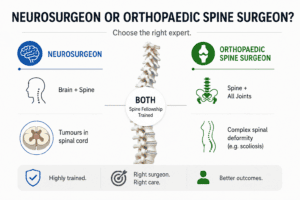
Which Surgeon Should You See for Your Spine Problem in Dubai?
Which Surgeon Should You See for Your Spine Problem in Dubai? Is a neurosurgeon always more qualified than an orthopaedic surgeon for spine conditions? No. Both pathways, when combined with
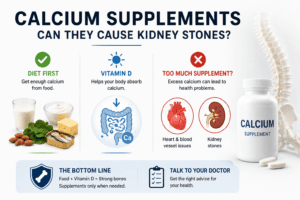
Can Calcium Supplements Cause Kidney Stones?
Can Calcium Supplements Cause Kidney Stones? If I have osteoporosis, should I take calcium supplements? This should be discussed specifically with your doctor, who will assess your individual dietary calcium
What Precision Medicine Means for Pain Management in Dubai
What Precision Medicine Means for Pain Management in Dubai How accurate is pharmacogenomic testing? Pharmacogenomic testing for well-established genetic variants, including CYP2D6 metaboliser status, is highly accurate and based on