
How Swimming Helps Your Spine Stay Healthy, A Dubai Surgeon Explains

How often should I swim to help my back pain?
Three to five sessions per week of 20 to 30 minutes each provides a meaningful benefit for most people with back pain. Starting with shorter, gentler sessions and building up is sensible for those who have not been swimming regularly.
Is swimming safe during an acute episode of back pain?
In most cases of non-specific acute back pain, gentle pool-based movement is preferable to bed rest and can help maintain function. However, very severe acute pain, particularly pain accompanied by neurological symptoms, should be assessed by a clinician before any exercise programme is commenced.
Can swimming make back pain worse?
In the vast majority of cases, swimming is well tolerated and beneficial for back pain. Specific stroke modifications, as described above, may be needed for patients with particular sensitivities. If a specific swimming activity consistently worsens symptoms, modify the stroke or seek physiotherapy advice.
Does the temperature of the pool affect the benefit?
Warmer pool temperatures are generally more comfortable for muscle relaxation and can improve tolerance in patients with significant muscle spasm. Standard pool temperatures are sufficient for most purposes, though hydrotherapy pools at higher temperatures (typically around 34 to 35 degrees Celsius) are used specifically for therapeutic purposes and can provide additional benefit for some patients.
Is swimming beneficial for osteoporosis?
Swimming provides excellent cardiovascular and core muscle benefits for patients with osteoporosis, and pool-based exercise is very safe in terms of fracture risk. However, swimming is non-weight-bearing and does not provide the bone density-maintaining stimulus that weight-bearing exercise does. Patients with osteoporosis should include both swimming and appropriate weight-bearing exercise in their programme.
Can I swim after spinal surgery?
Return to swimming after spinal surgery is typically guided by the type of procedure, the surgical approach, and healing progress. Many patients can return to gentle pool walking or swimming within a few weeks of a minimally invasive procedure, while major fusion surgery may require a longer wait. Your surgeon will advise on the specific timeline for your case.
Exercise prescriptions for back pain are often vague, inconsistent, and confusing. Patients are told to stay active but not which activity, to exercise but not how much, and to avoid certain movements but not given a clear alternative. Swimming cuts through this confusion. It is one of the few forms of exercise that carries a genuinely strong recommendation from spine specialists for almost every category of patient, from those with acute back pain to those with no pain at all who want to maintain long-term spinal health.
Dr. Sherief Elsayed, Consultant Spine Surgeon in Dubai, makes the case for swimming with characteristic directness, and then explains the physiological reasons that make it so consistently beneficial for the spine.
The Recommendation: As Direct as It Gets
Dr. Sherief Elsayed’s advice requires no qualification: “If you have any kind of back pain, just swim.”
This is not a conditional recommendation. It does not say “swimming might help” or “swimming is worth considering alongside other options.” It is a clear, direct instruction from an experienced spine surgeon who has seen what works and what does not across thousands of patients with back pain of every type and severity.
He then extends the recommendation beyond those with existing pain: “Even if you don’t have back pain, swim.”
This dual recommendation, for those with pain and for those seeking to prevent it, reflects the genuine versatility of swimming as a spinal health intervention.
Why Swimming Works: The Weightless Exercise Principle
Dr. Sherief Elsayed explains the specific mechanism that makes swimming uniquely beneficial for back pain: “Swimming is a weightless form of exercise that really gets your core muscles engaged and gets the muscles around the front and the back of the spine really strong, helps to support your spine and get your back pain under control.”
The concept of weightless exercise requires some unpacking.
What “weightless” means:
When you stand, walk, or run on land, your spine bears the compressive load of your body weight and the dynamic forces generated by locomotion. For many people with disc pathology, nerve root irritation, or facet joint pain, these compressive and impact forces are provocative, worsening symptoms with activity.
In water, buoyancy counteracts gravity. The effective weight supported by the spine during swimming is a small fraction of the actual body weight. A person who weighs 80 kilograms on land effectively weighs only a few kilograms in water. The compressive load on the vertebrae, discs, and facet joints is dramatically reduced.
This means that muscle activity, cardiovascular effort, and joint mobilisation can all occur with minimal provocative load on the painful structures.
What “getting core muscles engaged” means:
The core muscles, specifically the deep spinal stabilisers including the multifidus, transversus abdominis, and diaphragm, are the primary support system for the spine under load. These muscles maintain spinal alignment, control movement, and reduce the mechanical stress transmitted to passive structures like the discs and ligaments.
Swimming, particularly freestyle, backstroke, and breaststroke, demands sustained activation of both the anterior (abdominal) and posterior (back extensor) core muscles for propulsion, stability in the water, and maintenance of body position. The exercise is essentially a full-body core workout performed without the compressive loading that makes equivalent land-based exercises difficult for people with back pain.
The Disc Nutrition Mechanism
Dr. Sherief Elsayed adds a second physiological argument that applies even to people without pain: “Exercise helps nourish those discs in between the vertebra, keeping them nice and healthy and maintaining a healthy spine for your lifetime.”
This addresses a fundamental aspect of disc biology. Unlike most tissues in the body, the intervertebral disc has no direct blood supply in its adult form. The cells within the disc depend on diffusion of nutrients, including oxygen and glucose, from the surrounding vertebral end plates. This diffusion is driven in part by the cyclical compression and decompression of the disc that occurs during movement.
When a disc is loaded and then unloaded, fluid and dissolved nutrients are drawn in and waste products are expelled through a pumping mechanism. Regular, moderate exercise maintains this nutritional cycle. Prolonged sedentary behaviour, by contrast, reduces disc nutrition, accelerates degenerative changes, and contributes to the dehydration and height loss that characterise disc degeneration on MRI.
Swimming provides exactly the cyclical loading and unloading pattern that drives this mechanism, through the rhythmic movement of the spine during each stroke cycle, without the high compressive peaks of impact exercise that can overwhelm a compromised disc.
Which Swimming Strokes Are Best for Back Pain?
While the overall recommendation is clear, some nuance in stroke choice is clinically relevant for patients with specific back conditions.
Freestyle (front crawl): The rotation of the trunk during freestyle helps mobilise the lumbar and thoracic spine through a range of motion that strengthens the rotator muscles. The arm pull and leg kick engage the core symmetrically over time. Generally well tolerated for most back pain presentations.
Backstroke: Performed in a supine position, backstroke is often the most comfortable stroke for patients with lumbar extension-related pain (facet joint pain or spondylolisthesis) because the swimming position maintains a relatively flexed lumbar posture. The arm action provides core engagement without provoking extension-sensitive pain.
Breaststroke: The head and neck extension required during the breathing phase of breaststroke can be provocative for patients with cervical disc or facet joint problems. The lumbar extension at the end of the kick phase can also aggravate extension-sensitive lower back conditions. For these patients, breaststroke may be less comfortable than other strokes.
Water walking and pool-based exercise: For patients who are not confident swimmers or who find swimming strokes uncomfortable, simply walking in the pool at chest depth provides significant benefits. The water resistance engages the core and lower limb muscles while the buoyancy reduces spinal loading. Supervised hydrotherapy programmes extend this further. A Spine Doctor in Dubai (Spinal Conditions, Diagnosis & Treatment in Dubai) can advise on the most appropriate water-based exercise for a specific spinal condition.
A Spinal Health Doctor in Dubai can provide specific guidance on which swimming style is most appropriate for a patient’s individual spinal condition, but in the absence of specific contraindications, most people with back pain can begin with freestyle or backstroke under their own initiative.
How Swimming Compares to Other Exercise for Back Pain
A common question is how swimming compares with walking, cycling, or gym-based exercise for back pain management.
Walking is the most accessible form of weight-bearing exercise and has good evidence for reducing back pain, particularly non-specific mechanical back pain. It does not, however, specifically engage the core muscles as comprehensively as swimming, and for patients with significant nerve root irritation or facet pain, the impact forces may be provocative.
Cycling is low-impact and shares the weightlessness characteristic of swimming, but requires a sustained lumbar flexion posture that can be uncomfortable for patients with discogenic pain or flexion-intolerant presentations.
Gym-based core exercise can achieve similar or superior core muscle activation to swimming but requires knowledge of appropriate exercises, access to a gym, and guidance to avoid provocative movements. Swimming achieves comparable core engagement in a forgiving, self-regulating environment where the buoyancy naturally prevents the patient from loading the spine in ways that worsen pain.
The overall picture: Swimming is not superior to all forms of exercise for every patient, but it occupies a particularly valuable niche as an exercise that is effective, accessible, low-risk, and genuinely enjoyable for many people. The fact that Dr. Sherief Elsayed recommends it for patients with “any kind of back pain” reflects its unusually broad applicability across different presentations. The published article Why Your Spine Needs Gravity, Dr. Sherief Elsayed Explains covers the complementary argument that weight-bearing exercise should also be part of a complete spinal health programme alongside non-weight-bearing activities like swimming.
UAE-Specific Considerations
Dubai and the broader UAE present both advantages and barriers to swimming as a healthcare recommendation.
Advantages: Swimming pools are abundantly available across Dubai, both in residential complexes, hotels, gyms, and public facilities. The year-round warm climate makes outdoor swimming comfortable for much of the year. For many patients, pool access is more convenient than a gym.
Barriers: Cultural considerations around mixed swimming environments may limit uptake for some patients. Water safety, specifically access to pools with appropriate depth for exercise, is a practical consideration. Exercise habits in the UAE are also disproportionately focused on gym-based training and group fitness, meaning swimming is sometimes overlooked as a serious exercise modality. A Spinal Wellness Doctor in Dubai recommending swimming as part of a back pain management plan should address these practical barriers directly and help patients identify accessible options.
Expert Summary
Swimming is one of the most comprehensively beneficial exercises available for spinal health, for patients with back pain of any kind, and for those seeking to maintain a healthy spine through their lifetime. Its combination of near-weightlessness, full-body core engagement, spinal mobilisation, and disc nutrition support makes it almost uniquely well suited to the specific requirements of spinal health. Dr. Sherief Elsayed’s unequivocal recommendation reflects both the clinical evidence and his direct experience with what actually helps patients recover from and prevent back pain.
Table of Contents
Recent Articles
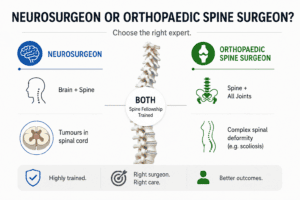
Which Surgeon Should You See for Your Spine Problem in Dubai?
Which Surgeon Should You See for Your Spine Problem in Dubai? Is a neurosurgeon always more qualified than an orthopaedic surgeon for spine conditions? No. Both pathways, when combined with

Can Calcium Supplements Cause Kidney Stones?
Can Calcium Supplements Cause Kidney Stones? If I have osteoporosis, should I take calcium supplements? This should be discussed specifically with your doctor, who will assess your individual dietary calcium

What Precision Medicine Means for Pain Management in Dubai
What Precision Medicine Means for Pain Management in Dubai How accurate is pharmacogenomic testing? Pharmacogenomic testing for well-established genetic variants, including CYP2D6 metaboliser status, is highly accurate and based on