
Why Women in Their 30s Need to Start Protecting Their Bone Density
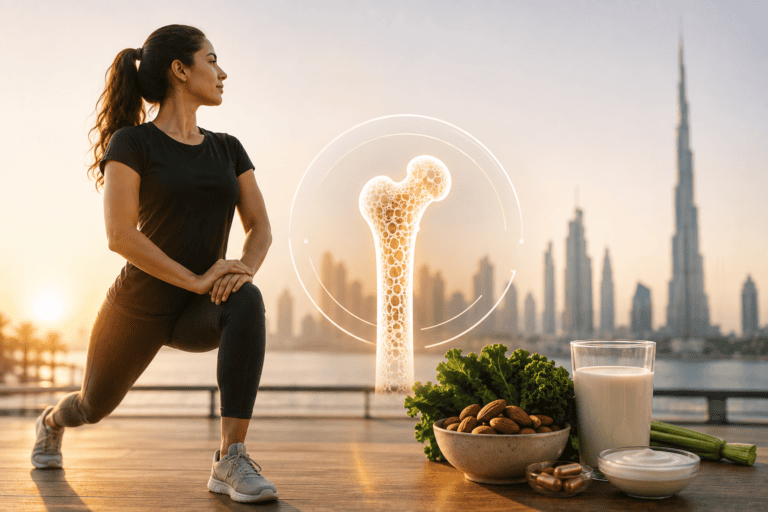
At what age should women start worrying about osteoporosis?
The time to act is before the decline begins, which means the 30s and early 40s. Waiting until the diagnosis of osteoporosis has been made means the preventable decline has already happened. Building and maintaining bone density before and through the perimenopausal years is far more effective than treating established osteoporosis.
Can you build bone density after 30?
Bone density is harder to increase significantly after peak density has been reached, but it can be maintained at or near its peak level with consistent weight-bearing exercise and adequate nutrition. The goal in the 30s and 40s is primarily to maintain what has been built, not to let it decline prematurely.
Is calcium supplementation enough to protect bone density?
Calcium is one essential ingredient, but not sufficient alone. Vitamin D is needed for calcium absorption, and weight-bearing exercise provides the mechanical stimulus that signals bone to maintain its density. All three elements are needed together; no single one is sufficient without the others.
How does menopause affect the spine specifically?
Oestrogen normally suppresses osteoclast activity (the bone-resorbing cells). When oestrogen falls at menopause, this suppression is removed and bone resorption accelerates, primarily affecting trabecular bone, which makes up the majority of the vertebral bodies. This is why the spine is particularly vulnerable to osteoporotic fractures after menopause.
Should I take hormone replacement therapy to protect my bones?
Hormone replacement therapy (HRT) can significantly reduce menopausal bone loss and is considered one of the most effective interventions for bone preservation through the menopause transition in appropriate candidates. The decision involves a full risk-benefit assessment with a doctor and is individual rather than universal.
What does a DEXA scan involve and is it widely available in Dubai?
A DEXA scan is a simple, low-radiation X-ray technique that measures bone mineral density, typically at the hip and lumbar spine. It takes around 10 to 15 minutes, involves no preparation, and exposes the patient to a very small dose of radiation. It is widely available at major hospitals and specialist centres across Dubai.
Most conversations about bone health and osteoporosis focus on older women, typically those who have already passed through menopause and are already experiencing the consequences of declining bone density. This framing misses the most important window for intervention entirely. The decisions made about bone health in the 30s determine how much reserve a woman has when the natural decline begins, and the gap between an adequate reserve and an insufficient one can be the difference between a fracture-free later life and a fractured hip in the 60s.
Dr. Sherief Elsayed, Consultant Spine Surgeon in Dubai, addresses this directly with a message aimed specifically at younger women, before the damage is done.
The Peak Bone Mineral Density Window
Dr. Sherief Elsayed opens with a specific, actionable piece of information: “If you’re a 30 year old woman watching this, you should know that you are at your peak bone mineral density. That means if you have a low energy injury like falling over, you’re not likely to break your hip, for example.”
Peak bone mineral density, the maximum bone mass achieved in a person’s lifetime, is typically reached between the late 20s and early 30s. After this point, bone mass is gradually lost at a rate of roughly 0.5 to 1 percent per year in premenopausal women. This rate accelerates dramatically at menopause, when the loss of oestrogen removes a key hormonal signal that suppresses bone resorption.
The practical implication of reaching peak bone density in the 30s is exactly as Dr. Sherief Elsayed describes: at that age, the bone is at its strongest and most resilient. A fall that would fracture the hip of a 70-year-old with osteoporosis is unlikely to cause the same damage in a 30-year-old with dense, well-mineralised bone.
The Critical Message: Peak Density Is Not Automatic Protection Forever
Dr. Sherief Elsayed continues with the less comfortable part of the message: “But it also means it’s really important that you maintain weight bearing exercises to keep your bones strong and prevent osteoporosis. Because once you hit the menopause, your bone density quickly starts to decline.”
This is the essence of the clinical argument for early action. Peak bone density is not a fixed asset that remains unchanged. It is the high point on a curve that will eventually trend downward. The question is not whether that decline will happen, because it will, but from how high a starting point it begins, and how steeply it falls.
A woman who reaches menopause with excellent bone density, built and maintained through appropriate exercise and nutrition in her 30s and 40s, has a much larger reserve to draw on as menopausal bone loss accelerates. A woman who arrives at menopause with already-marginal bone density, through inactivity, poor nutrition, or other risk factors, has far less buffer before her bone mineral density falls below the fracture threshold.
Why Weight-Bearing Exercise Is the Most Important Variable
The relationship between mechanical loading and bone density is one of the most well-established principles in musculoskeletal medicine. Bone responds to stress by maintaining or increasing density. Remove the stress stimulus and density falls. This is the same principle described in the article on spinal gravity, where astronauts lose significant bone density in the absence of gravitational loading.
For bone density preservation, the critical word is weight-bearing. Not all exercise provides equivalent bone stimulus.
Exercise types and their bone effects:
Weight-bearing exercise, where the skeleton carries the body’s weight against gravity, including walking, jogging, hiking, dancing, and resistance training, provides direct compressive loading of the skeleton. This stimulus drives osteoblast activity, the bone-building process, and maintains bone density.
Swimming and cycling, while excellent for cardiovascular fitness, are largely non-weight-bearing. They do not provide the same compressive skeletal loading stimulus, which is why they are less effective at maintaining bone density despite their many other health benefits.
Resistance training deserves specific mention: lifting weights, working with resistance bands, and other strength exercises that load the skeleton through muscle pull on bone provide particularly effective bone stimulus because they generate forces across multiple directions and at intensities that simple walking cannot match. This is why resistance training is increasingly recommended not just for muscle health but as a bone-preserving intervention at every age, with particular importance in the perimenopausal years.
The UAE Context: Specific Risk Factors for Bone Density Loss
The UAE creates a specific set of circumstances that increase the risk of early bone density loss in women, many of which are addressable with awareness.
Vitamin D deficiency: The UAE has some of the highest rates of vitamin D deficiency globally, despite abundant sunshine. Indoor lifestyles, sun-avoidance behaviours, and covering clothing reduce UVB-driven vitamin D synthesis. Vitamin D is essential for calcium absorption and bone mineralisation. A woman in her 30s who is vitamin D deficient is already undermining her peak bone density, regardless of how good her diet and exercise habits are.
Sedentary work and commuting: Dubai’s professional culture and car-dependent infrastructure mean that many women in their 30s spend the majority of their waking hours sitting, either at a desk or in a vehicle. This dramatically limits the daily weight-bearing activity that bone needs.
Dietary calcium insufficiency: Women who restrict dairy products, whether for dietary preference, lactose intolerance, or cultural reasons, may have inadequate dietary calcium unless actively supplementing or consuming alternative calcium sources.
Early menopause: Women who experience premature ovarian insufficiency, early surgical menopause, or any other cause of early oestrogen decline face accelerated bone loss at an earlier age than expected, making early bone density assessment and management even more important.
A Spinal Health Doctor in Dubai will assess bone density as part of a comprehensive spinal health evaluation, particularly for women approaching midlife or presenting with back pain that may be related to early vertebral bone loss.
What Osteoporosis Means for the Spine
While this article focuses on women in their 30s and preventive action, the consequence of inadequate action on bone health is directly relevant to spinal health and is a significant part of what Dr. Sherief Elsayed sees in clinical practice.
Osteoporotic vertebral compression fractures are among the most common fractures in older women. A Spine Trauma Surgeon in Dubai manages these fractures when they occur, but prevention through bone density protection in earlier decades is by far the preferable path. A vertebra that has lost sufficient bone mineral density may collapse, either spontaneously or after minor trauma, causing sudden severe back pain, height loss, and progressive kyphosis. Multiple vertebral fractures can accumulate over years, creating a stooped posture that is not merely cosmetic but functionally limiting and associated with significant pain and reduced quality of life.
For patients who develop severe osteoporotic vertebral fractures, surgical options including vertebroplasty (injection of bone cement) and balloon kyphoplasty can stabilise the fracture and relieve pain. But these are treatments for an established problem. A Back Pain Specialist in Dubai can advise on both prevention strategies and treatment options across the full lifespan of bone health. The investment in bone density during the 30s is an investment in avoiding that problem entirely. A Consultant Spine Surgeon in Dubai who sees the downstream consequences of inadequate bone density investment in younger years is well placed to make this preventive argument compellingly.
Practical Steps for Women in Their 30s
The message is not complicated. The challenge is implementation in the context of busy professional and family lives.
Weight-bearing exercise: Aim for a minimum of 150 minutes per week of moderate-intensity weight-bearing activity, including walking at a meaningful pace, combined with at least two sessions per week of resistance training targeting major muscle groups. This is achievable for most women even with demanding schedules.
Vitamin D and calcium: Have vitamin D levels checked, particularly in the UAE context. If deficient, supplement appropriately. Ensure adequate dietary calcium from dairy, fortified plant milks, canned fish with bones, leafy greens, or supplementation if dietary sources are consistently insufficient.
Avoid smoking: Smoking directly impairs bone metabolism and accelerates bone density loss. Its relevance to bone health is as strong as its relevance to spinal fusion healing.
Limit alcohol: Excessive alcohol intake interferes with calcium absorption and bone metabolism.
Consider a baseline bone density scan: Women with specific risk factors, including family history of osteoporosis, early or long-term steroid use, low body weight, or disordered eating history, should discuss a baseline DEXA scan with their doctor, as this provides a measurement point against which future changes can be tracked.
Expert Summary
The 30s represent the last point at which bone density can still be actively built or maintained at its peak level. After this, the trajectory trends downward, with the rate of decline accelerating significantly at menopause. The decisions made about exercise, nutrition, and lifestyle in this decade determine how much bone reserve a woman enters menopause with. A larger reserve means a lower risk of fracture in the decades that follow. The investment is straightforward: consistent weight-bearing and resistance exercise, adequate vitamin D and calcium, and awareness of the specific risk factors that apply in the UAE context.
Table of Contents
Recent Articles

Why Eight People Were Needed for One Spine Surgery in Dubai
Why Eight People Were Needed for One Spine Surgery in Dubai Does every spinal surgery require exactly eight team members? No, as Dr. Sherief Elsayed explains directly, the specific team
Three Spine Surgery Myths a Dubai Surgeon Wants You to Forget
Three Spine Surgery Myths a Dubai Surgeon Wants You to Forget Is it really safe to walk on the same day as spine surgery? Yes, for the majority of modern
Why Osteoporosis Is Called the Silent Disease in the UAE
Why Osteoporosis Is Called the Silent Disease in the UAE If osteoporosis doesn’t cause pain, how would I know if I needed a DEXA scan? Given the entirely silent nature