
What Is a Pulmonary Embolism and Why Should Spine Patients in Dubai Know About It
How common is pulmonary embolism after spine surgery?
The incidence varies depending on the procedure, the patient’s risk factors, and the prophylaxis used. With modern preventive measures including compression stockings, intermittent pneumatic compression, early mobilisation, and pharmacological prophylaxis, the risk is substantially reduced. Symptomatic pulmonary embolism after routine lumbar surgery is relatively uncommon but remains a clinically important concern in all surgical patients.
How long should I take blood thinners after spine surgery?
The duration of anticoagulation prophylaxis after spinal surgery varies depending on the procedure, the patient’s individual risk factors, and whether a DVT or PE has actually occurred. Your surgical team will specify the duration and type of prophylaxis appropriate for your situation.
Can I fly after spine surgery?
Long-haul flying significantly increases DVT risk due to prolonged immobility. Most surgical teams advise against long-haul flights for at least four to six weeks after major spinal surgery, sometimes longer. If travel is unavoidable, wearing compression stockings, staying well hydrated, and mobilising regularly during the flight are essential.
Is it possible to have a DVT without any symptoms?
Yes. A significant proportion of DVTs, particularly in the calf, are clinically silent and produce no symptoms. This is why post-operative prophylaxis is applied to all patients at risk rather than only those with symptoms.
What is the difference between a DVT and a pulmonary embolism?
A DVT is a clot in the deep veins, most commonly in the legs. A pulmonary embolism occurs when part or all of that clot breaks off and travels to the pulmonary arteries in the lungs. They are different manifestations of the same underlying thromboembolic process and are collectively referred to as venous thromboembolism (VTE).
Can younger patients get pulmonary embolism after spine surgery?
Yes. While older age is a risk factor, pulmonary embolism can occur in younger patients, particularly if they have other risk factors such as cancer, hormonal contraception, inherited clotting disorders, obesity, or prolonged immobility before and after surgery. Age alone does not eliminate the risk.
Surgery of any kind carries risks beyond the operating theatre. For spine patients, one of the most important post-operative risks to understand is pulmonary embolism, a condition that is often misunderstood, frequently underestimated, and in its severe form, life-threatening. Understanding how it develops, why spine patients are at elevated risk, and what the warning signs are puts patients in a far stronger position to protect themselves during recovery.
Dr. Sherief Elsayed, Consultant Spine Surgeon in Dubai, explains the pathway from a leg clot to a lung emergency with clinical precision.
What Is a Deep Vein Thrombosis?
A deep vein thrombosis, commonly called a DVT, is a blood clot that forms in one of the deep veins, typically in the lower leg or thigh. These veins, which run deep within the muscle rather than close to the skin surface, carry deoxygenated blood back to the heart. They are part of the venous system that any Spine Surgery Specialist in Dubai must account for in post-operative care planning.
Clots form in these veins when blood flow slows, when the vessel wall is damaged, or when the blood itself is in a more clottable state. After surgery, all three of these conditions can be present simultaneously. The patient has been immobile, the surgical procedure may have involved proximity to major vessels, and the body’s clotting response is activated as part of the healing process.
A DVT in the deep veins of the lower limb can cause swelling, pain, warmth, and redness in the affected leg. However, a significant proportion of DVTs are clinically silent and produce no obvious symptoms. This is what makes them dangerous.
Can a DVT Travel to the Lungs?
This is precisely the question Dr. Sherief Elsayed addresses directly, correcting a common misconception: “Some people have been told that DVTs or deep vein thrombosis don’t travel up the leg and into the lungs. That’s not true.”
The pathway from deep vein clot to pulmonary embolism is well established. Dr. Sherief Elsayed describes it clearly: “A deep vein thrombosis, which is a clot that happens typically in the deep veins of the lower limbs, the legs, they form and if they’re big enough, they can break up and then go into the right side of the heart, which is where the deoxygenated blood goes. And from there, that blood goes into the lungs to get oxygenated again. A clot can travel from the deep vein up into the right side of the heart and then out into the lungs causing a pulmonary embolism.”
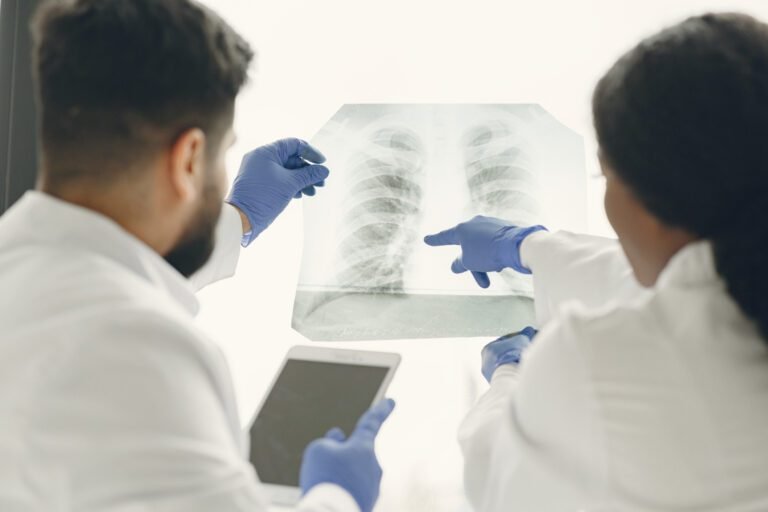
The anatomy explains the pathway precisely. Deoxygenated blood from the legs travels up through the femoral veins into the inferior vena cava, into the right atrium, through the right ventricle, and then into the pulmonary arteries that supply the lungs. A clot that breaks free from the deep veins of the leg follows exactly this route.
What Happens When a Clot Reaches the Lungs?
Once a clot lodges in the pulmonary arteries, it obstructs blood flow to a portion of the lung tissue. The consequences depend on the size of the clot and how much of the pulmonary circulation it blocks.
Dr. Sherief Elsayed explains the outcome: “The end result of that is that the blood supply that’s going to the lungs is compromised and so it’s not being oxygenated properly. You’ll get shortness of breath. If it’s big enough, it can be life-threatening.”
What a pulmonary embolism does:
- Blocks blood flow to lung tissue, causing that portion of the lung to become unable to participate in gas exchange
- Reduces the amount of oxygen that enters the bloodstream
- Increases the workload on the right side of the heart, which must pump against the increased resistance created by the obstruction
- In large or massive pulmonary embolism, can cause acute right heart failure, cardiovascular collapse, and death
Symptoms of pulmonary embolism:
- Sudden onset shortness of breath, often the most prominent symptom
- Sharp chest pain, typically worsening with deep breathing
- Rapid heart rate
- Coughing, sometimes with blood-stained sputum
- Light-headedness or fainting
- A sense of anxiety or impending doom, which is physiologically real and reflects the body’s response to hypoxia
A small pulmonary embolism may produce minimal or no symptoms and resolve without intervention. A large or saddle embolism, which straddles the main pulmonary artery trunk, is immediately life-threatening. The clinical urgency depends on the size and location of the obstruction.
Why Are Spine Patients at Particular Risk?
Several factors specific to spinal surgery and the spinal patient population elevate the risk of DVT and pulmonary embolism.
Immobility: Both before surgery, due to pain and limited mobility, and after surgery during recovery, patients are less active than normal. Reduced movement in the legs means reduced pumping of the deep venous system, slowing blood flow and creating the conditions for clot formation.
Surgical positioning: Many spinal procedures are performed with the patient in the prone position, lying face down. This position, maintained for hours during complex procedures, can affect venous return from the lower limbs.
Surgical trauma: Any surgical procedure activates the body’s coagulation cascade as part of the normal healing response. After major spinal surgery, this response is substantial.
Venous injury: Surgery in proximity to the major vessels of the spine, particularly in anterior approaches to the lumbar or cervical spine, carries a risk of venous injury that can further activate clotting.
Patient factors: Patients who are older, overweight, or have pre-existing conditions such as cancer, inflammatory disease, or prior DVT are at higher baseline risk.
How Is DVT and Pulmonary Embolism Prevented After Spine Surgery?
Prevention is far preferable to treatment, and spine surgical teams implement a range of strategies to reduce thrombotic risk in the post-operative period.
Mechanical prophylaxis:
- Compression stockings reduce venous stasis by maintaining graduated pressure on the deep venous system of the legs
- Intermittent pneumatic compression devices, which are inflatable sleeves fitted around the calves during and after surgery, actively pump blood through the deep veins by rhythmically compressing and releasing the calf
Pharmacological prophylaxis:
- Low molecular weight heparin (LMWH), administered by injection once or twice daily, reduces the blood’s clotting tendency without completely eliminating normal haemostasis
- Direct oral anticoagulants are used in some protocols, though specific agent selection in spine surgery is guided by the balance between thrombotic and haemorrhagic risk
- The timing of starting pharmacological prophylaxis after spine surgery is carefully chosen, typically 24 to 48 hours post-operatively, to allow adequate haemostasis at the surgical site before anticoagulation begins
Early mobilisation:
Getting patients out of bed and walking as soon as safely possible is one of the most effective measures for reducing DVT risk. The muscle pump action of walking actively propels blood through the deep venous system. Most post-operative spine patients are encouraged to mobilise on the same day as or the day after surgery.
Hydration:
Dehydration increases blood viscosity, contributing to clot formation. Adequate fluid intake in the post-operative period is a simple but important preventive measure.
What Are the Warning Signs That Need Immediate Attention?
Patients recovering from spinal surgery should be aware of the symptoms that may indicate a DVT or pulmonary embolism and should seek immediate medical assessment if they develop.
DVT warning signs:
- Calf or thigh swelling, particularly if asymmetric (one leg more swollen than the other)
- Calf pain or tenderness, particularly on walking
- Warmth and redness of the lower leg
Pulmonary embolism warning signs:
- Sudden shortness of breath that is new or significantly worsened
- Chest pain, particularly if sharp and worsened by breathing
- Rapid heartbeat
- Coughing up blood
- Feeling faint or losing consciousness
These symptoms require emergency assessment, not a call to the clinic to book an appointment. If pulmonary embolism is suspected, it is a medical emergency requiring immediate hospital attendance. The article Dr. Sherief Elsayed Explains Which Post-Surgery Symptoms Need Urgent Care covers the full range of post-operative warning signs that require same-day action.
How Is Pulmonary Embolism Treated?
When pulmonary embolism is diagnosed, treatment depends on the severity.
For haemodynamically stable patients (most cases):
- Anticoagulation therapy, typically with low molecular weight heparin initially, followed by oral anticoagulation for a defined period (usually three to six months for a provoked PE after surgery)
- The anticoagulant prevents new clot formation and allows the body’s own fibrinolytic system to gradually dissolve the existing clot
For massive pulmonary embolism with cardiovascular compromise:
- Thrombolysis, in which a clot-dissolving drug is given intravenously to rapidly break up the obstruction
- In the most severe cases, mechanical clot extraction (catheter-directed thrombectomy) or surgical embolectomy may be required
For patients with contraindications to anticoagulation, such as after recent surgery, an inferior vena cava filter, a small device placed in the main vein of the abdomen, can prevent large clots from reaching the lungs while the risk of anticoagulation remains unacceptable. Specific protective measures can be discussed with a Minimally Invasive Spine Surgeon in Dubai.
Expert Summary
A DVT is not simply a leg problem. It is a clot in the venous system that has the potential to travel to the heart and lungs, causing a pulmonary embolism that ranges from clinically silent to immediately fatal. Spine patients, with their combination of pre-operative immobility, surgical trauma, and post-operative recovery, represent a population at elevated risk.
Understanding the mechanism, recognising the warning signs, and complying with the preventive measures your surgical team puts in place are the most important things a patient can do to protect themselves. If you develop sudden breathlessness, chest pain, or calf swelling after spinal surgery, seek medical attention immediately. Consulting a Consultant Spine Surgeon in Dubai before your procedure allows a full discussion of your individual thrombotic risk and the preventive strategy that is right for you.
Table of Contents
Recent Articles
Why Eight People Were Needed for One Spine Surgery in Dubai
Why Eight People Were Needed for One Spine Surgery in Dubai Does every spinal surgery require exactly eight team members? No, as Dr. Sherief Elsayed explains directly, the specific team
Three Spine Surgery Myths a Dubai Surgeon Wants You to Forget
Three Spine Surgery Myths a Dubai Surgeon Wants You to Forget Is it really safe to walk on the same day as spine surgery? Yes, for the majority of modern
Why Osteoporosis Is Called the Silent Disease in the UAE
Why Osteoporosis Is Called the Silent Disease in the UAE If osteoporosis doesn’t cause pain, how would I know if I needed a DEXA scan? Given the entirely silent nature