
Three Spine Surgery Myths a Dubai Surgeon Wants You to Forget
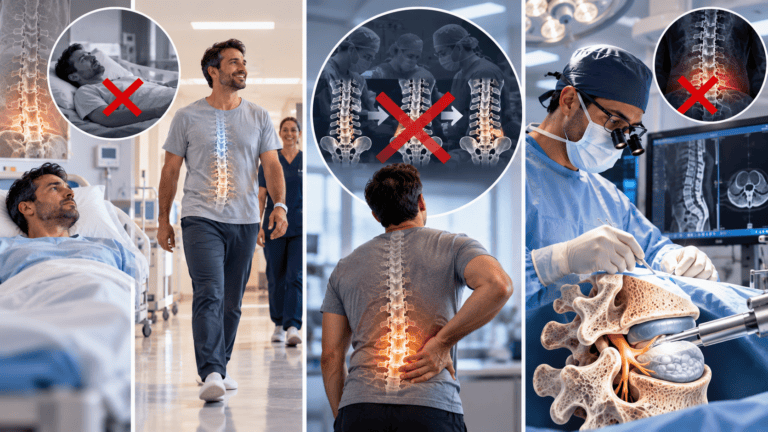
Is it really safe to walk on the same day as spine surgery?
Yes, for the majority of modern spinal procedures, early mobilisation, including walking on the day of surgery itself where the specific procedure and patient’s condition allow, is now considered both safe and genuinely beneficial for recovery, actively reducing several significant post-operative risks.
What types of spine surgery are more likely to require staged or repeated procedures?
As discussed in this article, this is specifically more relevant to complex, extensive procedures, including significant deformity correction, complex reconstructive surgery, or certain tumour cases, rather than the more common, straightforward procedures such as standard microdiscectomy or routine decompression.
How do I confirm that my surgeon is genuinely fellowship trained?
As discussed in the earlier article on choosing a spinal surgeon, directly asking your surgeon about their specific fellowship training background is entirely appropriate, and a qualified surgeon should be able to describe this clearly and specifically.
Does "very rare" risk mean spine surgery has no risk at all?
No, as emphasised in this article, this reflects an honest, balanced acknowledgement that serious risks, while uncommon, do genuinely exist, rather than a claim of zero risk. A thorough discussion of the specific risks relevant to your individual procedure should always be part of the informed consent process before surgery.
Why did spine surgery recovery advice change so significantly over time?
This reflects genuine advances in surgical technique (including more minimally invasive, tissue-preserving approaches) alongside evolving understanding of post-surgical recovery physiology more broadly, both of which have supported a significant, evidence-based shift toward earlier mobilisation across many surgical specialties, not spine surgery alone.
Should I be concerned if my recovery experience differs somewhat from what is described here?
Individual recovery experiences can genuinely vary based on the specific procedure performed, individual patient factors, and any complications encountered. Discuss any specific concerns about your own recovery trajectory directly with your treating surgical team, who can advise on what is appropriate and expected for your individual situation.
Certain beliefs about spine surgery persist in popular understanding not because they reflect current medical practice, but because they reflect an outdated, decades-old picture of what spinal surgery once involved, a picture that has been substantially superseded by genuine advances in surgical technique, patient care protocols, and clinical evidence over recent decades. These outdated beliefs continue to generate unnecessary fear and, in some cases, may even delay patients from seeking appropriate treatment for genuinely treatable conditions.
Dr. Sherief Elsayed, Consultant Spine Surgeon in Dubai, directly addresses and corrects the three most persistent of these myths.
Myth Number Three: You Need to Be in Bed for Days at a Time
Dr. Sherief Elsayed addresses this first outdated belief directly: “Myth number three, you need to be in bed for days at a time. I want my patients walking on day zero, the day of their operation, and almost all of them do.”
Why this belief was once accurate:
Historical spinal surgery practice did generally involve prolonged post-operative bed rest, reflecting both older surgical techniques that produced greater tissue disruption requiring longer healing time before mobilisation was considered safe, and an older, now largely superseded, understanding of recovery physiology that assumed rest, rather than early activity, was the safer approach following significant surgery.
Why this has fundamentally changed:
Modern spinal surgery, incorporating the minimally invasive and precision techniques discussed extensively throughout this blog series, including image-guided navigation and careful, tissue-preserving surgical approaches, produces meaningfully less surgical trauma than older techniques, supporting much earlier, safer mobilisation. Additionally, the broader medical understanding of post-surgical recovery physiology has evolved substantially. Early mobilisation is now understood to actively reduce several significant post-operative risks, including the deep vein thrombosis and pulmonary embolism risk discussed extensively in the earlier article on this specific topic, alongside reducing muscle deconditioning, and generally supporting faster, more complete functional recovery overall.
The specific goal: walking on day zero.
Dr. Sherief Elsayed’s specific target, mobilising patients on the very day of their surgery itself, reflects current, evidence-based best practice in modern spinal surgery, consistent with the enhanced recovery protocols that have transformed post-surgical care across many surgical specialties over recent decades.
Myth Number Two: You Will Need Repeated Surgeries
Dr. Sherief Elsayed addresses the second myth directly: “Myth number two, if you have a spinal surgery, you’re gonna need repeated surgeries. Unless it’s a really complex operation, very unlikely you’ll need further surgery.”
Why this misconception persists:
This belief likely reflects a combination of factors, including awareness of the genuine recurrence risk discussed in the earlier article on disc surgery recurrence rates (which, while real, affects a minority of patients and is specific to certain procedure types), general anxiety about the permanence and seriousness of any surgical intervention, and perhaps anecdotal awareness of specific complex cases requiring staged or revision procedures, generalised inappropriately to spinal surgery as a whole.
The more accurate clinical reality:
For the majority of common, relatively straightforward spinal procedures discussed throughout this blog series, including standard microdiscectomy and routine decompression for spinal stenosis, a single, well-performed procedure is genuinely expected to provide durable, long-term resolution of the treated condition for the substantial majority of patients. As Dr. Sherief Elsayed’s qualifier makes clear, it is specifically the more complex procedures, extensive multilevel reconstructions, significant deformity correction, or certain tumour cases, where staged procedures or a higher likelihood of eventual further surgery may genuinely be part of the anticipated treatment pathway from the outset, rather than representing an unexpected failure of the initial procedure.
Myth Number One: Spine Surgery Is Dangerous
Dr. Sherief Elsayed addresses the final, and arguably most consequential, myth directly: “Myth number one, spine surgery is dangerous. If you have a fellowship trained complex spine surgeon, the risks, while they can be serious, are very rare.”
Why this myth carries the greatest consequence:
Of the three myths addressed, this final one is arguably the most significant in its real-world impact, because a genuine belief that spine surgery is inherently dangerous can directly deter patients from seeking or accepting appropriate surgical treatment for conditions where surgery genuinely represents the most effective, evidence-based option, potentially prolonging unnecessary suffering, functional limitation, or in the case of the genuinely time-sensitive conditions discussed extensively throughout this blog series, risking permanent, avoidable neurological harm through delayed treatment.
The important, carefully calibrated nuance in Dr. Sherief Elsayed’s response:
It is worth noting precisely how this myth is addressed, because the response is not an oversimplified claim that spine surgery carries no risk whatsoever. Dr. Sherief Elsayed’s specific phrasing, “the risks, while they can be serious, are very rare,” reflects exactly the kind of honest, balanced risk communication that has characterised his approach consistently throughout this blog series, acknowledging genuine risk honestly while providing accurate context about its actual, statistical likelihood rather than either minimising it inappropriately or allowing an exaggerated, outdated perception of danger to persist unchallenged.
The specific qualifier that matters most: fellowship-trained expertise.
Dr. Sherief Elsayed’s specific framing, “if you have a fellowship trained complex spine surgeon,” directly connects this myth-correction back to the guidance established in the earlier article How to Choose the Right Spinal Surgeon, Dr. Sherief Elsayed Advises. The genuinely low risk profile he describes is specifically and explicitly tied to receiving treatment from an appropriately trained, experienced specialist, reinforcing that surgical outcomes, and the associated risk profile, are directly influenced by the surgeon’s qualifications and experience, precisely the reasoning behind the specific selection criteria discussed extensively in that earlier article.
Why These Myths Matter Collectively
Taken together, these three myths paint an outdated, unnecessarily alarming picture of spinal surgery: prolonged, uncomfortable bed rest, an expectation of repeated future operations, and an inherent, serious danger to the procedure itself. This composite outdated picture can understandably generate significant anxiety and avoidance among patients genuinely considering, or being appropriately advised toward, surgical treatment for their specific spinal condition.
The corrected, current, evidence-based picture, reflecting modern spinal surgical practice as described throughout this blog series, is considerably more reassuring: same-day mobilisation following surgery, a strong likelihood of durable, single-procedure resolution for the majority of common conditions, and, when performed by an appropriately fellowship-trained specialist, a genuinely low, though not zero, risk profile.
How This Connects to Broader Themes Throughout This Blog
These corrected myths connect directly to several other important themes explored extensively throughout this blog series. A Spine Surgery Specialist in Dubai reinforces this same evidence-based framework across every patient conversation. explored extensively throughout this blog series. The emphasis on fellowship training as a key determinant of surgical safety and outcome reinforces the guidance in the earlier article on choosing a spinal surgeon. The relatively low likelihood of repeated surgery for straightforward procedures provides important context for understanding the genuine, but statistically minority, recurrence risk discussed in the earlier article on disc surgery outcomes. And the emphasis on early mobilisation connects directly to the broader theme, explored throughout this blog series, of the spine benefiting from movement and appropriate loading rather than prolonged rest and inactivity, as established comprehensively in the earlier article on why the spine needs gravity.
What Patients Should Take From This
A UAE Spine Surgeon addressing these specific myths directly and honestly, providing accurate, current information rather than allowing outdated fears to persist unchallenged, reflects exactly the kind of transparent, evidence-based patient communication that should characterise the relationship between a patient and their treating specialist throughout the entire process of considering, undergoing, and recovering from spinal surgery.
UAE-Specific Context
Given the significant volume of spinal surgery performed across Dubai’s specialist medical centres, addressing these persistent, outdated myths directly is genuinely important for supporting informed, appropriately confident decision-making among the UAE’s diverse patient population, many of whom may carry preconceptions about spinal surgery formed in different healthcare systems or informed by genuinely outdated historical practice. A Spine Doctor in Dubai helps patients navigate these misconceptions with accurate, current information.
Expert Summary
Three persistent myths, prolonged mandatory bed rest, an expectation of repeated future surgeries, and an inherent, serious danger to the procedure itself, continue to generate unnecessary fear and hesitation about spinal surgery that no longer reflects current, evidence-based surgical practice. Modern spinal surgery, particularly when performed by an appropriately fellowship-trained specialist, generally supports same-day mobilisation, provides durable, single-procedure resolution for the majority of common conditions, and carries a genuinely low, though honestly acknowledged as not entirely absent, risk profile.
Table of Contents
Recent Articles

Why Eight People Were Needed for One Spine Surgery in Dubai
Why Eight People Were Needed for One Spine Surgery in Dubai Does every spinal surgery require exactly eight team members? No, as Dr. Sherief Elsayed explains directly, the specific team
Three Spine Surgery Myths a Dubai Surgeon Wants You to Forget
Three Spine Surgery Myths a Dubai Surgeon Wants You to Forget Is it really safe to walk on the same day as spine surgery? Yes, for the majority of modern
Why Osteoporosis Is Called the Silent Disease in the UAE
Why Osteoporosis Is Called the Silent Disease in the UAE If osteoporosis doesn’t cause pain, how would I know if I needed a DEXA scan? Given the entirely silent nature