
When Does Scoliosis Actually Need Surgery? A UAE Spine Surgeon Explains the Threshold
At what curve size does scoliosis definitely need surgery?
The surgical threshold is generally 45 to 50 degrees in a skeletally mature patient, or 40 to 45 degrees in a patient who is still growing and at high risk of progression. Below these thresholds, surgery is not typically recommended unless there are specific additional factors such as significant pain, neurological involvement, or rapid progression.
Will my scoliosis get worse as I get older?
For skeletally mature patients with curves below 30 degrees, significant progression is unlikely. Curves above 50 degrees in adults may progress at approximately 1 degree per year. The risk depends on curve magnitude, location, and skeletal status. Regular monitoring allows any progression to be identified early.
Can physiotherapy correct scoliosis?
No. Physiotherapy cannot straighten an established structural curve. However, specific approaches, particularly the Schroth method, have evidence supporting their role in reducing progression in growing patients with mild to moderate curves. Physiotherapy also plays an important role in managing pain and improving function in adult degenerative scoliosis.
Is scoliosis hereditary?
There is a genetic component to adolescent idiopathic scoliosis. First-degree relatives of affected patients have a higher prevalence than the general population. Having a family member with scoliosis does not mean a child will develop it, and having a mild curve does not mean a sibling will develop a severe one.
Can scoliosis cause back pain?
Adolescent idiopathic scoliosis typically does not cause significant back pain. The presence of significant pain in a young patient with scoliosis is a red flag warranting investigation for an underlying cause. Adult degenerative scoliosis, on the other hand, is frequently painful due to associated disc degeneration and facet joint disease.
How long does recovery from scoliosis surgery take?
Most patients are mobile and walking within 24 to 48 hours of surgery. Return to school or light activity takes four to six weeks. Return to sport and heavy physical activity takes six to twelve months. The fusion itself takes approximately 12 months to fully consolidate.
Scoliosis is one of the most anxiety-inducing diagnoses a patient or parent can receive. The word carries weight. It suggests something serious, something structural, something that might require surgery. In the vast majority of cases that anxiety is disproportionate to the actual clinical reality. Most people with scoliosis will never need an operation, and understanding the threshold at which surgery becomes necessary puts the diagnosis in its proper context.
Dr. Sherief Elsayed, Consultant Spine Surgeon in Dubai, addresses this question directly in clinic. His answer is precise, evidence-based, and in most cases, genuinely reassuring.
What Is Scoliosis?
Scoliosis is an abnormal lateral curvature of the spine. When viewed from behind, a healthy spine runs in a straight vertical line. In scoliosis, the spine curves to one side, sometimes forming a single C-curve, sometimes an S-shaped double curve involving both the thoracic and lumbar regions.
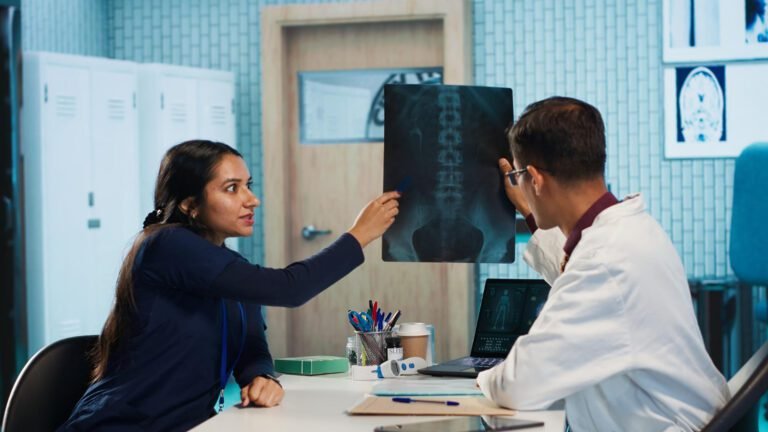
The severity of the curve is measured in degrees using the Cobb angle on a standing X-ray. This single measurement is the foundation of every treatment decision in scoliosis management.
The most common types:
- Adolescent idiopathic scoliosis, developing during the growth spurt between ages 10 and 18 with no identifiable underlying cause
- Adult degenerative scoliosis, developing later in life as disc and facet joint changes cause asymmetric spinal loading
- Congenital scoliosis, from abnormal vertebral development before birth
- Neuromuscular scoliosis, secondary to conditions such as cerebral palsy or muscular dystrophy
What the Degree of Curvature Actually Means
The Cobb angle determines whether observation, bracing, or surgery is appropriate. It also predicts the risk of progression over time.
General clinical thresholds:
- Under 20 degrees: observation only, with X-ray monitoring at intervals based on age and growth stage
- 20 to 40 degrees in a growing patient: bracing is typically recommended to prevent progression through the remaining growth period
- 40 to 50 degrees in a growing patient: surgery is considered, as curves at this level carry a high risk of continued progression
- Above 45 to 50 degrees in a skeletally mature patient: surgery is generally recommended, as curves of this magnitude carry a meaningful risk of slow continued progression in adulthood and can cause progressive cosmetic deformity, pain, and in severe cases, cardiorespiratory compromise
The Two Variables That Drive Every Scoliosis Decision
Dr. Sherief Elsayed illustrates the clinical reasoning with a direct patient exchange:
“I have a curve in my upper back. Do I need surgery for this? How old are you? I’m 20. Have you had an X-ray? Yes. What does it show? It shows a 30 degree bend. A 30 degree thoracic scoliosis. In all likelihood, you do not need surgery. A 20 year old has stopped growing. 30 degrees is below the threshold for surgery. So if a curve is 30 degrees, it’s very unlikely that it’s going to progress as you age. If you notice any change in your shape, of course, get a new X-ray. But it’s very unlikely that it’s going to progress to require surgery. For patients with thoracic curves considering correction, a Spinal Deformity Surgeon in Dubai (Spinal Deformities – Adult & Paediatric Care) can assess whether your specific curve warrants structural intervention.”
This exchange captures the two key variables in every scoliosis assessment: skeletal maturity and curve magnitude.
Skeletal Maturity
The risk of scoliosis progression is directly linked to how much growth remains. A 12-year-old with a 25-degree curve and several years of growth ahead carries a very different prognosis from a 20-year-old with the same measurement who has already reached skeletal maturity.
Skeletal maturity is assessed using the Risser sign on X-ray, which grades the ossification of the iliac crest apophysis from 0 (no ossification, significant growth remaining) to 5 (complete fusion, growth complete). A Risser 0 or 1 patient with a moderate curve requires much more aggressive monitoring and earlier bracing consideration than a Risser 4 or 5 patient with the same Cobb angle.
Curve Magnitude
The Cobb angle at presentation predicts progression risk. Curves below 30 degrees in a skeletally mature patient are unlikely to progress significantly. Curves above 50 degrees have been shown to progress at approximately 1 degree per year even after skeletal maturity, making long-term monitoring important regardless of whether surgery is chosen.
The 45 to 50 degree threshold for surgical consideration in adults reflects the point at which biomechanical forces acting on the spine consistently exceed the spine’s ability to compensate, leading to predictable continued progression.
What Is the Goal of Scoliosis Surgery?
When surgery is indicated, the goal is not to achieve a perfectly straight spine. It is to correct the curve sufficiently to halt progression, restore a more balanced spinal alignment, reduce the cosmetic deformity, and where the curve contributes to pain or neurological symptoms, address those directly.
The procedure is a spinal fusion with instrumentation. Pedicle screws are placed into the vertebrae across the curve, a contoured rod is attached, and a derotation manoeuvre corrects the rotational component of the deformity as well as the lateral curve. Bone graft placed across the instrumented levels creates a solid, stable construct over time.
Modern techniques have significantly improved both the correction achievable and the safety profile of the surgery. Intraoperative neuromonitoring, which tracks spinal cord and nerve function continuously throughout the procedure, has become standard practice and allows any concerns about neurological function to be identified in real time.
A Scoliosis Specialist in Dubai (Scoliosis Treatment in Dubai – Adult & Paediatric) will assess curve magnitude, skeletal maturity, curve location, and the patient’s overall health before making any surgical recommendation.
What Happens If Surgery Is Not Needed?
For the majority of patients, management involves monitoring and where appropriate, physiotherapy. Physiotherapy cannot correct an established structural curve, but specific approaches, particularly the Schroth method, have evidence supporting their role in reducing progression in growing patients with mild to moderate curves.
For patients with adult degenerative scoliosis causing back pain, core strengthening. A Adult Scoliosis Doctor in Dubai (Back Pain Treatment in Dubai – Rapid Relief & Rehabilitation) can guide the conservative pathway appropriately., postural training, and load management through physiotherapy address the mechanical component of the pain without any structural intervention.
For patients with curves below the surgical threshold who experience pain, targeted injections, oral anti-inflammatory medication, and structured rehabilitation can provide meaningful relief. The article How Do Doctors Screen for Scoliosis in UAE? (How Do Doctors Screen for Scoliosis in UAE? Expert Guide) covers the full screening and monitoring pathway in detail.
Scoliosis in the UAE: Specific Considerations
Several patterns are worth noting in clinical practice in Dubai and the wider UAE.
Late presentation: Mild adolescent scoliosis is frequently missed during childhood because school screening programmes vary across the UAE and early curves produce no pain or functional limitation. Patients sometimes present as young adults with established curves that were never monitored during the critical growth period.
Adult degenerative scoliosis: The UAE’s older working population, combined with physically demanding work in many sectors, creates a significant burden of adult degenerative scoliosis presenting with back pain, leg pain, and functional decline. This is a different clinical entity from adolescent scoliosis and requires a different assessment approach.
Anxiety around the diagnosis: Cultural and social factors in the UAE can amplify anxiety around a scoliosis diagnosis, particularly for younger female patients concerned about cosmetic implications. Clear, direct communication about the threshold for surgery and the realistic natural history of the curve is an important part of the clinical encounter.
Red Flags That Warrant Urgent Assessment
Most scoliosis does not constitute an urgent clinical situation. However, certain presentations require prompt specialist review.
Seek early assessment if:
- A child presents with scoliosis before the age of 10, as early-onset curves carry a higher risk of progression and can compromise thoracic growth and lung development
- The curve is accompanied by significant back pain, which is unusual in adolescent idiopathic scoliosis and may suggest an underlying cause
- Neurological symptoms are present, including weakness, numbness, or changes in bladder or bowel function
- The curve is left-sided thoracic scoliosis in an adolescent, which is atypical and requires MRI to exclude a spinal cord abnormality
- Rapid progression is documented between monitoring X-rays
Expert Summary
The surgical threshold for scoliosis is defined and evidence-based. A 30-degree curve in a skeletally mature 20-year-old does not need surgery and is unlikely to progress significantly. The decision to operate is made on the basis of curve magnitude, skeletal maturity, rate of progression, and the presence of symptoms, never on the basis of the diagnosis alone.
Dr. Sherief Elsayed’s approach is to give patients the honest clinical picture, confirm what the X-ray shows, assess where they are in their skeletal development, and advise accordingly. For most patients with mild to moderate curves, that advice is reassuring. For those who do meet the surgical threshold, modern correction techniques achieve excellent outcomes with a well-established safety profile. To discuss a scoliosis diagnosis with a Consultant Spine Surgeon in Dubai (About Dr Sherief Elsayed – Consultant Spine Surgeon), a single consultation is the most direct way to understand what your specific curve means and what, if anything, needs to be done.
Table of Contents
Recent Articles
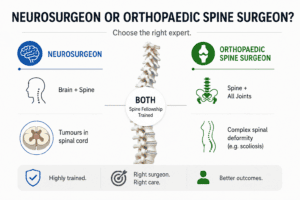
Which Surgeon Should You See for Your Spine Problem in Dubai?
Which Surgeon Should You See for Your Spine Problem in Dubai? Is a neurosurgeon always more qualified than an orthopaedic surgeon for spine conditions? No. Both pathways, when combined with
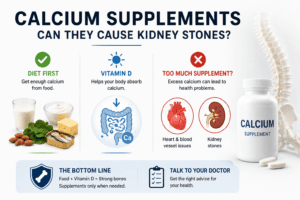
Can Calcium Supplements Cause Kidney Stones?
Can Calcium Supplements Cause Kidney Stones? If I have osteoporosis, should I take calcium supplements? This should be discussed specifically with your doctor, who will assess your individual dietary calcium
What Precision Medicine Means for Pain Management in Dubai
What Precision Medicine Means for Pain Management in Dubai How accurate is pharmacogenomic testing? Pharmacogenomic testing for well-established genetic variants, including CYP2D6 metaboliser status, is highly accurate and based on