
Leg Pain When Walking: Is It Your Spine or Your Blood Vessels? A UAE Surgeon Explains

Can spinal stenosis cause calf pain like vascular claudication?
Yes. Neurogenic claudication from lumbar spinal stenosis commonly presents with calf pain, heaviness, and cramping that is clinically similar to vascular claudication. The postural and activity-related features described above are the key to distinguishing them.
Can I have both spinal stenosis and blocked arteries at the same time?
Yes, and this is not uncommon in older patients with cardiovascular risk factors. Both conditions must be investigated and treated appropriately. Treating only one when both are present will produce only partial improvement.
How is spinal stenosis treated without surgery?
Physiotherapy with lumbar flexion exercises, activity modification using aids that promote a forward-flexed posture, anti-inflammatory medication, and epidural steroid injections can all provide meaningful relief. Surgery is considered when these measures are insufficient and quality of life is significantly affected.
Does spinal stenosis always get worse over time?
Not necessarily. Many patients have stable stenosis for years with manageable symptoms. Others experience progressive deterioration. Regular review, appropriate physiotherapy, and lifestyle modification can slow progression in many cases.
Is it safe to exercise with spinal stenosis?
Yes, with appropriate guidance. Cycling and swimming are particularly well-suited to patients with neurogenic claudication because the flexed posture reduces spinal canal compression. Walking remains beneficial even if distance is limited. High-impact extension-loaded exercise should be avoided.
What age does neurogenic claudication typically develop?
Lumbar spinal stenosis most commonly becomes symptomatic in patients over 50, and neurogenic claudication is most prevalent in patients in their 60s and 70s. However, it can develop earlier in patients with congenitally narrow canals, previous spinal injury, or accelerated degenerative change.
Leg pain that comes on with walking and forces you to stop and rest is a symptom that demands careful diagnosis. It has a name, claudication, and it can arise from two completely different causes: one vascular, the other spinal. Getting the distinction right is critical, because the treatments are entirely different and mistaking one for the other wastes time and leaves the actual problem untreated.
Dr. Sherief Elsayed, Consultant Spine Surgeon in Dubai (About Dr Sherief Elsayed – Consultant Spine Surgeon), uses a set of highly specific clinical questions to separate these two conditions. The difference becomes clear very quickly when you know what to ask.
What Is Claudication?
Claudication comes from the Latin word for limping. It refers to pain, cramping, heaviness, or weakness in the legs that is triggered by walking or exercise and relieved by rest. The key feature is its predictability, it typically comes on after a consistent distance or duration of walking, and it consistently goes away with stopping.
There are two main types:
Vascular claudication, caused by narrowing of the arteries supplying the legs, usually from atherosclerosis. The muscles do not receive enough blood during exercise, producing ischaemic pain.
Neurogenic claudication, caused by narrowing of the spinal canal (spinal stenosis), which compresses the nerves supplying the legs. The nerves do not function normally under the increased demand of walking, producing pain, heaviness, and weakness.
Both conditions can look similar at first glance. But specific details of the history allow a Spine Doctor in Dubai (Spinal Conditions – Diagnosis & Treatment in Dubai), and indeed any thorough clinician, to distinguish them with considerable accuracy before any imaging is performed.
The Clinical Case: 30 Seconds to Diagnose
Dr. Sherief Elsayed uses a case presentation approach to illustrate this diagnostic challenge:
“A 65-year-old male diabetic smoker presents with calf pain and weakness on walking. How far can he walk? About five minutes and then he needs to rest. What does he look like when he rests? Does he bend forward? Yes, bending forward actually helps him. How about walking uphill? He finds walking uphill easier and he can walk uphill for about 10 minutes. Cycling? He can cycle for as long as he likes.”
The initial picture, diabetic, smoker, calf pain, limited walking distance, raises immediate concern about vascular claudication. These are classic atherosclerotic risk factors. And yet the clinical details that follow point in a different direction entirely.
As Dr. Sherief Elsayed explains: “I was thinking vascular claudication because you said diabetic smoker, but if he’s walking uphill, what he’s doing is he’s flexing his spine. That opens it up. It’s the same as if you’re sat down, flexing your spine. It opens it up, so I’m thinking spinal stenosis. Correct.”
This is a masterclass in clinical reasoning. The diagnosis is not made from the demographic data alone. It is made from the specific pattern of what makes the symptoms better and worse.
The Key Differentiating Features
The following clinical features allow neurogenic and vascular claudication to be distinguished at the bedside, before any imaging or blood flow studies are performed.
Walking Uphill
Neurogenic claudication: Improves with uphill walking. Walking uphill causes the lumbar spine to flex forward slightly, which opens the spinal canal and reduces the compression on the nerves. Patients can typically walk further uphill than on flat ground.
Vascular claudication: Worsens with uphill walking. The increased metabolic demand of uphill exercise requires more blood flow. If the arteries are narrowed, they cannot supply it, and symptoms worsen faster.
Leaning Forward or Sitting Down
Neurogenic claudication: Relieves symptoms. Flexing the spine, bending forward over a shopping trolley, leaning on a wall, sitting down, opens the spinal canal and decompresses the nerves. Relief is rapid, often within a minute or two of sitting.
Vascular claudication: Relieved by standing still, not by posture. The muscles stop contracting and blood flow needs reduce. The patient does not need to sit or lean, simply stopping walking is enough.
Cycling
Neurogenic claudication: Cycling is typically well-tolerated and may be possible for extended periods. On a bicycle, the spine is in a forward-flexed position, which opens the spinal canal. Patients who cannot walk for five minutes may be able to cycle for an hour.
Vascular claudication: Cycling is usually as limited as walking, because the leg muscles still require significant blood flow regardless of posture. The ischaemia follows the exercise demand, not the spinal position.
Onset Pattern
Neurogenic claudication: May have variable onset distance depending on the position. Can be worse when walking downhill (which extends the spine) and better when pushing a trolley (which flexes it).
Vascular claudication: Highly consistent onset distance. The patient knows almost exactly how far they can walk before symptoms begin, and it is reproducible regardless of posture.
Associated Symptoms
Neurogenic claudication: May be accompanied by back pain, bilateral leg heaviness, numbness, or tingling. Some patients describe their legs as feeling like “dead weights” rather than a true cramp.
Vascular claudication: Typically presents as calf cramping with a more burning or aching quality. Peripheral pulse examination may reveal diminished pulses. Skin changes such as hair loss or reduced temperature may be present in the affected limb.
What Is Spinal Stenosis and How Does It Cause Claudication?
Spinal stenosis refers to narrowing of the spinal canal, the channel through which the spinal cord and nerve roots travel. In the lumbar spine, this narrowing compresses the cauda equina, the bundle of nerve roots that supply the legs, bladder, and bowel.
The nerves in a stenotic canal tolerate rest but struggle under the increased demand of walking, which requires coordinated neural activity and increased blood flow to the neural tissue. When the canal is too narrow, the nerves become transiently ischaemic during walking, producing the characteristic heaviness, pain, and weakness that forces the patient to stop.
Common causes of lumbar spinal stenosis:
- Degenerative disc height loss, which reduces the space in the canal
- Facet joint hypertrophy, the joints enlarge with arthritis, encroaching on the canal
- Ligamentum flavum thickening, the ligament at the back of the canal buckles inward
- Spondylolisthesis, forward slip of one vertebra over another, narrowing the canal at that level
- Combination of several of these factors, which is most common in older patients
Investigations: What to Order and Why
Once the clinical picture suggests neurogenic claudication, the priority investigation is an MRI of the lumbar spine. This will show the degree of canal narrowing, which levels are affected, and whether nerve compression is the cause of the symptoms.
If vascular claudication cannot be excluded, particularly in a patient with strong cardiovascular risk factors like diabetes, smoking, or hypertension, an ABI (ankle-brachial pressure index) measurement is a simple, non-invasive first step. A reduced ABI confirms arterial disease. A normal ABI makes vascular claudication much less likely.
In patients where both conditions may coexist, which is not uncommon in older patients with cardiovascular risk factors who also have lumbar degeneration, both investigations should be performed. Treating spinal stenosis in a patient whose primary problem is arterial disease will not produce the expected improvement, and vice versa.
Treatment of Neurogenic Claudication
Once lumbar spinal stenosis is confirmed as the cause of claudication, a structured treatment pathway begins.
For a deeper understanding of what is happening inside the spinal canal when walking triggers these symptoms, including how MRI images show the nerve compression directly, Why Your Legs Feel Heavy and Painful When You Walk covers the structural mechanism and treatment options in full.
Conservative management:
- Physiotherapy focusing on lumbar flexion exercises, cycling, and aquatic therapy
- Activity modification, using a shopping trolley or walking pole to maintain a flexed posture
- Anti-inflammatory and nerve pain medication
- Epidural steroid injections to reduce neural inflammation and extend walking tolerance
Surgical management:
When conservative measures have been insufficient and the patient’s quality of life is significantly impaired by their limited walking distance, surgical decompression is highly effective for neurogenic claudication. The procedure, a laminectomy or laminotomy, removes the bone and ligament compressing the nerves, reopening the canal and restoring normal nerve function.
Outcomes for carefully selected patients with confirmed neurogenic claudication are excellent, with the majority experiencing a significant and lasting improvement in walking distance. For patients considering surgery, a Sciatica Surgeon in Dubai (Sciatica Treatment in Dubai – Fast Symptom Relief) will determine whether decompression is the right step. The Spinal Stenosis Treatment in Dubai (Spinal Stenosis Treatment in Dubai) page covers the full range of options in detail.
UAE-Specific Considerations
In the UAE population, both vascular and neurogenic claudication are clinically relevant. Patients with limited walking distance can be assessed by a Back Pain Doctor in Dubai (Back Pain Treatment in Dubai – Rapid Relief & Rehabilitation) for a structured diagnosis. The UAE has high rates of diabetes, metabolic syndrome, and cardiovascular disease, creating a patient population at elevated risk for both arterial disease and degenerative lumbar stenosis. It is not unusual to encounter patients with both conditions simultaneously.
The sedentary professional lifestyle common in Dubai, with extended desk work and car-dependent commuting, also contributes to the lumbar degeneration that underlies neurogenic claudication. Patients who find their walking limited and attribute it to general fitness or age deserve a formal clinical assessment rather than an assumption that deterioration is inevitable.
Expert Summary
Leg pain that forces you to stop walking is not an inevitable consequence of ageing. It is a symptom with a specific cause that can be identified with clinical precision, and treated effectively once identified. The distinction between vascular and neurogenic claudication is one of the most instructive examples of how careful history-taking outperforms pattern recognition based on demographics alone.
As Dr. Sherief Elsayed demonstrates with this case, knowing whether walking uphill makes the pain better or worse tells you more than knowing the patient’s smoking history. Clinical details matter, and getting them right is the foundation of every good treatment outcome. Consulting a UAE Spine Surgeon (Dr Sherief Elsayed – Leading Spine Surgeon in Dubai) when walking distance is limiting your daily life is the first step toward a clear diagnosis and effective treatment.
Table of Contents
Recent Articles
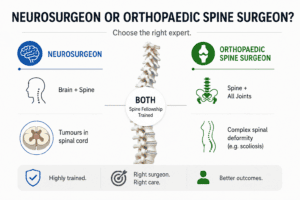
Which Surgeon Should You See for Your Spine Problem in Dubai?
Which Surgeon Should You See for Your Spine Problem in Dubai? Is a neurosurgeon always more qualified than an orthopaedic surgeon for spine conditions? No. Both pathways, when combined with
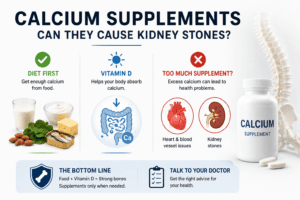
Can Calcium Supplements Cause Kidney Stones?
Can Calcium Supplements Cause Kidney Stones? If I have osteoporosis, should I take calcium supplements? This should be discussed specifically with your doctor, who will assess your individual dietary calcium

What Precision Medicine Means for Pain Management in Dubai
What Precision Medicine Means for Pain Management in Dubai How accurate is pharmacogenomic testing? Pharmacogenomic testing for well-established genetic variants, including CYP2D6 metaboliser status, is highly accurate and based on