
Does a Slipped Disc Always Need Surgery? A UAE Spine Surgeon Explains the Truth
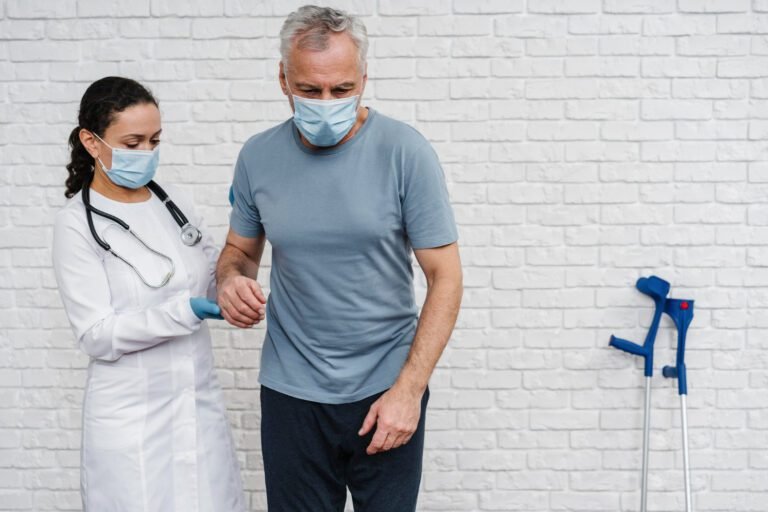
Can a slipped disc heal on its own?
Yes, and this happens more often than most patients realise. The body mounts an immune response to the herniated disc material and gradually reabsorbs it. Most patients with lumbar disc herniations who do not have significant neurological deficits recover fully without surgery.
How long does it take for a slipped disc to get better without surgery?
Most patients experience meaningful improvement within six to twelve weeks of structured conservative management. Full resolution may take longer, sometimes several months, but progressive improvement over that period is a reliable indicator that surgery is not required.
Is it safe to exercise with a slipped disc?
Yes, with appropriate guidance. Certain exercises reduce nerve tension and support recovery, while others temporarily aggravate symptoms. A physiotherapist experienced in spinal conditions will help you identify which movements are beneficial and which to avoid during the recovery phase.
Can a slipped disc come back after it has recovered?
The disc that herniated will not return to a fully normal state on imaging, but the symptoms can fully resolve. A future herniation at the same or a different level is possible if the underlying postural or mechanical risk factors are not addressed, which is why rehabilitation and lifestyle modification are important parts of the recovery process.
What is the success rate of surgery for a slipped disc?
For appropriately selected patients, microdiscectomy has good outcomes. The majority of patients experience significant relief of leg or arm pain. The key word is appropriately selected: patients who have not had an adequate trial of conservative management, or whose symptoms are not clearly attributable to the herniation on imaging, tend to have less predictable outcomes.
Should I be worried if my MRI still shows the disc prolapse after my pain has gone?
No. As Dr. Sherief Elsayed explains, the MRI is unlikely to look normal even after symptoms fully resolve. The disc does not return to its original appearance after resorption. What matters is how you feel and how you function, not the appearance of the scan.
What Is a Slipped Disc and What Does It Actually Mean?
A slipped disc, known clinically as a herniated or prolapsed intervertebral disc, refers to a condition where the soft inner material of a spinal disc pushes through a weakness or tear in its outer wall. This inner gel, called the nucleus pulposus, can then press against a nearby nerve root or the spinal cord itself, causing pain, numbness, or weakness.
The term “slipped disc” is a common phrase but a slightly misleading one. The disc does not physically slip out of place like a bar of soap. It deforms. Part of its contents protrude where they should not, and it is this protrusion that irritates the adjacent nerve tissue and creates symptoms.
Slipped discs are most common in the lower back (lumbar spine), where they typically cause leg pain that follows a nerve’s path downward, a pattern known as sciatica. They also occur in the neck (cervical spine), where they produce arm pain, tingling, or weakness. Less commonly, they affect the mid-back (thoracic spine).
For patients in the UAE who receive this diagnosis, the immediate question is often whether surgery is necessary. The honest answer, supported by both clinical evidence and the experience of Dr. Sherief Elsayed,Spine Surgeon in Dubai, is that most slipped discs do not require surgery and improve significantly with the right conservative management.
Why Do So Many People Assume Surgery Is Inevitable?
There are a few reasons why patients often expect surgery to be the answer when they are diagnosed with a slipped disc.
Imaging can look alarming. When a patient is shown an MRI with a significant disc prolapse pressing against a nerve root, the natural assumption is that something this visible must require surgical correction. But imaging findings and clinical symptoms do not always correlate neatly. A large disc prolapse on MRI can coexist with surprisingly mild symptoms, while a smaller herniation at a more critical location may cause more significant dysfunction.
Pain intensity creates urgency. Sciatica from a disc herniation can be genuinely debilitating. Patients in severe pain naturally want a definitive solution, and surgery can feel like the fastest path to relief. This is understandable, but it does not make surgery the right first step in most cases.
The word “prolapse” sounds structural and permanent. In reality, many disc herniations undergo a process of natural resorption over time. The body’s immune system recognises the prolapsed material and begins to absorb it. This is not a theory. It is a well-documented biological process, and it underpins why many patients improve substantially without any surgical intervention.
What Does the Body Actually Do With a Prolapsed Disc?
This is one of the most important and least discussed aspects of disc herniation management, and it is something Dr. Sherief Elsayed explains clearly to his patients.
“Nothing. If the patient has no neurological deficit, no weakness, bladder or bowel dysfunction, by and large it just goes away. Doesn’t mean you’re going to have leg pain forever, doesn’t mean you’re going to have back pain forever. Most of the time the body throws white cells at the prolapse, they eat their way through it, your leg pain disappears, and that’s it. It’s not ever going to look normal on the MRI scan, but that doesn’t mean it’s going to continue to cause symptoms.”
This is a clinically significant point. The disc prolapse visible on a follow-up MRI may still appear abnormal even after symptoms have fully resolved. The scan does not return to normal. The patient does. These are two different things, and conflating them leads to unnecessary anxiety and, in some cases, unnecessary surgery.
The process Dr. Sherief Elsayed is describing is macrophage-mediated resorption. The body identifies the herniated disc material as foreign, mounts an immune response, and gradually reabsorbs it. This process is most active in larger, more vascular prolapses and is well supported by evidence across both surgical and non-surgical outcome studies.
What Does Conservative Treatment for a Slipped Disc Look Like?
Conservative management of a slipped disc is not simply a matter of rest and waiting. It is an active, structured process designed to manage symptoms, protect the nerve while natural resorption occurs, and support recovery.
The main components are:
Pain management: Short-term use of anti-inflammatory medication, nerve pain medication (such as gabapentin or pregabalin), and in some cases short-term oral steroids can significantly reduce the acute phase of symptoms and allow rehabilitation to begin.
Physiotherapy: A targeted programme focusing on nerve mobility exercises, posture correction, and gradual spinal loading is central to recovery. The aim is to reduce nerve sensitisation and restore normal movement patterns without aggravating the herniation.
Activity modification: Patients do not need to stop all activity. They need to understand which positions and movements load the disc in a way that worsens nerve compression (typically flexion in lumbar herniations) and temporarily avoid those while the nerve settles.
Epidural steroid injections: When leg or arm pain is severe and unresponsive to oral medication, a targeted epidural or transforaminal injection of steroid delivers anti-inflammatory medication directly around the compressed nerve. This does not cure the herniation but can dramatically reduce the intensity of nerve pain and make rehabilitation possible.
Education and reassurance: Understanding that the disc can and often does resorb naturally, that the pain is not a signal of ongoing structural damage, and that recovery is the expected outcome for most patients plays a meaningful role in managing fear and promoting appropriate activity.
How Long Should Conservative Treatment Be Given?
There is no fixed answer, because every patient’s situation differs. However, a reasonable general framework is that a six-to-twelve week period of well-structured conservative management should be the minimum before surgery is considered in the absence of red flags.
Dr. Sherief Elsayed, Spine Doctor in Dubai, structures this assessment around whether the patient is progressing. If pain is gradually reducing over weeks, if function is slowly improving, and if neurological function is stable, then the conservative pathway should continue. If pain is not changing despite adequate treatment, or if function is deteriorating, the timeline for review shortens.
When Does a Slipped Disc Actually Need Surgery?
Surgery is not off the table. There are specific circumstances in which it is clearly indicated and where delaying it would not be in the patient’s interest.
Surgery is recommended or urgently required when:
- Neurological deterioration is progressing: If muscle weakness is increasing, if the patient is losing the ability to perform specific movements, or if reflexes are declining, surgery is needed to decompress the nerve before permanent damage occurs.
- Cauda equina syndrome is present: This is a spinal emergency. Loss of bladder or bowel control, numbness in the groin or inner thighs, or bilateral leg weakness following a disc herniation requires emergency surgical decompression without delay.
- Conservative treatment has failed after an adequate trial: If a patient has undergone a genuine, well-structured period of conservative management over several months without meaningful improvement, surgical decompression becomes a reasonable option to restore quality of life.
- Pain is functionally disabling with no signs of improvement: Where pain severity is preventing any rehabilitation, is severely affecting a patient’s ability to work, sleep, or manage daily activities, and has not responded to injections or medication, surgery may be considered earlier than the standard timeline.
What surgery for a lumbar disc herniation typically involves is a microdiscectomy: a small incision, a surgical microscope, removal of the herniated fragment pressing on the nerve, and preservation of as much of the disc as possible. For a full overview of surgical and non-surgical pathways, see Herniated Disc – Diagnosis & Treatment in Dubai. Recovery is generally faster than patients expect, and outcomes for appropriately selected patients are excellent.
The Role of Imaging: What Your MRI Can and Cannot Tell You
One of the most consistent messages in Dr. Sherief Elsayed’s clinical approach is that a scan is not a diagnosis. This is particularly relevant to slipped disc management, where imaging findings are frequently cited as the reason surgery is being recommended when clinical symptoms alone may not justify it.
What MRI can tell you:
- The level and location of the disc herniation
- Which nerve root or structures appear compressed
- Whether there are any additional findings such as spinal stenosis or instability
- Whether red flag pathology such as a tumour or infection is present
What MRI cannot tell you:
- How much of the patient’s pain is actually coming from that disc
- Whether the disc will resorb naturally over the coming months
- Whether the patient’s function will improve with conservative management
- Whether surgery will be more effective than non-surgical treatment for this specific patient
Treating a scan rather than a patient is one of the most common reasons for poor surgical outcomes in spine care. The decision to operate must be based on the combination of what the imaging shows, what the patient clinically demonstrates, and how they have responded to conservative management.
We have covered this in detail in Should I Get an MRI or X-Ray for Back Pain?, which walks through how diagnostic imaging is used appropriately in spinal conditions.
Slipped Disc in the UAE: Patterns Worth Knowing
The way patients in Dubai and across the UAE use their bodies and their work environments contributes meaningfully to both the incidence of disc herniations and the way they recover.
Desk-based work culture: Long hours of sustained sitting, particularly with a forward-flexed lumbar posture, increases intradiscal pressure significantly. This is one of the most consistent risk factors for lumbar disc herniation in a working-age population.
Gym and sport injuries: Heavy lifting with improper technique, particularly squats and deadlifts performed with a rounded lower back, places sudden high compressive and shear loads on the disc and can trigger an acute herniation in an otherwise young and active patient.
Driving posture: Long commutes and extended time behind the wheel combine lumbar flexion with road vibration and asymmetric loading, all of which stress the lumbar discs.
Return to activity after rest: A common pattern in UAE patients is a cycle of acute pain, complete rest, partial recovery, and then re-injury on return to normal activity. This cycle prevents the structured rehabilitation that supports full recovery and can prolong the overall timeline significantly.
Smoking: Nicotine reduces blood supply to the disc, accelerating degeneration and impairing the body’s ability to mount the immune response needed for natural resorption. Why Smoking Prevents Spine Fusion Healing (Why Smoking Prevents Spine Fusion Healing) covers this in detail and is relevant beyond surgical patients.
Table of Contents
Recent Articles
How Dr. Sherief Elsayed Spots Spinal Tumours Before Paralysis Sets In
How Dr. Sherief Elsayed Spots Spinal Tumours Before Paralysis Sets In If I have no symptoms, why would a tumour on my spine need urgent treatment? The absence of symptoms
Why a Custom 3D Scanned Brace Works Better for Scoliosis in Dubai
Why a Custom 3D Scanned Brace Works Better for Scoliosis in Dubai Is 3D scanning for scoliosis braces widely available in Dubai? 3D scanning for brace manufacture is available at
What Happens When a Spine Cage Is Placed in the Wrong Position?
What Happens When a Spine Cage Is Placed in the Wrong Position? How is cage malpositioning diagnosed? Post-operative imaging is essential. Plain X-rays can identify obvious cage malpositioning. CT scanning