
How Dr. Sherief Elsayed Uses Nerve Blocking to Treat Facet Joint Pain in Dubai

What is the difference between a diagnostic facet injection and a denervation?
A diagnostic injection uses local anaesthetic to temporarily block pain from the facet joint and confirm it is the source of symptoms. Denervation uses a radiofrequency current to disrupt the nerve supply more durably, providing long-term pain relief. The diagnostic injection must always come first.
Does facet joint denervation require general anaesthesia?
No. The procedure is performed under local anaesthesia with light sedation for comfort. Patients are typically able to go home on the same day.
How soon will I feel the benefit?
Most patients notice progressively improving pain levels within two to four weeks. A temporary increase in soreness in the first week or two is normal as the nerve responds to treatment. This settles quickly in the majority of cases.
Can the procedure be repeated?
Yes. Because the nerve can slowly regenerate over time, symptoms may gradually return after one to three years. The procedure can safely be repeated when this occurs, as long as a fresh diagnostic injection confirms the facet joints remain the primary pain source.
Will I need physiotherapy after denervation?
Yes. Denervation removes the pain signal but does not address the underlying mechanical factors that stress the facet joints. Using the pain-free window to build better posture and muscle support is essential for lasting improvement.
Is facet joint pain the same as a slipped disc?
No. Facet joint pain comes from the small joints at the back of the spine. A herniated or slipped disc involves the cushioning structures between the vertebrae. They can occur together, and distinguishing between them requires careful clinical assessment and targeted diagnostic injections. A Sciatica Doctor in Dubai can help determine which structure is driving leg pain symptoms
What Is Facet Joint Pain and Why Is It So Often Missed?
Facet joint pain refers to discomfort arising from the small paired joints that connect the vertebrae at the back of the spine. These joints, known medically as zygapophyseal joints, are present at every spinal level from the neck to the lower back. Their role is to guide and limit spinal movement while providing stability as you bend, rotate, and extend.
When these joints become worn, inflamed, or arthritic, they can become a significant and persistent source of pain. What makes facet joint pain particularly difficult to identify is that it does not usually follow the clear nerve radiation pattern associated with a disc herniation. It tends to produce a deep ache localised to the neck or back, sometimes referring into the shoulders, buttocks, or hips without the telltale leg or arm shooting pain that points unmistakably to nerve compression.
As a result, many patients go undiagnosed for months or longer. They are told their scans look relatively normal, or that no specific cause can be identified, when in fact their facet joints are the primary source of ongoing daily discomfort. For patients in the UAE seeking clarity after a long period of unexplained spinal pain, a structured diagnostic approach is the only way to confirm or exclude the facet joints as the problem.
Dr. Sherief Elsayed, a Spine Doctor in Dubai with over twenty years of specialist spinal experience, uses a deliberate two-stage process to do exactly that.
What Causes Facet Joints to Become Painful?
Facet joint pain is rarely the result of a single event. It typically develops over time and is influenced by a combination of structural, mechanical, and lifestyle factors.
Common causes include:
- Age-related wear and arthritis within the joint surfaces
- Disc height loss at the same spinal level, which forces the facet joints to carry a disproportionate share of the load
- Repetitive mechanical stress from sustained poor posture, prolonged sitting, or heavy physical work
- Whiplash injuries or road traffic accidents, which are a frequent cause of cervical facet joint damage
- Spinal instability or hypermobility at a particular segment
- Post-surgical changes at segments adjacent to a prior fusion
How patients typically describe the pain:
- A persistent deep ache in the neck or lower back
- Stiffness that is worst on waking or after sitting for an extended period
- Pain that worsens when bending backwards or rotating the spine
- Tenderness when pressing directly over the affected spinal level
- Referred discomfort into the buttocks or down the upper thigh (lumbar) or into the shoulders and upper arms (cervical), without the sharpness or electrical quality of nerve root pain
How Is Facet Joint Pain Diagnosed?
This is where careful clinical thinking separates a good outcome from a prolonged and frustrating diagnostic journey. Imaging alone cannot confirm facet joint pain as the source of a patient’s symptoms. Arthritic changes visible on an MRI can be present in patients with no pain whatsoever, while patients with significant facet-related pain may have relatively modest changes on their scan.
The only reliable method to confirm the facet joints as the pain generator is a diagnostic facet joint injection.
What the diagnostic process involves:
- A small volume of local anaesthetic is injected precisely into or around the suspected facet joint, guided by fluoroscopic X-ray or ultrasound imaging
- The patient is then asked to rate their pain level and perform the movements that normally provoke symptoms
- If there is significant or complete pain relief following the injection, the targeted joint is confirmed as the primary pain source
- If there is no meaningful change, the facet joint at that level can be excluded and other structures must be investigated
Dr. Sherief Elsayed, Consultant Spine Surgeon in Dubai, performs this diagnostic step as a deliberate clinical discipline before recommending any longer-term treatment. It eliminates guesswork and ensures that any subsequent intervention is aimed at the confirmed source, not a presumed one.
What Is Facet Joint Denervation?
Once the facet joints have been confirmed as the pain source through a positive diagnostic injection, the next option Dr. Sherief Elsayed offers is facet joint denervation.
Facet joint denervation, also known as radiofrequency ablation (RFA) or medial branch neurotomy, is a minimally invasive procedure that interrupts the nerve supply to the painful facet joint. It does not remove the joint or alter its structure in any way. It prevents the joint from continuing to send pain signals to the brain.
Dr. Sherief Elsayed describes what this involves:
“I’ve confirmed that his facet joints are the problem. So the next thing I’ve offered him is a facet joint denervation. What that means is it is also an injection, but I have passed an electric current down onto the facet joint which disrupts its nerve supply, stops sending pain signals up to the brain.”
The procedure step by step:
- The patient lies comfortably on a procedure table with fluoroscopic imaging available
- A fine needle is positioned precisely at the medial branch nerve, the small nerve that carries pain signals from the facet joint to the brain
- A radiofrequency current is passed through the needle, heating the tip to a carefully controlled temperature
- This heat disrupts the nerve tissue and stops it from transmitting pain
- The process is repeated at each level where diagnostic injections have confirmed symptomatic facet joints
The procedure is performed under local anaesthesia, usually with light sedation for comfort. Most patients go home the same day.
What Results Can Patients Realistically Expect?
Results from facet joint denervation are measured primarily by how long patients remain free of their previous pain and how significantly their daily function improves.
Dr. Sherief Elsayed sets a clear and honest benchmark for what constitutes a successful outcome:
“We say it is a good result if the patient is pain-free for a year, but I have patients who are pain-free for much longer than that.”
What clinical experience and the published evidence show:
- Most patients with confirmed facet joint pain achieve significant and meaningful pain relief following denervation
- The procedure typically takes two to four weeks to reach full effect as the nerve tissue responds
- Relief lasting one to two years is considered a good result; durations of three years or more are not uncommon
- Because the medial branch nerve can slowly regenerate over time, the procedure can be safely repeated if symptoms return
- Results are most durable when patients use the pain-free window to engage in physiotherapy and address the postural and lifestyle factors that stress the facet joints
It is important to be clear about what denervation does and does not do. It does not cure the underlying arthritis or reverse the wear in the facet joint. It reliably stops pain signals from that joint for a meaningful period, which allows patients to rehabilitate, return to normal function, and improve their quality of life without being limited by constant pain.
How Does This Fit Into a Conservative-First Treatment Philosophy?
Facet joint denervation sits within a broader treatment philosophy that Dr. Sherief Elsayed applies consistently. It is not a first-line response to back pain. It is a targeted intervention offered after a structured conservative phase has not provided adequate relief and after diagnostic confirmation has identified the specific pain source.
The typical pathway looks like this:
- Clinical assessment, including a full history and physical examination
- Appropriate imaging to exclude other significant structural problems
- A structured course of physiotherapy, activity modification, and anti-inflammatory treatment
- If insufficient relief: diagnostic facet joint injection to confirm or exclude the joints as the pain source
- If diagnostic injection confirms facet involvement and provides temporary relief: radiofrequency denervation
- Ongoing physiotherapy following denervation to consolidate the benefit and address underlying mechanical factors
This step-by-step approach reflects the principle that pain is a symptom requiring a confirmed diagnosis, not a target to be guessed at. To seek this kind of structured assessment, patients in the UAE can consult a UAE Spine Surgeon who follows a root-cause diagnostic pathway.
Is Facet Joint Denervation Safe?
Facet joint denervation has a well-established safety profile when performed by an experienced spine surgeon using image guidance. Serious complications are uncommon.
What patients should know:
- Temporary soreness at the injection site is normal for a few days after the procedure
- Some patients experience a brief increase in pain in the first one to two weeks as the nerve responds to the thermal treatment; this typically settles
- In rare cases, temporary altered sensation near the treated area may occur
- The procedure does not affect the structural stability of the spine or the function of surrounding nerves that control movement
Patients on blood-thinning medication, with active local infection, or with certain systemic conditions will require an individual assessment before proceeding. Dr. Sherief Elsayed reviews each patient’s full health profile as part of the consultation process.
Facet Joint Pain and Life in the UAE
Several patterns of daily life in Dubai and across the UAE place consistent stress on the facet joints and make this a commonly encountered presentation in clinical practice.
Long periods of driving: Dubai’s road infrastructure means many residents spend considerable time seated behind the wheel. Sustained driving posture, particularly with lumbar flexion and the vibration of the road, loads the facet joints without recovery time.
Extended desk work: Office environments, laptop use on low surfaces, and screens positioned below eye level all promote a forward head posture that chronically overloads the cervical facet joints. Patients who spend eight to ten hours seated in this position daily are placing their neck joints under continuous stress.
High-impact gym training: Extension-loaded movements such as heavy deadlifts, overhead pressing, and hyperextension exercises can aggravate already sensitised lumbar facet joints.
Road traffic accidents: Rear-end collisions and sudden deceleration injuries are a well-recognised cause of cervical facet joint damage. Many patients who present with persistent neck pain months after such an incident have ongoing facet joint involvement that has not been identified or properly treated.
If you are exploring this further, Should I Get an MRI or X-Ray for Back Pain? is a useful guide to how imaging and clinical assessment work together in spinal pain diagnosis.
Table of Contents
Recent Articles
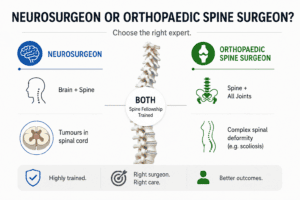
Which Surgeon Should You See for Your Spine Problem in Dubai?
Which Surgeon Should You See for Your Spine Problem in Dubai? Is a neurosurgeon always more qualified than an orthopaedic surgeon for spine conditions?No. Both pathways, when combined with dedicated

Can Calcium Supplements Cause Kidney Stones?
Can Calcium Supplements Cause Kidney Stones? If I have osteoporosis, should I take calcium supplements? This should be discussed specifically with your doctor, who will assess your individual dietary calcium

What Precision Medicine Means for Pain Management in Dubai
What Precision Medicine Means for Pain Management in Dubai How accurate is pharmacogenomic testing? Pharmacogenomic testing for well-established genetic variants, including CYP2D6 metaboliser status, is highly accurate and based on