
How Gaming Ruins Your Posture: Dr. Sherief Elsayed UAE Explains
How many hours of gaming per day is safe for my spine?
There’s no absolute safe number that applies to everyone, but Dr. Sherief Elsayed recommends taking breaks every 30 to 60 minutes regardless of how long you game. The key is movement and posture variation rather than total gaming time. If you game for several hours, make sure you have proper ergonomics, take regular breaks to stand and stretch, and maintain good posture throughout.
Can gaming really cause permanent spine damage?
Prolonged poor posture during gaming can contribute to conditions like disc degeneration, chronic muscle imbalances, and postural abnormalities. However, these develop over years of sustained poor habits. The good news is that with proper care, posture correction, and lifestyle changes, most gaming-related spine problems can be prevented or managed effectively without permanent damage.
What type of gaming chair is best for spine health in Dubai?
Look for a chair with adjustable lumbar support that maintains the natural curve of your lower back, adjustable armrests to keep your elbows at 90 degrees, adjustable height so your feet rest flat on the floor, and a headrest that supports your neck in a neutral position. Expensive gaming chairs aren’t always necessary. A good office chair with proper adjustability often works just as well.
Should I see a doctor for mild gaming-related back pain?
Mild pain that improves with rest, stretching, and ergonomic changes usually doesn’t require immediate medical attention. However, if pain persists for more than a few weeks despite these measures, if it’s getting worse, if it’s affecting your daily activities, or if you experience any red flag symptoms like numbness, weakness, or changes in bladder or bowel control, you should see a spine specialist like Dr. Sherief Elsayed for proper assessment.
Can children and teenagers develop spine problems from gaming?
Yes, children and teenagers are particularly vulnerable to posture problems from gaming because their spines are still developing. Young gamers in the UAE should be encouraged to maintain good posture, take frequent breaks, engage in physical activities outside of gaming, and have their gaming setups properly adjusted to their size. Parents should monitor gaming duration and encourage balanced activities.
Will physiotherapy really help my gaming-related neck pain?
In most cases, yes. Physiotherapy is highly effective for addressing the muscle imbalances, joint stiffness, and movement dysfunction that cause gaming-related pain. A qualified physiotherapist can teach you specific exercises to strengthen weak postural muscles, stretch tight areas, and improve your overall body mechanics. Dr. Sherief Elsayed frequently refers patients to physiotherapy as the first line of treatment, and most see significant improvement.
Gaming has become one of the most popular activities in the UAE, with millions of people spending hours playing video games on consoles, PCs, and mobile devices. While gaming can be entertaining and even beneficial for cognitive skills, it comes with a hidden cost that many players don’t notice until pain strikes: poor posture and spine problems.
Dr. Sherief Elsayed, a senior UK-trained spinal surgeon practicing in Dubai, sees an increasing number of patients whose neck, back, and shoulder pain stems directly from prolonged gaming sessions. “The human spine was not designed to stay in fixed positions for hours,” he explains. “When we game, we often lean forward, round our shoulders, and crane our necks without realizing the strain we’re putting on our spinal structures.”
This article explores how gaming affects your posture, what happens to your spine during long gaming sessions, and most importantly, what you can do to protect yourself while still enjoying your favorite games.
What happens to your spine when you game for hours?
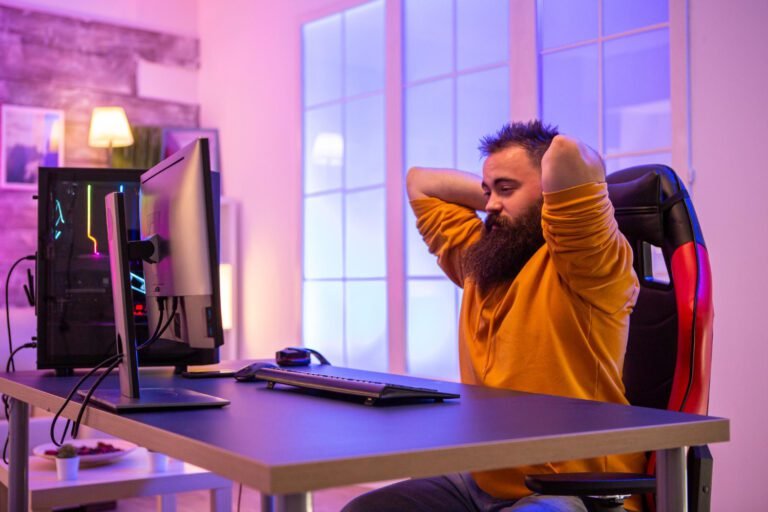
When you sit down to game, your body naturally shifts into a forward-leaning position. Your eyes focus on the screen, your shoulders round forward, your neck juts out, and your lower back loses its natural curve. This posture creates several problems:
Neck strain: Your head weighs about 5 to 6 kilograms. When you tilt it forward by just 15 degrees to look at a screen, the effective weight on your neck increases to about 12 kilograms. At 30 degrees, it jumps to 18 kilograms. At 45 degrees, which is common during gaming, your neck is supporting nearly 22 kilograms of pressure. This constant strain affects the cervical spine, the delicate structures in your neck.
Shoulder tension: Rounded shoulders while gaming cause the muscles around your shoulder blades to stretch and weaken, while the chest muscles tighten. This imbalance creates a hunched appearance and can lead to chronic pain between the shoulder blades.
Lower back stress: Sitting for extended periods, especially without proper lumbar support, flattens the natural curve of your lower back. This puts excessive pressure on the lumbar discs, the cushions between your vertebrae. Over time, this can contribute to disc degeneration, bulging discs, or even herniated discs.
Reduced blood flow: Staying in one position restricts blood circulation, which means your muscles and spinal tissues receive less oxygen and nutrients. This leads to stiffness, fatigue, and increased pain.
Dr. Sherief Elsayed emphasizes that “pain is a symptom, not a diagnosis.” When gamers come to his clinic in Dubai complaining of neck or back pain, he doesn’t just look at the scan. He asks about their gaming habits, their setup, how long they play, and what position they maintain. “Understanding the root cause is essential. Sometimes the solution isn’t surgery or even medication. It’s changing how you interact with your environment.”
Why do gamers develop forward head posture?
Forward head posture, often called “tech neck” or “gamer neck,” has become extremely common in the UAE and worldwide. This condition occurs when your head shifts forward from its natural position, which should be directly over your shoulders.
During gaming, several factors contribute to this problem:
Screen position: If your monitor or television is too low, you naturally tilt your head down to see it. Mobile gamers often look down at their phones for hours, creating even more severe forward head posture.
Concentration and immersion: When you’re focused on a game, you unconsciously lean toward the screen to see better or react faster. This forward lean becomes habitual.
Lack of awareness: Most gamers don’t realize their posture is poor until pain develops. By that time, the muscles and ligaments have already adapted to the incorrect position, making it harder to correct.
Weak postural muscles: Modern lifestyles involve very little activity that strengthens the muscles responsible for good posture. Without strong upper back and neck muscles, maintaining proper alignment becomes difficult.
The consequences of forward head posture go beyond pain. It can cause headaches, reduce lung capacity, contribute to jaw problems, and even affect your mood and energy levels. Dr. Sherief Elsayed notes that “we treat the person, not the scan.” Even if imaging shows some disc changes or arthritis, the real solution often involves addressing posture and movement patterns rather than rushing into invasive treatments.
How does sitting for long gaming sessions affect your lower back?
Your lower back, or lumbar spine, bears significant stress during prolonged sitting. Unlike standing or walking, which allow your spine to move and maintain its natural curves, sitting fixes your spine in one position.
When you sit to game, especially on a couch or gaming chair without proper support, your pelvis tilts backward. This tilts your lumbar spine out of its healthy curved position and into a flattened or even rounded position. The result is increased pressure on your lumbar discs.
Research shows that sitting can put up to 40% more pressure on your lower back discs compared to standing. Add poor posture and hours of immobility, and you have a recipe for back problems.
Common lower back problems Dr. Sherief Elsayed sees in gamers include:
Mechanical back pain: Pain caused by strain on the muscles, ligaments, and joints of the lower back. This is the most common type and usually responds well to physiotherapy, posture correction, and activity modification.
Disc bulges and herniations: When the soft inner material of a spinal disc pushes through its outer layer, it can press on nerves, causing pain that radiates down the leg, known as sciatica.
Facet joint pain: The small joints at the back of your spine can become irritated from sustained poor posture and lack of movement.
Muscle imbalances: Weak core muscles and tight hip flexors, both common in people who sit for hours, contribute to lower back instability and pain.
Dr. Sherief Elsayed’s approach always starts with understanding the full picture. “Every spine is different. Every treatment should be, too,” he says. For gamers with back pain, he assesses their gaming setup, their daily routine, their exercise habits, and performs a thorough physical examination before recommending any treatment.
What are the early warning signs that gaming is hurting your spine?
Many gamers ignore early symptoms until they become severe. Dr. Sherief Elsayed encourages UAE residents to pay attention to these warning signs:
Stiffness after gaming: If you feel stiff when you stand up after a gaming session, your body is telling you that position was held too long.
Headaches: Tension headaches at the base of your skull or around your temples can result from neck strain and forward head posture.
Shoulder and upper back pain: A burning sensation or ache between your shoulder blades indicates muscle strain from poor posture.
Lower back discomfort: Aching in your lower back during or after gaming suggests your lumbar spine is under stress.
Numbness or tingling: If you experience numbness or tingling in your arms, hands, legs, or feet, this could indicate nerve compression and requires immediate medical assessment.
Reduced range of motion: Difficulty turning your head, bending forward, or twisting could signal joint stiffness or muscle tightness.
While most of these symptoms can be managed with conservative care, Dr. Sherief Elsayed warns that certain red flags require urgent evaluation:
- Loss of bladder or bowel control, which could indicate cauda equina syndrome, a surgical emergency
- Numbness in your inner thighs or groin area
- Progressive weakness in your arms or legs
- Severe pain following trauma or a fall
“Most back pain is manageable, but some warning signs must be assessed urgently,” Dr. Sherief Elsayed stresses. If you experience any of these red flags, seek medical attention immediately.
How can you set up an ergonomic gaming station to protect your spine?
The good news is that you can continue gaming while protecting your spine. Dr. Sherief Elsayed recommends these ergonomic adjustments for gamers in Dubai and across the UAE:
Monitor height: Your screen should be at eye level or slightly below. You should be able to look straight ahead without tilting your head up or down. If you use a laptop, consider a laptop stand with an external keyboard.
Seating position: Choose a chair with good lumbar support that maintains the natural curve of your lower back. Your feet should rest flat on the floor, and your knees should be at about a 90-degree angle. Avoid gaming on a bed or couch without back support.
Controller or keyboard position: Keep your arms relaxed at your sides with your elbows at about 90 degrees. Your wrists should be in a neutral position, not bent up or down.
Distance from screen: Sit at arm’s length from your monitor. This prevents you from leaning forward and straining your neck.
Take regular breaks: Follow the 20-20-20 rule: every 20 minutes, look at something 20 feet away for 20 seconds. Stand up and move around every hour. Even a brief walk around your room helps.
Stretch regularly: Simple neck rolls, shoulder shrugs, and back extensions can counteract the effects of sitting. Dr. Sherief Elsayed often recommends specific stretches based on each patient’s needs.
“Surgery is not the first step. It is the right step only when necessary,” Dr. Sherief Elsayed reminds patients. For most gamers with posture-related pain, the solution involves ergonomic changes, physiotherapy, and lifestyle modifications rather than medical procedures.
What exercises can gamers do to improve posture and prevent pain?
Dr. Sherief Elsayed emphasizes that prevention is always better than treatment. He recommends these simple exercises for gamers:
Chin tucks: Sit or stand tall. Gently pull your chin straight back, creating a double chin. Hold for 5 seconds and repeat 10 times. This strengthens the deep neck muscles that support proper head position.
Shoulder blade squeeze: Sit upright and squeeze your shoulder blades together as if trying to hold a pencil between them. Hold for 5 seconds and repeat 10 times. This strengthens your upper back muscles.
Cat-cow stretch: On your hands and knees, arch your back up like a cat, then let it sag down like a cow. This mobilizes your entire spine and relieves stiffness.
Hip flexor stretch: Kneel on one knee with the other foot forward. Gently push your hips forward to stretch the front of your hip. Hold for 30 seconds on each side. This counteracts the tight hip flexors from prolonged sitting.
Core strengthening: Strong core muscles support your lower back. Simple exercises like planks, bird dogs, and bridges help build core stability.
Wall angels: Stand with your back against a wall, arms up like goal posts. Slowly slide your arms up and down the wall, keeping your back and arms touching the wall. This improves shoulder mobility and posture.
These exercises take just 10 to 15 minutes daily but can make a significant difference in preventing pain. Dr. Sherief Elsayed often refers patients to physiotherapists who specialize in posture correction and can create personalized exercise programs.
When should gamers in the UAE see a spine specialist?
Dr. Sherief Elsayed follows a clear treatment pathway that emphasizes conservative care first:
Step 1 – Conservative care: For most gamers with posture-related pain, the first approach includes physiotherapy, ergonomic adjustments, posture correction, anti-inflammatory medications if needed, and activity modification. Most patients improve significantly with these measures.
Step 2 – Minimally invasive options: If conservative care doesn’t provide adequate relief after several weeks, and if diagnostic tests show specific problems like a herniated disc pressing on a nerve, minimally invasive procedures may be considered. These include injections for targeted pain relief or endoscopic procedures to address disc problems with minimal tissue disruption.
Step 3 – Advanced surgical options: Surgery is reserved for cases with clear structural problems that don’t respond to conservative treatment, or when red flag symptoms indicate urgent intervention is needed. Dr. Sherief Elsayed specializes in advanced techniques including robot-assisted spine surgery, disc replacement, and spinal fusion when appropriate.
“We treat the person, not the scan,” Dr. Sherief Elsayed explains. “An MRI might show a bulging disc, but that doesn’t automatically mean surgery. Many people have disc bulges with no symptoms at all. The key is correlating the imaging findings with your symptoms, your physical exam, and your lifestyle factors.”
If you’re a gamer in Dubai or elsewhere in the UAE experiencing persistent pain despite making ergonomic changes and trying exercises, it’s time to seek professional assessment. Dr. Sherief Elsayed’s comprehensive evaluation includes a detailed history of your gaming habits, a thorough physical examination, and appropriate imaging studies only when needed.
Expert insights from Dr. Sherief Elsayed on gaming and spine health
Dr. Sherief Elsayed brings over 25 years of medical experience and 20 years focused on spine and orthopaedics to his practice in the UAE. His UK training, including his fellowship at the Centre for Spinal Studies & Surgery in Nottingham and his role as Lead Clinician for Spinal Surgery at Brighton & Sussex University Hospitals, gives him deep expertise in both conservative and surgical spine care.
What sets Dr. Sherief Elsayed apart is his holistic, root-cause approach. When gamers come to his clinic, he doesn’t just prescribe medication or recommend surgery. He takes time to understand the complete picture: How many hours do you game each day? What does your setup look like? What’s your posture like during gaming? What other activities do you do? Do you exercise? How’s your sleep?
This comprehensive assessment often reveals that the pain isn’t just about gaming but about overall lifestyle patterns. Dr. Sherief Elsayed creates personalized treatment plans because, as he says, “every spine is different. Every treatment should be, too.”
For young gamers and esports enthusiasts in the UAE, Dr. Sherief Elsayed emphasizes prevention. “It’s much easier to maintain good habits than to fix problems later,” he notes. He encourages gamers to view spine health as essential to their gaming performance, not as an obstacle to it. Good posture, regular breaks, and proper ergonomics actually improve focus, reaction time, and endurance during gaming sessions.
Conclusion
Gaming doesn’t have to ruin your posture or damage your spine. With awareness, proper ergonomics, regular movement, and targeted exercises, you can enjoy your favorite games while protecting your spinal health.
Dr. Sherief Elsayed’s message to gamers in Dubai and the UAE is clear: pay attention to your body’s warning signs, make smart choices about your gaming setup, and seek professional help when needed. Most posture-related pain responds well to conservative treatment, especially when addressed early.
Remember that pain is your body’s way of signaling that something needs to change. Don’t ignore it, but also don’t panic. With the right approach, most gaming-related spine problems can be resolved without surgery, allowing you to return to the games you love with better posture and less pain.
Table of Contents
Recent Articles

Why Eight People Were Needed for One Spine Surgery in Dubai
Why Eight People Were Needed for One Spine Surgery in Dubai Does every spinal surgery require exactly eight team members? No, as Dr. Sherief Elsayed explains directly, the specific team

Three Spine Surgery Myths a Dubai Surgeon Wants You to Forget
Three Spine Surgery Myths a Dubai Surgeon Wants You to Forget Is it really safe to walk on the same day as spine surgery? Yes, for the majority of modern

Why Osteoporosis Is Called the Silent Disease in the UAE
Why Osteoporosis Is Called the Silent Disease in the UAE If osteoporosis doesn’t cause pain, how would I know if I needed a DEXA scan? Given the entirely silent nature