
Why Sitting Ruins Your Spine: Dr. Sherief Elsayed Explains Disc Damage
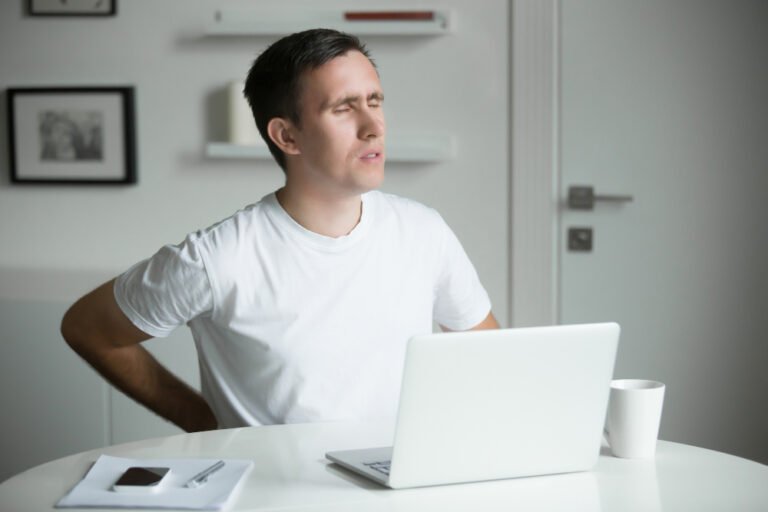
Table of Contents
Can sitting really cause permanent disc damage?
How long can I sit before damaging my discs?
Is standing all day better than sitting?
Can exercise reverse disc damage from sitting?
Do expensive ergonomic chairs prevent disc problems?
Should I see a doctor for minor back stiffness after sitting?
In Dubai and across the UAE, thousands of professionals spend 8 to 12 hours each day sitting at desks, in meetings, or during long commutes. What seems like a harmless position is actually one of the most damaging things you can do to your spine. Dr. Sherief Elsayed, a senior UK-trained spinal surgeon with over 20 years of experience, explains why prolonged sitting creates such serious problems for your discs and what you can actually do about it.
Why Does Sitting Damage Your Spine More Than Standing?
Your spine wasn’t designed to stay still. It evolved for movement, bending, twisting, and supporting your body through a range of activities. When you sit, especially for extended periods, you fundamentally change how forces act on your spine.
Sitting compresses your spine by approximately 30% more than standing. This dramatic increase in pressure has profound effects on the delicate structures between your vertebrae, particularly the intervertebral discs.
“Pain is a symptom, not a diagnosis,” explains Dr. Sherief Elsayed. “When patients come to me with back pain from desk work, they often think the solution is a better chair or a standing desk. But we need to understand what’s happening inside the spine to address the root cause.”
In the UAE’s business culture, where long working hours and back-to-back meetings are common, this information becomes especially relevant. Your career shouldn’t cost you your spine health.
What Happens Inside Your Discs When You Sit?
To understand why sitting is so damaging, you first need to know what your spinal discs do and how they work.
Your spine has 24 vertebrae (individual bones) stacked on top of each other. Between most of these bones sits an intervertebral disc, a remarkable structure that acts as both shock absorber and spacer. Each disc has two main parts:
The annulus fibrosus: This is the tough outer layer, made of concentric rings of fibrous tissue. Think of it like the sidewall of a tire, strong and resilient when healthy.
The nucleus pulposus: This is the jelly-like center, which contains water and special proteins. It acts like a water balloon, distributing pressure evenly across the disc.
When you stand or lie down, these discs maintain their shape and health relatively well. But when you sit, everything changes.
How Does Sitting Position Shift Pressure to Your Disc’s Back Wall?
The biomechanics of sitting create a perfect storm for disc damage. Here’s what happens step by step:
When you sit, your pelvis tilts backward slightly. This pelvic tilt causes your lower back to flatten out, reducing or eliminating the normal inward curve (lordosis) of your lumbar spine. This flattening is called flexion, and it shifts pressure dramatically.
In a standing position, pressure distributes fairly evenly across the entire disc. But sitting, especially with a forward slouch, forces most of the pressure toward the back wall of the disc. Over time, this concentrated pressure creates small cracks or fissures in the tough outer layer.
“Every spine is different. Every treatment should be, too,” says Dr. Sherief Elsayed. “But the biomechanics of sitting affect everyone the same way. The question is how much damage occurs before symptoms appear.”
Think of your disc like a tube of toothpaste. When you squeeze it evenly from all sides, it stays intact. But if you repeatedly press hard on one small spot, eventually the tube will weaken and the toothpaste will squeeze through. That’s essentially what happens to your disc’s jelly-like center when sitting creates constant pressure on the back wall.
What Are the Stages of Disc Damage From Prolonged Sitting?
Disc damage from sitting doesn’t happen overnight. It progresses through predictable stages, and understanding these stages helps you recognize problems early.
Stage 1: Disc Bulge
The earliest stage of damage is a disc bulge. The repeated pressure on the back wall weakens the outer fibers, causing the disc to bulge outward slightly, like a tire with a weak spot developing.
At this stage, you might notice:
- Stiffness after sitting for long periods
- Mild lower back discomfort that improves when you stand or walk
- Tightness in your lower back muscles
- Discomfort that comes and goes
Many people ignore these early warning signs, attributing them to “getting older” or “working too hard.” But these symptoms indicate your discs are under strain.
Stage 2: Disc Protrusion
If the pressure continues, the disc bulge progresses to a protrusion. Now the weakened area of the outer layer bulges more significantly, and the jelly-like center starts pushing into this weak zone.
Symptoms intensify:
- More consistent back pain, especially after sitting
- Pain that takes longer to improve when you change positions
- Occasional shooting pain down your leg
- Muscle spasms in your lower back
Stage 3: Disc Herniation
A herniated disc occurs when the outer layer finally tears, allowing the jelly-like nucleus to escape through the crack. This material can press against nearby nerves, causing significant symptoms.
You’ll notice:
- Sharp, severe back pain
- Radiating pain down your leg (sciatica)
- Numbness or tingling in your leg or foot
- Weakness in your leg muscles
- Pain that’s worse with sitting, bending, or lifting
Stage 4: Disc Extrusion
The most severe stage happens when the herniated material completely separates from the disc and moves into the spinal canal. This is called an extrusion or sequestration.
Symptoms can be severe:
- Intense pain that doesn’t respond to usual treatments
- Significant leg weakness
- Difficulty walking
- In severe cases, loss of bladder or bowel control (a medical emergency)
“Surgery is not the first step. It is the right step only when necessary,” emphasizes Dr. Sherief Elsayed. “Most disc problems, even herniations, can be treated without surgery. But prevention is always better than treatment.”
Why Does the pH Inside Your Disc Change When You Sit Too Long?
Here’s a fascinating aspect of disc health that many people don’t know about: your discs need movement to stay healthy at a chemical level.
Intervertebral discs don’t have their own blood supply. Instead, they rely on a process called imbibition, which is basically absorption of nutrients from surrounding tissues through movement and pressure changes.
When you move, walk, or change positions, you create pressure changes that pump nutrients into your discs and waste products out. It’s like squeezing and releasing a sponge, the motion helps exchange fluids.
Movement helps improve the health of your discs by promoting better circulation of fluids and nutrients. When you sit for extended periods, this pumping action stops. The disc becomes more acidic as waste products accumulate and the pH drops.
An acidic environment inside the disc makes it harder for the cells to maintain the disc structure. The proteins that give the disc its water-holding capacity start breaking down. The disc dehydrates slightly, loses height, and becomes less able to distribute pressure evenly.
This creates a vicious cycle: sitting damages the disc, which makes it less able to handle the pressure of sitting, which causes more damage.
Taking brief standing breaks can have a positive impact on the discs in your lower back. When you stand up or walk around, the pH inside the disc improves, creating a healthier environment for the disc and reducing the chances of damage.
How Do Different Sitting Postures Affect Disc Pressure?
Not all sitting positions are equally harmful, but understanding the differences helps you make better choices throughout your workday in Dubai or wherever you work in the UAE.
Slouched or Forward-Leaning Position
This is the worst position for your discs. When you lean forward, especially while looking at a computer screen or phone, you maximize the pressure on the back wall of your discs. This posture can increase disc pressure by up to 85% compared to standing.
In this position:
- Your head moves forward, adding weight to your neck and upper back
- Your shoulders round forward
- Your lower back loses its natural curve
- Maximum pressure concentrates on the back portion of your discs
Upright Sitting With Lower Back Support
Sitting upright with proper lumbar support is better, but still not ideal for extended periods. This position maintains some of your spine’s natural curves and distributes pressure more evenly.
However, even “good” sitting posture still compresses your spine significantly more than standing or lying down. Your discs are still under considerable pressure, just distributed slightly better.
Reclined Sitting
Reclining your chair backward slightly (about 110 to 120 degrees) can reduce disc pressure compared to upright sitting. This position transfers some of your body weight to the backrest, taking pressure off your discs.
The challenge with reclined sitting is maintaining productivity. It’s harder to type, use a mouse, or look at documents when you’re leaning back. This position works better for phone calls, reading, or thinking tasks.
“We treat the person, not the scan,” says Dr. Sherief Elsayed. “I have patients who do everything ‘right’ with their posture but still develop disc problems because they simply sit too long without breaks. Movement is more important than perfect posture.”
What Role Does Core Strength Play in Protecting Your Discs?
Your abdominal and back muscles work together to create a natural brace for your spine. When these muscles are strong and properly engaged, they reduce the load on your discs significantly.
Think of your core muscles like the guy-wires that support a radio tower. The tower (your spine) can stand on its own, but the wires (your muscles) stabilize it and prevent excessive movement or stress.
When you sit for extended periods, several things happen to these protective muscles:
They turn off: Your body is smart about conserving energy. When you’re sitting still, your core muscles essentially go to sleep. They stop actively supporting your spine, transferring all the load to passive structures like your discs and ligaments.
They shorten and tighten: Your hip flexors (the muscles at the front of your hips) become tight and shortened from constant flexion. This pulls your pelvis forward, increasing stress on your lower back.
They weaken over time: Muscles that aren’t used regularly become weaker. Weak core muscles mean less protection for your discs during all activities, not just sitting.
This is why people with desk jobs often injure their backs doing simple things like lifting a light box or picking up a dropped pen. Their discs are already under strain from sitting, and their weakened core muscles can’t protect the spine when they suddenly move.
How Does Working at a Computer in Dubai’s Business Environment Damage Your Spine?
In Dubai’s dynamic business environment, the demands of modern work create perfect conditions for spine damage. Let’s look at a typical day for a professional working in Dubai Marina, Downtown, or any of the UAE’s business districts:
You wake up, get ready, and sit in your car or taxi for your commute, anywhere from 20 minutes to over an hour depending on traffic. You arrive at work and sit at your desk, checking emails and working on projects. You attend back-to-back meetings, sitting in conference rooms. You sit through lunch at your desk or a restaurant. More afternoon meetings and desk work. Another sitting commute home. Then you sit on your couch to relax, watch TV, or scroll through your phone.
Total sitting time: 12 to 14 hours or more.
“Every spine is different,” reminds Dr. Sherief Elsayed. “But no spine was designed to handle this much sitting. I see patients in their 30s with disc degeneration that we used to see in people twenty years older.”
The combination of factors creates accelerated disc damage:
Sustained lumbar flexion: Your lower back stays in a flexed position for hours, constantly pushing pressure to the back wall of your discs.
Static loading: Unlike dynamic activities where pressure changes, sitting creates constant, unrelenting pressure on the same disc areas.
Forward head posture: Looking at screens all day moves your head forward, adding 10 to 15 pounds of extra load on your neck for every inch your head moves forward from neutral position.
No nutrient exchange: Without movement, your discs can’t properly exchange nutrients and waste products, leading to gradual deterioration.
What Are the Warning Signs That Sitting Has Already Damaged Your Discs?
Many people don’t realize their discs are damaged until symptoms become significant. However, your body often provides earlier warning signs if you know what to look for.
Early Warning Signs
Stiffness getting up from sitting: If you feel stiff or need a moment to straighten up after sitting, your discs are showing strain.
Lower back discomfort that improves with movement: This suggests your discs are compressed from sitting and need the movement to restore their shape and nutrition.
Increased pain as the day progresses: If your back feels fine in the morning but progressively worsens throughout your workday, sitting is likely the culprit.
Need to shift positions frequently: If you can’t sit comfortably for more than 20 to 30 minutes, your discs may already be irritated.
Moderate Warning Signs
Pain after specific sitting durations: You can sit for 45 minutes, but at 50 minutes, your back starts hurting predictably.
Tightness in your hamstrings or hip flexors: These muscles compensate for poor sitting posture and weak core, creating additional spine stress.
Occasional sharp pains with movement: Quick jolts of pain when you stand, bend, or twist suggest disc irritation.
Back pain that interferes with sleep: If sitting during the day leads to discomfort at night, your discs need attention.
Serious Warning Signs
Radiating leg pain: Pain traveling from your lower back down your buttock and leg indicates a disc may be pressing on a nerve.
Numbness or tingling in your legs or feet: This suggests nerve involvement and requires evaluation.
Weakness in your leg or foot: Difficulty lifting your foot or feeling like your leg might give out is a serious sign.
Pain with coughing, sneezing, or bowel movements: These activities increase pressure in your spine. If they cause significant pain, a disc problem is likely.
If you experience any of the serious warning signs, schedule an evaluation with a spine specialist like Dr. Sherief Elsayed. Early intervention prevents minor disc problems from progressing to more severe conditions requiring surgery.
What Can UAE Residents Do to Protect Their Discs From Sitting Damage?
Understanding the problem is the first step. Now let’s discuss practical solutions that actually work for busy professionals in Dubai and the UAE.
The 20-8-2 Movement Rule
Research suggests an ideal ratio for spine health: sit for 20 minutes, stand for 8 minutes, move for 2 minutes. This 30-minute cycle keeps your discs healthier than continuous sitting.
During your 2 minutes of movement, you don’t need to do formal exercises. Simply walk to get water, do some gentle stretches, walk around your office, or do anything that changes your spine position and activates your muscles.
This rhythm allows nutrient exchange in your discs, prevents muscle fatigue, and breaks up the sustained pressure on your disc’s back wall.
“Surgery is not the first step. It is the right step only when necessary,” says Dr. Sherief Elsayed. “Most of my patients with disc problems could have prevented them entirely with simple movement habits. Prevention is always easier than treatment.”
Optimize Your Workspace Ergonomics
While movement is more important than perfect posture, proper ergonomics still matter:
Monitor height: Your screen should be at eye level when you’re sitting upright. Your gaze should hit the center of your screen without tilting your neck up or down.
Chair height: Your feet should rest flat on the floor with your knees at approximately 90 degrees. If your desk is too high and you can’t lower it, use a footrest.
Lumbar support: Your chair should support the natural inward curve of your lower back. A small cushion or rolled towel can help if your chair lacks proper support.
Keyboard and mouse position: These should be close enough that you don’t need to reach forward, which pulls your shoulders and upper back into poor position.
Phone use: Avoid cradling your phone between your shoulder and ear. Use a headset or speakerphone for longer calls.
Strengthen Your Core Muscles
Strong core muscles protect your discs during all activities, including sitting. You don’t need complicated gym routines. Simple exercises done consistently make a huge difference:
Planks: Hold a plank position for 30 to 60 seconds, building up your time gradually. This strengthens your entire core without putting extra pressure on your discs.
Bird dogs: On hands and knees, extend one arm and the opposite leg, hold for a few seconds, then switch. This builds balanced core strength and stability.
Bridges: Lie on your back with knees bent, lift your hips off the floor, hold briefly, and lower. This strengthens your glutes and lower back muscles.
Dead bugs: Lie on your back, raise your arms and legs, then slowly lower opposite arm and leg while keeping your back flat. This teaches core control.
Do these exercises 3 to 4 times per week, just 10 to 15 minutes per session. The key is consistency, not intensity.
Take Walking Breaks
Walking is one of the best activities for spine health. The rhythmic motion of walking creates gentle pressure changes in your discs, promoting nutrient exchange. Your core muscles engage naturally to stabilize your spine as you walk.
Try to walk for at least 10 minutes after every 2 hours of sitting. In Dubai’s summer heat, this might mean walking inside air-conditioned buildings or malls during the day and taking outdoor walks in the evening when it’s cooler.
Use Active Sitting Options Wisely
Some people in the UAE have tried alternatives like exercise balls, kneeling chairs, or balance cushions. These can be helpful in moderation, but they’re not magic solutions.
Active sitting options make your muscles work harder to maintain balance, which can be beneficial. However, they also fatigue your muscles faster. Use them for short periods, perhaps 20 to 30 minutes at a time, alternating with regular sitting and standing.
Consider a Sit-Stand Desk
Adjustable desks allow you to alternate between sitting and standing throughout the day. Standing isn’t perfect either; it has its own stresses, but alternating positions is much better than staying in one position all day.
Start gradually if you’re new to a standing desk. Stand for 15 to 20 minutes at a time, then sit again. Gradually increase your standing time as your body adapts.
How Does Dr. Sherief Elsayed Treat Disc Damage From Sitting?
When disc damage has already occurred, Dr. Sherief Elsayed’s root-cause approach focuses on understanding why the damage happened and addressing all contributing factors, not just treating the pain.
“Pain is a symptom, not a diagnosis,” he explains. “When I see a patient with disc problems, I need to understand their lifestyle, work habits, posture patterns, and overall health. Two people with identical MRI findings may need completely different treatment approaches.”
His treatment philosophy follows a clear progression:
Step 1: Conservative Care
The first step always involves non-surgical treatments unless red flags indicate an urgent problem (like progressive weakness or loss of bladder control).
Conservative treatment options include:
Physiotherapy: Specific exercises to strengthen your core, improve flexibility, and correct movement patterns that stress your discs.
Postural correction: Learning proper ergonomics and movement habits to prevent further disc damage.
Medications: Anti-inflammatory medications or muscle relaxants to reduce pain and inflammation while your body heals.
Activity modification: Identifying which activities worsen your symptoms and finding alternatives or modifications.
Injections: For some patients, targeted injections can reduce inflammation around irritated nerves, allowing physiotherapy and exercise to work more effectively.
Most disc problems improve significantly with these conservative measures over 6 to 12 weeks.
Step 2: Minimally Invasive Procedures
If conservative care doesn’t provide adequate relief after an appropriate trial, minimally invasive options may be appropriate.
Microdiscectomy: For disc herniations pressing on nerves, this procedure removes the portion of disc material causing pressure. It’s done through a small incision, often allowing you to go home the same day.
Endoscopic discectomy: An even less invasive approach using a small camera and instruments through tiny incisions.
These procedures address the disc problem directly while minimizing tissue damage and recovery time.
Step 3: Advanced Surgical Solutions
For more complex disc problems, including severe degeneration or instability, advanced procedures may be necessary.
Disc replacement: For appropriate candidates, replacing a damaged disc with an artificial disc preserves motion at that level of your spine.
Spinal fusion: For severe degeneration or instability, fusion eliminates motion at the damaged segment, preventing further disc deterioration and stabilizing your spine.
Robot-assisted spine surgery: Dr. Sherief Elsayed uses robotic assistance for complex procedures requiring precise hardware placement, improving accuracy and outcomes.
“We treat the person, not the scan,” emphasizes Dr. Sherief Elsayed. “I have patients with terrible-looking MRIs who function well with conservative care, and others with seemingly mild problems who need surgery because of specific circumstances in their lives. Each decision is personalized.”
Real Patient Scenario: How Sitting Nearly Ruined Ahmed’s Spine
Ahmed, a 38-year-old finance manager working in Dubai’s financial district, came to see Dr. Sherief Elsayed with severe lower back pain radiating down his right leg. His MRI showed a significant disc herniation at L4-L5.
His typical day involved:
- 45-minute sitting commute each way
- 10 to 12 hours at his desk working on complex financial models
- Frequent travel requiring long flights
- Minimal exercise due to work demands
“I thought the pain would just go away,” Ahmed explained. “I ignored the early stiffness for months. Then one morning, I bent to tie my shoe and felt a sharp pain shoot down my leg. I could barely walk.”
Dr. Sherief Elsayed’s comprehensive evaluation revealed:
- Significant core muscle weakness
- Very tight hip flexors and hamstrings
- Poor sitting posture with rounded lower back
- Forward head posture from years of computer work
- The disc herniation on MRI
Rather than rushing to surgery, Dr. Sherief Elsayed started with conservative treatment:
- Specific physiotherapy exercises focusing on core strengthening
- Ergonomic modifications to Ahmed’s workspace
- Instructions to take movement breaks every 30 minutes
- Anti-inflammatory medication for initial pain relief
- Education about proper lifting and movement techniques
After 8 weeks, Ahmed’s leg pain had resolved 80%. After 12 weeks, he was back to full function without surgery. More importantly, he understood how to prevent future problems.
“Every spine is different. Every treatment should be, too,” notes Dr. Sherief Elsayed. “Ahmed’s case reminds us that even significant disc problems often respond to appropriate conservative care when we address the root cause.”
Conclusion: Movement Is Medicine for Your Spine
In Dubai’s competitive business environment and throughout the UAE, long work hours and sedentary habits have become normal. But your spine doesn’t adapt to sitting just because it’s common. The biomechanics remain the same: sitting compresses your discs, shifts pressure to vulnerable areas, and gradually damages these crucial structures.
The good news is that prevention works. Simple habits like taking movement breaks every 30 minutes, strengthening your core, and improving your workspace ergonomics can protect your discs even if you have a desk job.
“Surgery is not the first step. It is the right step only when necessary,” reminds Dr. Sherief Elsayed. “The vast majority of disc problems I see could have been prevented with better movement habits. But even when damage has occurred, we have excellent treatment options that usually don’t require surgery.”
Remember these key points:
- Sitting compresses your spine 30% more than standing
- Prolonged sitting shifts pressure to the back wall of your discs, causing damage over time
- Disc damage progresses through stages from bulge to extrusion
- Movement breaks every 20 to 30 minutes protect your discs better than perfect posture
- Most disc problems respond well to conservative treatment when caught early
Your spine is designed for movement. Honor that design, and your discs will serve you well throughout your career and life. If you’re concerned about disc health or experiencing symptoms, Dr. Sherief Elsayed and his team in Dubai provide comprehensive evaluation and personalized treatment based on your specific needs and lifestyle.
Every spine is different. Every treatment should be, too. But every spine needs movement.