
When Is Sciatica Surgery Urgent? Nerve Compression Explained by Dubai Surgeon
How long should I wait before seeing a spine specialist for sciatica?
Can sciatica go away on its own without any treatment?
Is bed rest good or bad for sciatica?
Will I need an MRI scan for my sciatica?
How successful is surgery for sciatica and will my pain come back?
What makes Dr. Sherief Elsayed's approach to sciatica treatment different?
Sciatica affects thousands of people across Dubai and the UAE every year. While most cases improve with conservative treatment, knowing when sciatica becomes a medical emergency can make the difference between full recovery and permanent nerve damage.
Dr. Sherief Elsayed, a senior UK-trained spinal surgeon practicing in the UAE, explains that while surgery is rarely the first option for sciatica, certain warning signs require immediate medical attention. “Pain is a symptom, not a diagnosis,” he emphasizes. “Understanding what’s causing your sciatica and recognizing urgent warning signs is essential for protecting your nerves.”
This article explores when sciatica becomes urgent, what nerve compression really means, and how to know if you need immediate medical assessment.
What is sciatica and why does it happen?
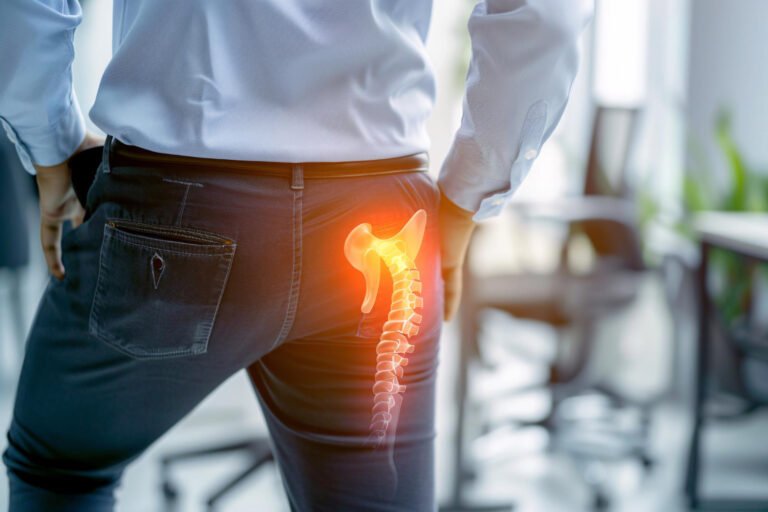
Sciatica refers to pain that travels along the path of the sciatic nerve, which runs from your lower back through your hips and buttocks and down each leg. The pain typically affects only one side of your body.
The sciatic nerve is the longest and thickest nerve in your body, about as wide as your finger. When this nerve becomes compressed or irritated, it sends pain signals that can range from mild discomfort to severe, debilitating pain.
Common causes of sciatica include:
Herniated or slipped disc: The soft cushion between your vertebrae pushes out and presses on the nerve. This is the most common cause, especially in people between 30 and 50 years old.
Spinal stenosis: The spaces in your spine narrow, putting pressure on nerves. This typically affects people over 60.
Degenerative disc disease: The discs in your spine naturally wear down over time, sometimes causing nerve irritation.
Spondylolisthesis: One vertebra slips forward over another, which can pinch the nerve roots.
Piriformis syndrome: A muscle deep in your buttock irritates the sciatic nerve.
Trauma or injury: Falls, car accidents, or sports injuries can damage the spine or surrounding tissues.
In the UAE, Dr. Sherief Elsayed sees many sciatica patients whose symptoms are worsened by lifestyle factors common in the region. Long hours sitting at desks in Dubai’s corporate offices, extended periods of driving in traffic, and sudden transitions from air-conditioned environments to outdoor heat can all aggravate sciatic nerve pain.
How can I tell if my sciatica pain is just temporary or something serious?
Most people with sciatica improve within a few weeks with conservative treatment. However, certain characteristics of your pain can indicate whether you have a temporary irritation or a more serious problem.
Temporary sciatica typically:
- Improves with rest and position changes
- Responds to over-the-counter pain relief
- Gradually decreases in intensity over days or weeks
- Doesn’t affect your ability to move your leg or foot
- Allows you to continue most daily activities with some discomfort
More serious sciatica may:
- Wake you up at night consistently
- Progressively worsen despite rest and medication
- Cause visible weakness in your leg or foot
- Make it difficult to stand on your toes or heels
- Cause numbness that spreads or becomes more intense
- Affect your balance or coordination
Dr. Sherief Elsayed uses a comprehensive assessment approach that goes beyond just looking at scans. “We treat the person, not the scan,” he explains. “I’ve seen patients with terrible-looking MRI scans who have minimal symptoms, and others with minor disc bulges who have severe pain. The key is understanding the full picture: your symptoms, your physical examination, your lifestyle, and yes, your imaging studies.”
During assessment, Dr. Sherief examines posture, gait, strength, reflexes, and sensation. He looks at how you move, where exactly your symptoms appear, and what activities make them better or worse. This root-cause approach helps identify whether your sciatica is likely to improve with conservative care or whether more urgent intervention might be needed.
What are the red flag symptoms that mean I need urgent medical attention?
While most sciatica cases can be managed with conservative treatment, certain warning signs indicate nerve compression that requires immediate medical assessment. These red flags suggest possible serious conditions like cauda equina syndrome, severe spinal cord compression, or progressive nerve damage.
Loss of bladder or bowel control: This is the most serious warning sign. If you cannot control when you urinate or have a bowel movement, or if you lose sensation of needing to go, seek emergency medical care immediately. This suggests cauda equina syndrome, a condition where nerves at the bottom of your spinal cord become severely compressed. Without urgent treatment, this can lead to permanent loss of bowel and bladder function.
Numbness in your inner thighs, groin, or genital area: Often called “saddle anesthesia” because it affects the area that would touch a saddle if you were riding a horse, this numbness indicates serious nerve compression. This symptom should never be ignored.
Progressive leg weakness: If your leg is becoming noticeably weaker over hours or days, or if you’re developing “foot drop” where you cannot lift the front part of your foot, this indicates progressive nerve damage. Unlike general tiredness or muscle fatigue, this weakness means specific muscles are not responding properly to nerve signals.
Severe pain after trauma: If your sciatica started after a fall, car accident, or significant injury, especially if you’re over 50 or have osteoporosis, you may have a spinal fracture. This requires immediate assessment.
Sciatica in both legs simultaneously: Pain, numbness, or weakness affecting both legs at the same time is unusual and may indicate severe central spinal canal compression.
Severe pain that doesn’t improve at all with position changes or rest: While typical sciatica may be painful, you can usually find some position that provides partial relief. If no position helps and pain is constant and severe, this warrants urgent evaluation.
Unexplained fever with back pain: This combination can indicate spinal infection, which requires urgent treatment with antibiotics or sometimes surgery.
“Most back pain is manageable, but some warning signs must be assessed urgently,” Dr. Sherief Elsayed advises his Dubai patients. “If you experience any of these red flag symptoms, don’t wait for a routine appointment. Go to the emergency department or contact a spine specialist immediately.”
Can conservative treatment really help severe sciatica or will I need surgery anyway?
This is one of the most common questions Dr. Sherief Elsayed hears from patients in Dubai who are experiencing severe sciatica pain. Many people assume that intense pain automatically means they need surgery, but the evidence tells a different story.
Research shows that approximately 80 to 90 percent of people with sciatica improve with conservative treatment within six to twelve weeks. Even when an MRI shows a herniated disc pressing on the nerve, the body often heals naturally as the disc material shrinks and inflammation decreases.
Dr. Sherief Elsayed’s treatment approach follows a structured pathway that prioritizes conservative care unless red flags are present:
Step 1: Conservative Care
The first line of treatment typically includes:
Medications: Anti-inflammatory drugs, muscle relaxants, and sometimes neuropathic pain medications that specifically target nerve pain. These don’t just mask symptoms but help reduce inflammation around the compressed nerve.
Physiotherapy: Specific exercises strengthen core muscles, improve flexibility, and take pressure off the sciatic nerve. A skilled physiotherapist can teach you which movements help and which to avoid. This is particularly important in Dubai, where many people have desk jobs that contribute to poor posture.
Posture and ergonomic modifications: Simple changes to how you sit, stand, and move can significantly reduce nerve compression. Dr. Sherief examines each patient’s work setup, driving position, and daily habits to identify contributing factors.
Activity modification: This doesn’t mean complete bed rest, which can actually make sciatica worse. Instead, it means avoiding activities that aggravate your symptoms while staying generally active within your pain limits.
Injections: Epidural steroid injections can deliver powerful anti-inflammatory medication directly to the area around the compressed nerve. These can provide significant relief and allow you to participate more effectively in physiotherapy.
“Surgery is not the first step. It is the right step only when necessary,” Dr. Sherief emphasizes. “I’ve seen many patients who were convinced they needed immediate surgery make complete recoveries with conservative treatment.”
Step 2: Minimally Invasive Options
If conservative treatment doesn’t provide adequate relief after six to twelve weeks, or if symptoms are significantly affecting your quality of life, minimally invasive surgical options may be considered:
Microdiscectomy: A small incision surgery to remove the portion of the herniated disc pressing on your nerve. This procedure typically takes 45 to 60 minutes and most patients go home the same day or after one night in hospital.
Endoscopic discectomy: An even less invasive approach using a tiny camera and instruments through a tube, resulting in minimal muscle damage and faster recovery.
These procedures have high success rates, with 85 to 90 percent of patients experiencing significant pain relief. Recovery is typically faster than people expect, with many returning to desk work within two to three weeks.
Step 3: Advanced Surgical Procedures
For complex cases involving spinal instability, severe stenosis, or deformity, more advanced procedures may be necessary:
Spinal fusion: Joining two or more vertebrae together to provide stability.
Disc replacement: Replacing a damaged disc with an artificial one to maintain motion.
Deformity correction: Addressing abnormal spinal curves that contribute to nerve compression.
Dr. Sherief Elsayed uses robot-assisted spine surgery technology for complex procedures, which provides enhanced precision and can lead to better outcomes. However, he’s clear that technology is a tool, not a substitute for proper diagnosis and treatment planning.
“Every spine is different. Every treatment should be, too,” he explains. “Some patients need surgery within days because of red flag symptoms. Others may never need surgery at all. The key is proper assessment and honest communication about what’s realistic for your specific situation.”
What happens during surgery for severe nerve compression and what should I expect?
If you do need surgery for sciatica, understanding what to expect can reduce anxiety and help you prepare for the best possible recovery.
Before Surgery
Dr. Sherief Elsayed’s approach includes thorough preparation:
Detailed explanation: You’ll understand exactly what will be done during surgery, why it’s necessary, and what results are realistic. Dr. Sherief uses simple language and visual aids to ensure you fully understand your procedure.
Shared decision-making: Surgery is a significant decision, and you should feel confident that it’s the right choice for your situation. Dr. Sherief discusses alternatives, risks, benefits, and answers all your questions.
Optimization: If possible, factors that might affect healing such as smoking, blood sugar control for diabetics, and overall fitness are addressed before surgery.
During Surgery
For a typical microdiscectomy:
The procedure is performed under general anesthesia, so you’ll be completely asleep and pain-free.
A small incision, usually 2 to 3 centimeters long, is made in your lower back.
Using an operating microscope or endoscope, the surgeon carefully moves aside muscle and identifies the compressed nerve.
The portion of the herniated disc pressing on the nerve is removed. The goal is to relieve pressure while removing as little disc material as possible.
The incision is closed with absorbable stitches, usually leaving a small scar.
The entire procedure typically takes 45 to 90 minutes, depending on complexity.
For more complex procedures involving fusion or deformity correction, surgery takes longer and requires more extensive reconstruction. Dr. Sherief Elsayed uses robot-assisted spine surgery technology for these cases, which provides exceptional precision in placing screws and implants.
After Surgery
Immediate recovery: Most patients with simple microdiscectomy go home the same day or after one night. More complex surgeries require two to four nights in hospital.
Pain management: You’ll have pain medication to keep you comfortable. Many patients are surprised that their leg pain, which may have been unbearable before surgery, often improves immediately. The surgical site will be sore, but this is typically manageable.
Early mobilization: You’ll be encouraged to walk the same day as surgery. Movement helps prevent complications and promotes healing.
Activity restrictions: You’ll avoid heavy lifting, bending, and twisting for the first few weeks. Specific guidelines depend on your procedure.
Return to normal activities: Most people return to desk work within two to three weeks and to more physical activities within six to twelve weeks. Recovery is individual and depends on your specific surgery, overall health, and job requirements.
Follow-up care: Regular check-ins ensure proper healing and address any concerns. Physiotherapy usually begins a few weeks after surgery to restore strength and function.
Dr. Sherief Elsayed emphasizes realistic expectations: “Surgery can be very effective at relieving nerve compression and leg pain. However, it’s not magic. Some people have complete pain relief, while others have significant improvement but not 100 percent resolution. The goal is to improve your quality of life and prevent permanent nerve damage.”
How do spine surgeons in Dubai and the UAE approach sciatica differently than other regions?
Dubai and the UAE present unique considerations for spine care that influence how specialists like Dr. Sherief Elsayed approach sciatica treatment.
Multicultural patient population: Dubai’s diverse population means patients come from many cultural backgrounds with different pain tolerances, treatment expectations, and communication styles. Dr. Sherief Elsayed, who is fluent in both English and Arabic, adapts his approach to each patient’s cultural context and preferences.
Climate and lifestyle factors: The extreme heat in UAE summers keeps people indoors in air conditioning for extended periods, often leading to more sedentary behavior. The sudden temperature changes from hot outdoors to cold indoors can also affect muscle tension and pain perception. Dr. Sherief considers these environmental factors when recommending activity modifications and physiotherapy.
High expatriate turnover: Many expatriates in Dubai are concerned about needing surgery while living abroad, away from family support systems. Dr. Sherief addresses these concerns by ensuring patients understand their full treatment plan, providing clear guidance on what support they’ll need during recovery, and offering flexible follow-up options including telemedicine for patients who may return to their home countries.
Access to advanced technology: Dubai’s healthcare infrastructure provides access to cutting-edge surgical technology. Dr. Sherief Elsayed uses robot-assisted spine surgery and the latest minimally invasive techniques, which can mean faster recovery and better outcomes compared to traditional open surgery.
Work and insurance considerations: Many patients in Dubai are concerned about time away from work and insurance coverage for treatment. Back pain doctors in Dubai like Dr. Sherief works closely with patients to understand their insurance benefits and plans treatment timing around work commitments when medically appropriate.
“Practicing in Dubai means treating a sophisticated, internationally minded patient population who often have access to information from around the world,” Dr. Sherief explains. “My role is to provide expert guidance that’s personalized to each individual’s situation while using the best available technology and evidence-based techniques.”
What questions should I ask my doctor if I have sciatica?
Being an informed patient leads to better outcomes. When you see a spine specialist about sciatica, consider asking:
About diagnosis:
- What is the exact cause of my sciatica?
- Do I need an MRI or other imaging?
- Are there any warning signs I should watch for?
About treatment options:
- What are all my treatment options, from conservative to surgical?
- What do you recommend for my specific situation and why?
- What are the success rates and risks of each option?
- How long should I try conservative treatment before considering surgery?
About the specialist’s experience:
- How many patients with my condition do you treat?
- What is your training and experience with the recommended treatment?
- What outcomes do your patients typically experience?
About practical concerns:
- How long will recovery take?
- When can I return to work and normal activities?
- What support will I need during recovery?
- What are the costs and is this covered by my insurance?
Dr. Sherief Elsayed encourages questions: “An informed patient is an empowered patient. I want you to understand your condition, feel confident in the treatment plan, and know what to expect at every stage.”
Conclusion
Sciatica ranges from a temporary annoyance to a medical emergency requiring urgent surgery. The key is recognizing which category you fall into and seeking appropriate care.
Most sciatica improves with conservative treatment, but red flag symptoms like loss of bladder or bowel control, numbness in your groin or inner thighs, or progressive leg weakness require immediate medical attention. These warning signs indicate severe nerve compression that can lead to permanent damage if not treated urgently.
Dr. Sherief Elsayed’s approach emphasizes proper diagnosis, conservative treatment when appropriate, and timely surgical intervention when necessary. “We treat the person, not the scan,” he reminds his Dubai patients. “Your symptoms, your examination findings, your lifestyle, and your goals all matter. Surgery is not the first step. It is the right step only when necessary.”
If you’re experiencing sciatica, pay attention to your symptoms. If you have any red flag signs, seek immediate medical care. If your symptoms are less severe but affecting your quality of life, a comprehensive assessment by a spine specialist can identify the cause and create a personalized treatment plan.
Remember: pain is a symptom, not a diagnosis. Understanding what’s causing your sciatica is the first step toward effective treatment and recovery.