
Revision ACDF Surgery in Dubai
Who you'll see
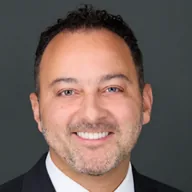
Dr Sherief Elsayed
Consultant Spinal Surgeon, FRCS (Tr & Orth), UK-trained
Clinics: OrthoPro Clinic, Dubai Science Park, and UPANDRUNNING, Al Wasl Road
Most major insurance accepted. Please check with reception.
Written and medically reviewed by Dr Sherief Elsayed, UK-trained Consultant Spinal Surgeon, FRCS (Tr & Orth). Last reviewed 13 November 2026.
Most people do well after ACDF (anterior cervical discectomy and fusion). Sometimes symptoms come back, never fully go, or a scan shows a problem with the fusion or the implant. A second operation, called revision surgery, may then help, but not always. This page explains the common reasons for revision after ACDF, the tests that guide the decision, the operations used and what recovery involves. Complex and revision spinal surgery is a main focus of Dr Sherief Elsayed’s practice. As Lead Clinician for Spinal Surgery at Brighton and Sussex University Hospitals he took revision referrals, and he sees patients whose first operation was done elsewhere, in the UAE or abroad.
At a glance
- Further surgery after ACDF is uncommon in the first years: in pooled studies outside disc replacement trials, about 3 to 4 in 100 people needed another operation (Wadhwa et al., 2026).
- Not every problem on a scan needs an operation. In a study of 48 people whose fusion had not healed, a third still had no symptoms about 5 years later (Phillips et al., 1997).
- Before operating from the front of the neck again, Dr Sherief arranges a check of the vocal cords, because an earlier operation can weaken one without obvious symptoms (Paniello et al., 2008).
Symptoms that need urgent care
Call 998 (UAE ambulance) or go to the nearest emergency department straight away if you have:
- new or rapidly worsening weakness or numbness in your arms or legs, difficulty walking, or loss of bladder or bowel control;
- after recent neck surgery, swelling in the neck that is getting bigger, with difficulty breathing, noisy breathing, or difficulty swallowing your saliva.
If your hands are becoming clumsier or your walking or balance is getting worse over weeks, this can be a sign of pressure on the spinal cord. Get it assessed soon rather than waiting for a routine appointment.
Why revision may be needed
The fusion has not healed (non-union)
After ACDF the two vertebrae are meant to grow together over the following months. Sometimes they do not fully join; this is called a non-union or pseudarthrosis. In pooled studies outside disc replacement trials, a non-union causing symptoms was found in about 2 to 3 in 100 people in the first years (Wadhwa et al., 2026). The risk rises with the number of levels fused: in pooled older studies of ACDF with a plate, the bones fused in 97.1% after one level, 94.6% after two and 82.5% after three (Fraser and Härtl, 2007). Smoking also slows bone healing (Hilibrand et al., 2001).
A non-union can cause neck pain, sometimes arm pain, or loosening of the screws or plate. Some people have no symptoms at all: in one study of 48 people with a non-union, 16 (a third) had none an average of about 5 years after their ACDF (Phillips et al., 1997). A non-union seen on a scan therefore does not automatically mean another operation.
The level next to the fusion wears out (adjacent segment disease)
The discs above and below a fusion can wear over time and press on a nerve or the spinal cord. In a study of 374 patients followed for up to 21 years, new symptoms from the level next to a fusion appeared at about 2.9% a year, affecting about 1 in 4 people by 10 years. More than two-thirds of those affected went on to need another operation (Hilibrand et al., 1999).
Symptoms came back or never went away
Sometimes a nerve or the spinal cord is still under pressure after the first operation, or pressure has built up again. Sometimes the pain has another cause. Dr Sherief reviews your original scans and operation notes alongside new ones to work out which.
Implant problems or difficulty swallowing
The spacer (cage) can sink into the bone, and screws or a plate can loosen, move or break. Swallowing difficulty is common in the first weeks after ACDF and usually settles. When it does not, and a plate is part of the problem, the plate can sometimes be removed once the bones have fused.
After a cervical disc replacement
A cervical disc replacement can occasionally fail, for example if the implant moves or the nerves are still under pressure. It can be removed and the level converted to a fusion.
Assessment and tests
Dr Sherief starts with your symptoms and an examination, then reviews your previous scans, operation notes and implant details. The tests he usually arranges are:
- CT scan: shows whether the bones have joined and where the implants sit.
- MRI scan: shows the nerves, the spinal cord and the discs next to the fusion.
- Flexion-extension X-rays: taken with the head bent forwards and backwards. Movement at a level that should be fused suggests a non-union.
- Vocal cord check by an ENT specialist: before any operation from the front of the neck again. The nerve to the voice box can be weakened by an earlier operation without the person noticing, because the other side compensates. Operating on the opposite side could then put both vocal cords at risk. In one series of 50 checks before revision surgery, 11 (22%) showed weakness or paralysis of a vocal cord, 5 of them without symptoms (Paniello et al., 2008); another series of 64 patients found no paralysis (Seok et al., 2022). The result helps decide which side to operate from.
Revision operations
The right operation depends on the cause, the number of levels, how you were operated on before, your bone quality and your vocal cords. Dr Sherief performs:
- Revision from the front: removing the old plate or cage, freeing the nerves or spinal cord, re-fusing the level, or extending the fusion to the next level.
- Fusion from the back: posterior cervical decompression and fusion, using screws and rods to hold the spine still so that an unhealed fusion can heal, and to take pressure off the nerves where needed.
- Front and back together: for some people, for example when several levels are involved or the bone is weak.
- Converting a disc replacement to a fusion: removing a failed artificial disc and fusing the level.
For a fusion that has not healed, studies have compared operating again from the front with fusing from the back. In one US series of 120 people, 12 of 27 (44%) operated on again from the front needed a further operation because the bones still had not joined, against 2 of 93 (about 2%) fused from the back. Fusion from the back meant more blood loss and a longer hospital stay (Carreon et al., 2006). The surgeons chose the approach for each patient, so this was not a fair head-to-head test, and in another series both approaches healed most non-unions (Phillips et al., 1997).
Risks of revision surgery
A second operation generally carries more risk than the first. Scar tissue from the first operation makes the approach from the front more difficult. Voice and swallowing problems are more likely: in a study of 815 operations from the front of the neck, revision surgery was one of the factors linked with a change in voice (Razfar et al., 2012). Other risks include bleeding, infection, injury to the nerves or spinal cord, and the bones again failing to fuse. Your own risks depend on your health, the operation and the number of levels, and are discussed in detail at your consultation.
Recovery after revision surgery
- Hospital stay: about one night after an operation from the front; two to three nights after an operation from the back.
- Collar: sometimes, decided case by case, for example after fusion from the back or for a fusion that has not healed.
- Desk work and driving: usually after about 2 weeks following an operation from the front, and about 4 to 6 weeks following an operation from the back. Driving waits until you can turn your head freely and are not taking painkillers that make you drowsy.
- Bone healing: checked with X-rays or a CT scan at follow-up. Stopping smoking before surgery helps the bones fuse; see smoking and spinal fusion.
Table of Contents
Your consultation with Dr Sherief Elsayed
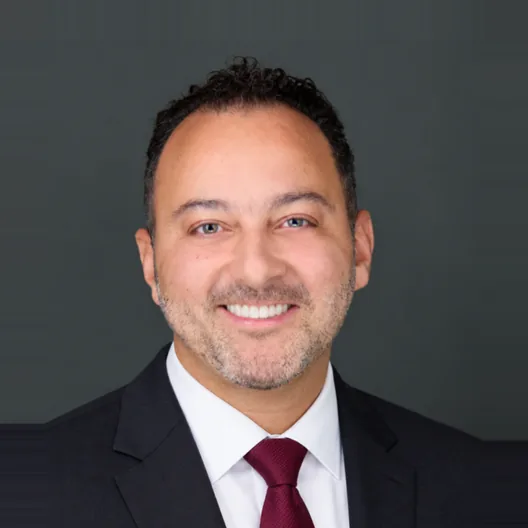
Dr Sherief Elsayed is a UK-trained Consultant Spinal Surgeon, FRCS (Tr & Orth). He sees anyone with problems after previous neck surgery, including people operated on elsewhere in the UAE or abroad, at OrthoPro Clinic, Dubai Science Park, and at UPANDRUNNING on Al Wasl Road. He operates at American Hospital Dubai (Oud Metha and Dubai Science Park) and Emirates Hospital Jumeirah. He will tell you whether another operation is likely to help, and when it is not.
Please bring your scan images (not only the reports), the operation notes from your previous surgery, any implant details and your discharge letters. To book, call OrthoPro Clinic on 04 835 9000, send a WhatsApp message to 052 105 2798, or use the contact page. Fees depend on the procedure and your insurance. Most major insurance accepted. Please check with reception.
Frequently asked questions
Not always. Some people with a non-union have no symptoms and need no further surgery. Revision is considered when a non-union causes persistent pain, nerve symptoms or loosening of the implants.
Generally yes. Scar tissue makes an operation from the front more difficult, and voice and swallowing problems are more likely. The risks are weighed against the likely benefit at your consultation.
It depends on the cause, the levels involved, your previous surgery, your bone quality and your vocal cords. For a fusion that has not healed, fusion from the back has had lower rates of further surgery in some studies, at the cost of a longer recovery.
An earlier operation from the front can weaken the nerve to one vocal cord without obvious symptoms. Knowing this before surgery lets Dr Sherief choose the side of the neck that avoids putting both vocal cords at risk.
Yes. He sees patients operated on elsewhere in the UAE or abroad. Bring your scan images, operation notes and implant details.
After an operation from the front, usually about one night in hospital, with desk work and driving after about 2 weeks. After an operation from the back, two to three nights in hospital, with desk work and driving after about 4 to 6 weeks.