
Correct Headrest Position Can Save Your Spine - UAE Spine Doctor Explains
Should I wear a neck collar after a whiplash injury?
Current evidence suggests that prolonged collar use actually delays recovery from whiplash injuries. While a soft collar might provide comfort for a few days immediately after injury, extended use beyond 72 hours can lead to muscle weakness and stiffness. Early gentle mobilisation produces better outcomes. Your doctor may recommend a collar for very short-term use if pain is severe, but the goal is to discontinue it as soon as tolerable and begin gentle neck movements.
Can I drive immediately after adjusting my headrest correctly?
Yes, correct headrest positioning should not interfere with your driving or visibility. If the proper position feels uncomfortable initially, you may be accustomed to incorrect positioning. Give yourself a few drives to adapt. The correct position keeps your head close to the headrest, which should not restrict your ability to turn and check blind spots. If it does, your seat back may be too reclined or your overall seating position may need adjustment.
Is whiplash only caused by car accidents?
No, although motor vehicle collisions are the most common cause. Whiplash-type injuries can occur from any sudden acceleration-deceleration force applied to the head and neck. This includes sports injuries, particularly in contact sports like rugby or football, falls where the head strikes a surface, physical assaults, or amusement park rides with sudden starts and stops. The key mechanism is the rapid, forceful back-and-forth head motion.
Will my whiplash show up on X-rays?
Often no. X-rays are excellent for detecting bone fractures and gross alignment problems, but the soft tissue injuries that cause most whiplash symptoms, including muscle strains, ligament sprains, and minor disc injuries, do not show on X-rays. This does not mean your injury is not real or significant. Clinical examination findings are often more important than imaging in diagnosing and guiding treatment of whiplash. MRI scans may be ordered if symptoms persist or if nerve involvement is suspected, as they visualise soft tissues much better than X-rays.
Can children get whiplash injuries, and do their headrests need special positioning?
Yes, children can sustain whiplash injuries, though their injury patterns may differ from adults due to anatomical differences. Children should always be in age-appropriate car seats or booster seats that provide proper head and neck support. These restraint systems have built-in head protection designed for children’s size and weight. Once children are large enough to use standard vehicle seats and headrests, the same positioning rules apply: top of the headrest level with the top of the head, minimal gap to the back of the head.
How long should I take off work after a whiplash injury?
This varies greatly depending on your injury severity and occupation. Many people with mild whiplash can continue working, particularly if their job does not involve heavy physical demands or prolonged awkward neck positions. Moderate injuries might require a few days to a week off, while severe injuries could necessitate several weeks. Research shows that prolonged work absence can actually worsen outcomes, so returning to work as soon as safely possible, perhaps with temporary modifications, generally supports better recovery. Discuss your specific situation with your treating doctor to develop an appropriate plan.
Every day on Dubai roads, thousands of drivers adjust their seats, mirrors, and climate controls, but overlook one critical safety feature: the headrest. As a spine surgeon who has treated countless whiplash injuries in the UAE, I can tell you that something as simple as headrest positioning can mean the difference between walking away from a rear-end collision and spending months in recovery.
Whiplash injuries are among the most common consequences of road traffic accidents in Dubai and across the Emirates. The UAE’s rapid traffic flow, high-speed highways, and frequent stop-start conditions at traffic lights create perfect conditions for rear-end collisions. Yet most drivers remain unaware that their headrest, when positioned correctly, serves as their first line of defence against serious neck injury.
This article explains the biomechanics of whiplash, why headrest position matters so critically, and how to adjust yours properly to protect your cervical spine during the unpredictable moments on UAE roads.
What Exactly Is a Whiplash Injury?
Whiplash refers to a neck injury caused by rapid, forceful back-and-forth movement of the head and neck, similar to the cracking of a whip. This mechanism typically occurs during rear-end vehicle collisions when your car is struck from behind while stationary or moving slowly.
Here is what happens during a rear-end impact:
- Your vehicle suddenly accelerates forward from the collision force
- Your body moves forward with the seat
- Your head, not yet supported, stays momentarily in place due to inertia
- Your neck forcibly extends backward beyond its normal range
- Milliseconds later, your head rebounds forward with significant force
- The neck flexes forward, sometimes hitting your chest
This violent extension-flexion motion strains the soft tissues of your neck including muscles, ligaments, tendons, and in severe cases, can damage intervertebral discs, facet joints, or even cause nerve compression treatment (Nerve Compression Treatment – Dubai Spine Specialist) requiring specialist intervention.
The term “whiplash” actually describes the injury mechanism rather than a specific diagnosis. Medical professionals use terms like cervical sprain, cervical strain, or whiplash-associated disorder to describe the actual tissue damage resulting from this motion.
How Does a Headrest Prevent Whiplash Injury?
The headrest, despite its name, is not primarily designed for resting your head during long drives. Its true purpose is biomechanical protection during rear-impact collisions.
When positioned correctly, your headrest limits the backward range of motion your head can travel during the extension phase of whiplash. By reducing this extension distance, the headrest significantly decreases the forces transmitted through your cervical spine and surrounding soft tissues.
Think of it as a safety boundary. Without proper headrest positioning, your head can hyperextend backward unrestricted, allowing maximum strain on your neck structures. With correct positioning, the headrest acts as a backstop, catching your head early in the extension phase and preventing excessive backward motion.
Research has consistently demonstrated that properly adjusted headrests reduce the severity of whiplash injuries. Some studies suggest reductions in injury risk of up to 25 percent when headrests meet recommended positioning standards.
From my clinical experience treating patients across Dubai and the UAE, I have observed that drivers who suffer severe neck pain treatment in Dubai (Neck Pain Treatment in Dubai – Expert Care by Dr Sherief Elsayed) following rear-end collisions often report that their headrest was positioned too low or too far back at the time of impact.
What Is the Correct Headrest Position?
Setting your headrest correctly takes only seconds but provides lasting protection. Follow these positioning guidelines:
Height adjustment:
- The top of the headrest should align with the top of your head or at least with the top of your ears
- Never position the headrest below ear level, as this leaves the upper cervical spine unprotected
- If your headrest cannot reach high enough, you may need a different vehicle or aftermarket headrest designed for taller drivers
Distance from your head:
- The back of your head should be no more than 5 to 7 centimetres from the headrest surface
- Closer is generally better, ideally within 2 to 3 centimetres
- Many modern vehicles have active headrests that automatically move forward during rear impacts to close this gap
Angle adjustment:
- The headrest should be as vertical as possible or tilted slightly forward
- Avoid angling it backward, which increases the distance to your head
- Some sports car seats have fixed-angle headrests integrated into the seat design
After adjustment, test the position. Sit normally with your back against the seat and your head in a neutral driving position. Your head should be close to or lightly touching the headrest without forcing you to crane your neck forward.
Why Do So Many Drivers Get This Wrong?
During my years practising in the UAE, I have developed an unusual habit. When crossing roads or waiting at traffic lights, I observe drivers in nearby vehicles and notice their headrest positions. I would estimate that more than half have their headrests positioned incorrectly, usually too low or too far back.
Several factors contribute to this widespread problem:
Comfort over safety: Many drivers position headrests based on perceived comfort rather than protective function. Some find the correct position feels too close or constraining.
Height variation: Vehicles are designed for average-height drivers. Very tall or very short individuals may struggle to achieve optimal positioning with standard headrests.
Lack of awareness: Most drivers have never received instruction on proper headrest adjustment. Driving schools rarely emphasise this detail.
Seat sharing: In households where multiple people drive the same vehicle, headrest positions get repeatedly changed and may not be readjusted properly each time.
Design limitations: Some older vehicles have non-adjustable or poorly designed headrests that cannot achieve recommended positioning.
The consequences of incorrect positioning become apparent only during the rare event of a collision. Unfortunately, that single event can result in months of cervical spine care (Cervical Spine Care – Expert Treatment in Dubai) and recovery.
What Are the Different Grades of Whiplash Injury?
Not all whiplash injuries are equal in severity. The Quebec Task Force classification system, widely used by medical professionals, categorises whiplash-associated disorders into grades:
Grade 0: No neck complaints and no physical signs
Grade 1: Neck pain, stiffness, or tenderness only, with no physical signs of injury detected by examination
Grade 2: Neck complaints plus musculoskeletal signs including decreased range of motion and point tenderness over specific areas
Grade 3: Neck complaints plus neurological signs such as decreased or absent reflexes, weakness, or sensory changes indicating nerve involvement
Grade 4: Neck complaints with fracture or dislocation requiring immediate surgical evaluation
Most rear-end collision victims experience Grade 1 or Grade 2 injuries, which typically resolve with conservative treatment over weeks to months. However, even these seemingly minor grades can cause significant disability during the acute phase.
Grade 3 injuries involving nerve compression may require more intensive intervention, potentially including spinal injections (Spinal Injections – Image-guided Pain Relief) or, in rare cases, surgical decompression if symptoms persist despite conservative management.
Grade 4 injuries represent true emergencies requiring immediate hospital assessment and often surgical stabilisation to prevent permanent spinal cord damage.
How Do You Know If Your Whiplash Injury Is Serious?
Most whiplash injuries are self-limiting, meaning they improve naturally over time with appropriate symptom management. However, certain warning signs indicate the need for urgent medical evaluation.
Seek immediate assessment if you experience:
- Severe or worsening neck pain despite rest and medication
- Numbness, tingling, or weakness in your arms or hands
- Difficulty walking or coordinating movements
- Loss of bladder or bowel control
- Severe headache that differs from your usual headaches
- Visual disturbances or dizziness that persists
- Confusion or altered consciousness
- Pain that radiates into your shoulders, arms, or between your shoulder blades
These red flags may indicate complications beyond simple soft tissue strain, including disc herniation, vertebral fracture, or in very rare cases, arterial injury.
It is important to note that whiplash symptoms often have delayed onset. You might feel relatively normal immediately after the collision, only to develop significant pain and stiffness over the following 24 to 72 hours. This delay occurs because initial adrenaline release masks pain, and inflammation takes time to develop fully.
If symptoms develop or worsen after initially seeming minor, do not dismiss them. Proper assessment can identify issues requiring specific treatment and prevent chronic problems from developing.
What Is Dr. Sherief Elsayed’s Approach to Treating Whiplash?
When patients present to my clinic following motor vehicle accidents with suspected whiplash injury, my assessment follows a systematic approach that goes beyond simply reviewing imaging.
Initial assessment priorities:
First, I take a detailed history of the collision mechanism. How fast were the vehicles travelling? Was your head turned at the moment of impact? Were you aware the collision was coming and able to brace? These details help me understand the forces involved and predict injury patterns.
Physical examination is crucial. I assess your neck range of motion in all directions, palpate for areas of tenderness, test your muscle strength and reflexes, and perform specific provocative tests to identify which structures are injured. Many whiplash injuries do not show clearly on initial imaging, so clinical examination provides essential diagnostic information.
Imaging decisions:
Not every whiplash patient requires immediate imaging. For Grade 1 injuries with no red flags, imaging may not change management in the acute phase. However, I have a low threshold for ordering investigations if there are neurological signs, severe pain, or risk factors such as age over 65, previous cervical spine problems, or high-energy collision mechanisms.
X-rays help rule out fractures and assess alignment. MRI scans become necessary when there are neurological symptoms or when pain persists beyond the expected timeframe, as they can identify disc herniations, ligament injuries, or nerve compression that X-rays cannot show.
Treatment pathway:
My treatment philosophy prioritises supporting your body’s natural healing while managing symptoms that interfere with function and quality of life.
Conservative management forms the foundation:
- Evidence-based pain relief including anti-inflammatory medications and muscle relaxants during the acute phase
- Early, gentle mobilisation rather than prolonged collar use, which research shows can delay recovery
- Structured physiotherapy programmes focusing on range of motion, strengthening, and postural correction
- Patient education about expected recovery timelines and strategies to prevent chronicity
Most patients respond well to this approach within 6 to 12 weeks.
Escalation when needed:
For persistent symptoms despite adequate conservative treatment, I consider image-guided cervical facet joint injections (Cervical Facet Joint Injections – Pain Relief) which can both diagnose and treat facet joint pain, a common source of chronic post-whiplash neck pain.
If there is clear evidence of nerve compression causing arm symptoms, and conservative measures fail, surgical decompression may be necessary. However, this represents a small minority of whiplash cases.
Addressing the psychological component:
Whiplash injuries can be psychologically traumatic, particularly if the collision was severe or unexpected. Anxiety about driving, hypervigilance on roads, and fear of re-injury can all complicate recovery. I address these factors openly with patients and involve appropriate psychological support when needed.
The goal is always to restore you to your pre-injury function and quality of life using the minimum intervention necessary.
Can Whiplash Cause Long-Term Problems?
Most people who sustain whiplash injuries recover completely within three to six months. However, research indicates that 10 to 20 percent develop chronic symptoms lasting beyond six months, and a smaller percentage experience symptoms for years.
Factors associated with poor recovery include:
- High initial pain intensity
- Rapid onset of symptoms after the collision
- Presence of headache, arm pain, or neurological symptoms
- Reduced neck range of motion at initial assessment
- Previous history of neck pain or headaches
- Older age
- Female gender (possibly related to differences in neck muscle strength and biomechanics)
- Psychological factors including high stress, anxiety, or depression
The mechanism behind chronic whiplash remains incompletely understood. Some patients have identifiable structural problems such as facet joint arthritis or disc degeneration that developed or worsened due to the injury. Others have no clear structural abnormality on imaging yet experience persistent pain, possibly related to altered pain processing in the nervous system.
From a clinical perspective, early appropriate treatment and avoiding excessive medicalisation appear protective against chronicity. Patients who remain active within pain limits, maintain work participation where possible, and avoid catastrophic thinking about their injury tend to have better long-term outcomes.
If you develop chronic symptoms, comprehensive reassessment is important to identify treatable contributors and exclude other diagnoses that might mimic chronic whiplash such as cervical spondylosis (Cervical Spondylosis Treatment in Dubai) or degenerative disc disease.
Beyond the Headrest: Other Prevention Strategies
While correct headrest positioning is crucial, comprehensive whiplash prevention involves several factors:
Vehicle selection: Vehicles with higher safety ratings typically have better seat and headrest designs. Some manufacturers incorporate active safety features that detect impending rear collisions and automatically adjust headrests or pre-tension seatbelts.
Seat position: Your seat back should be relatively upright, around 100 to 110 degrees from the seat base. More reclined positions increase the distance between your head and headrest and can worsen whiplash severity.
Posture awareness: Drivers who habitually lean forward away from their seat back position themselves poorly for impact protection. Maintain contact with your seat back while driving.
Defensive driving: Maintaining awareness of vehicles behind you, particularly when stopped at traffic lights or in heavy traffic, gives you precious seconds to brace if you perceive an imminent collision. While bracing cannot prevent whiplash entirely, it may reduce severity.
Physical conditioning: Strong neck muscles provide some protection by better controlling head motion during impact. Regular neck strengthening exercises, which you can discuss with a physiotherapist, may offer modest protective benefit.
When Should You See a Spine Specialist?
Many whiplash injuries can be initially managed by emergency departments or general practitioners with good outcomes. However, certain situations warrant specialist spine assessment:
- Persistent or worsening symptoms beyond 6 to 8 weeks despite appropriate conservative treatment
- Neurological symptoms including arm weakness, numbness, or coordination problems
- Severe pain that significantly limits daily activities
- Previous spine problems or surgery that may complicate recovery
- Diagnostic uncertainty about whether symptoms are truly whiplash-related
- Medicolegal situations requiring expert assessment and documentation
As a spine surgeon practising in Dubai, I see patients at various stages of their whiplash journey. Some present acutely following high-energy collisions requiring immediate assessment for serious injury. Others come months or years later with persistent symptoms that have not responded to previous treatments.
Regardless of when you present, the goal remains the same: accurate diagnosis of which specific structures are causing your symptoms, identification of treatable contributing factors, and implementation of an evidence-based treatment plan that respects your individual circumstances and preferences.
Conclusion
Your car’s headrest is not an afterthought or a comfort feature. It is a carefully engineered safety device designed to protect your cervical spine during rear-end collisions. Taking two minutes to ensure proper positioning before each drive provides protection that becomes invaluable in the unpredictable moment of impact.
With Dubai’s busy roads and high-speed highway traffic, the risk of rear-end collisions remains ever-present. While we cannot control the actions of other drivers, we can control our vehicle setup and defensive driving practices.
If you have been involved in a motor vehicle accident and developed neck pain or other symptoms, proper assessment is important. Most whiplash injuries resolve with appropriate conservative management, but some require more detailed investigation and specialist intervention.
Do not ignore persistent symptoms or hope they will eventually disappear. Early, appropriate treatment prevents complications and supports the best possible recovery. Whether your injury occurred yesterday or years ago, effective treatment options remain available.
Table of Contents
Recent Articles
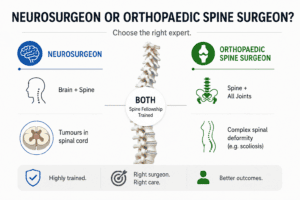
Which Surgeon Should You See for Your Spine Problem in Dubai?
Which Surgeon Should You See for Your Spine Problem in Dubai? Is a neurosurgeon always more qualified than an orthopaedic surgeon for spine conditions? No. Both pathways, when combined with

Can Calcium Supplements Cause Kidney Stones?
Can Calcium Supplements Cause Kidney Stones? If I have osteoporosis, should I take calcium supplements? This should be discussed specifically with your doctor, who will assess your individual dietary calcium

What Precision Medicine Means for Pain Management in Dubai
What Precision Medicine Means for Pain Management in Dubai How accurate is pharmacogenomic testing? Pharmacogenomic testing for well-established genetic variants, including CYP2D6 metaboliser status, is highly accurate and based on