
Why Thoracic Disc Surgery Deflates Your Lung: Dr. Sherief Elsayed Dubai Explains

Is it dangerous to have one lung deflated during thoracic spine surgery?
No, lung deflation during thoracic spine surgery is a controlled, well-established technique that is generally safe when performed by experienced anesthesia teams. One healthy lung can provide adequate oxygenation for most patients. The deflated lung is periodically re-expanded during surgery to maintain lung health, and the anesthesia team continuously monitors oxygen levels. Patients with healthy lungs tolerate one-lung ventilation well. However, patients with significant lung disease may have more difficulty and need careful pre-operative assessment.
How long does the lung stay deflated during surgery?
The duration varies depending on the complexity of the surgery, but typically the lung is deflated for 2 to 4 hours during the critical portions of the procedure. The lung is periodically re-expanded every 30 minutes in many protocols to prevent complications. At the end of surgery, before closing the chest, the lung is fully re-expanded and checked to ensure it is inflating properly.
Will I need a chest tube after thoracic disc surgery?
Yes, if the surgeon enters the chest cavity through a transthoracic or VATS approach, a chest tube will be placed before closing the incision. The tube drains any fluid or air from the chest cavity and allows the lung to fully re-expand. The tube typically stays in place for 1 to 4 days, depending on the amount of drainage. Once drainage decreases to acceptable levels, the tube is removed. Removal is quick but can be briefly uncomfortable.
Can thoracic disc surgery be done without deflating the lung?
For some thoracic disc herniations, yes. Posterior approaches like transfacet or transpedicular techniques access the spine from the back and do not require entering the chest cavity or deflating the lung. Newer minimally invasive lateral approaches may also avoid the chest cavity. However, for large, central, or calcified thoracic disc herniations, anterior approaches that require lung deflation often provide the safest and most complete decompression of the spinal cord.
What are the chances of permanent lung damage from thoracic spine surgery?
Permanent lung damage is rare with modern techniques and careful surgical and anesthesia management. Most patients recover full or near-full pulmonary function within a few weeks to months after surgery. Some studies report a modest (around 10%) temporary reduction in pulmonary function after thoracotomy, but this typically improves with time. Risk factors for pulmonary complications include smoking, pre-existing lung disease, prolonged surgery, and obesity. Patients can minimize risk by stopping smoking before surgery and actively participating in breathing exercises after surgery.
Why can't surgeons just approach thoracic discs from the back like they do in the lower back?
The thoracic spinal cord is much less tolerant of manipulation than the nerve roots in the lower back. In the lumbar spine, surgeons are dealing with individual nerve roots that can be gently moved aside. In the thoracic spine, the actual spinal cord is present, and any manipulation or pressure on the cord can cause permanent neurological injury. For central thoracic disc herniations, approaching from the back would require retracting or pushing on the spinal cord to reach the disc, which is dangerous. Approaching from the front or side allows direct access to the disc without touching the spinal cord.
When patients in Dubai and the UAE learn they need thoracic disc surgery, many are surprised to discover that the surgical approach may involve intentionally deflating one of their lungs. This revelation often raises concerns and questions. Why would a spine surgery require collapsing a lung? Is it safe? What are the risks?
Dr. Sherief Elsayed, a senior UK-trained spinal surgeon with over 25 years of experience practicing in Dubai, specializes in complex spine procedures including thoracic disc surgery. His patient-centered approach emphasizes clear communication and helping patients understand every aspect of their treatment.
“When I explain to patients that we need to temporarily deflate their lung to access their spine, I often see worry in their eyes,” says Dr. Sherief Elsayed. “But understanding why this is sometimes necessary, and that it is a controlled, safe process, helps patients feel more confident about their surgery. The lung deflation is not a complication. It is a carefully planned part of certain surgical approaches that allows us to safely reach and treat the problem.”
What Are Thoracic Disc Problems and Why Are They Challenging to Treat?
The thoracic spine is the mid-back region, consisting of 12 vertebrae (T1 through T12) that connect to your ribs. Unlike the neck and lower back, which move freely, the thoracic spine is relatively rigid because it is connected to the rib cage. This rigidity provides protection for vital organs like the heart and lungs but also makes thoracic disc problems particularly challenging.
Thoracic disc herniations are rare, accounting for less than 3% of all disc herniations. They typically occur in people between 40 and 60 years old and most commonly affect the lower thoracic spine (T8-T12). When a thoracic disc herniates, the soft inner material pushes out through a tear in the outer disc wall and can compress the spinal cord or nerve roots.
The thoracic spinal cord is especially vulnerable. Unlike the lower back where the spinal cord has already tapered off into individual nerve roots, the thoracic region contains the actual spinal cord, a delicate structure carrying nerve signals to and from the entire lower body. Even small amounts of compression can cause serious symptoms including leg weakness, numbness, difficulty walking, loss of balance, band-like chest or abdominal pain, and in severe cases, paralysis.
“Thoracic disc herniations present a unique surgical challenge,” explains Dr. Sherief Elsayed. “The spinal cord at this level is unforgiving. We cannot simply approach from the back and push the disc away from the spinal cord, as we might in the lower back. Pushing on the thoracic spinal cord can cause devastating injury. We need to approach the disc from the side or front to avoid touching the spinal cord.”
Why Do Surgeons Sometimes Need to Access the Thoracic Spine Through the Chest?
To understand why lung deflation is sometimes necessary, we need to understand the anatomy and the different surgical approaches available for thoracic disc problems.
The thoracic vertebrae sit in the middle of your chest cavity, surrounded by your lungs, heart, major blood vessels, and rib cage. The spinal cord runs through the vertebrae in a protected canal. When a disc herniates, it typically pushes toward the front of the spinal cord (ventrally).
Surgeons have several approach options for thoracic disc surgery:
Posterior Approaches (from the back): These include techniques like transfacet, transpedicular, and costotransversectomy. These approaches work well for smaller, lateral (off to the side) disc herniations. However, for large, central, or calcified disc herniations, posterior approaches have limitations because they require manipulating the spinal cord to reach the disc.
Anterior Approaches (from the front): These include transthoracic and video-assisted thoracoscopic surgery (VATS). These approaches provide direct access to the front of the spine where most problematic thoracic discs sit. To reach the spine from the front, the surgeon must go through the chest cavity, which means temporarily deflating the lung on that side.
Lateral Approaches: Newer minimally invasive techniques approach the spine from the side. Some of these can avoid entering the chest cavity entirely.
The choice of approach depends on several factors including the location of the disc herniation (central versus lateral), the size of the herniation, whether the disc is calcified (hardened with calcium deposits), the level of the thoracic spine involved, and the surgeon’s experience and preference.
For large, central, or calcified thoracic disc herniations, anterior approaches that require lung deflation often provide the safest and most effective access to completely remove the problematic disc without manipulating the spinal cord.
How Do Surgeons Deflate Your Lung and Why Is It Safe?
The process of lung deflation for thoracic spine surgery is highly controlled and managed by specialized anesthesiologists trained in thoracic anesthesia. This is not an emergency complication, it is a planned component of the surgical approach.
The One-Lung Ventilation Technique
Here is how lung isolation and deflation work during thoracic disc surgery:
Double-Lumen Endotracheal Tube: Before surgery begins, the anesthesiologist places a special breathing tube called a double-lumen endotracheal tube. This tube has two separate channels, one for each lung. Each channel can be controlled independently, allowing one lung to receive oxygen and ventilation while the other is allowed to deflate.
Tube Positioning: Using a fiberoptic bronchoscope (a thin camera that goes down the breathing tube), the anesthesiologist ensures the tube is perfectly positioned. The tip of one channel sits in the right main bronchus (the airway to the right lung), and the other sits in the left main bronchus.
Selective Lung Ventilation: During the critical parts of the surgery when the surgeon needs clear access to the spine, the anesthesiologist stops ventilating the lung on the side being operated on. That lung naturally deflates like a balloon losing air, collapsing down to create space in the chest cavity.
Continued Oxygenation: The opposite lung continues to be ventilated normally, supplying oxygen to the blood and removing carbon dioxide. One healthy lung can provide adequate oxygenation for most patients during surgery.
Monitoring: Throughout the procedure, the anesthesia team continuously monitors oxygen levels in the blood, carbon dioxide levels, heart rate and rhythm, blood pressure, and ventilation parameters. If oxygen levels drop, they have several strategies to improve oxygenation.
Periodic Re-Expansion: Even during one-lung ventilation, the deflated lung is periodically re-expanded (every 30 minutes in many protocols) to prevent microatelectasis (collapse of tiny air sacs) and maintain lung health.
Final Re-Expansion: Before closing the chest, the lung is fully re-expanded and carefully checked to ensure it is inflating properly and there are no leaks or injuries.
“The key to safety in one-lung ventilation is careful patient selection, expert anesthesia management, and excellent communication between the surgical and anesthesia teams,” emphasizes Dr. Sherief Elsayed. “We only deflate the lung when necessary, and we have the anesthesiologist re-expand it periodically. The lung is designed to inflate and deflate millions of times in a lifetime. Controlled deflation for a few hours under careful monitoring is well-tolerated by most patients.”
What Are the Different Surgical Approaches That Require Lung Deflation?
Several anterior and anterolateral approaches to the thoracic spine require entering the chest cavity and deflating the lung.
Open Transthoracic Approach (Thoracotomy)
This is the traditional anterior approach. The surgeon makes an incision along the course of a rib, usually the fifth or sixth rib, depending on the level of the spine being treated. The rib may be resected (removed) or simply separated from adjacent ribs. The chest cavity is entered through the intercostal space (between the ribs). The lung is deflated and retracted forward and downward using specialized retractors. The parietal pleura (lining of the chest cavity) is opened, exposing the vertebral bodies. Segmental blood vessels are identified and ligated (tied off) as needed. The disc space is accessed, and the herniated disc material is removed. The vertebral body may be partially or completely removed (corpectomy) if needed. A bone graft or cage may be placed to maintain spinal stability. A chest tube is placed before closing to drain any fluid or air and allow the lung to re-expand fully.
The transthoracic approach provides excellent visualization and access to the anterior spine but is associated with significant approach-related morbidity including post-operative pain, pulmonary complications, and longer recovery.
Video-Assisted Thoracoscopic Surgery (VATS)
VATS is a minimally invasive version of the transthoracic approach. Instead of a large open incision, the surgeon makes several small incisions (portals). A camera and specialized instruments are inserted through these portals. The lung is deflated to create working space. Using video guidance, the surgeon performs the same disc removal or corpectomy as in open surgery but through smaller incisions. A chest tube is still needed but the incisions are much smaller.
VATS offers potential advantages including less tissue disruption, less post-operative pain, shorter hospital stay, and faster recovery. However, it requires specialized equipment and has a steep learning curve. Visualization may be more limited than in open surgery, and the technique is not suitable for all cases.
Mini-Thoracotomy
This is a hybrid approach, providing better access than VATS but smaller incisions than full open thoracotomy. A 4 to 6 cm incision is made, the underlying rib may be partially resected, and the chest cavity is entered. The procedure combines direct visualization with minimally invasive principles.
All of these approaches require lung deflation on the side being operated on to create space for the surgeon to work safely and visualize the spine clearly.
What Are the Risks and Complications of Lung Deflation During Thoracic Spine Surgery?
While lung deflation itself is generally safe when performed by experienced teams, the process of entering the chest cavity and performing one-lung ventilation does carry some risks.
Pulmonary Complications
The most common complications relate to the respiratory system:
Atelectasis: Collapse of small air sacs in the lungs, particularly common in the deflated lung. This usually resolves with deep breathing, coughing, and incentive spirometry after surgery.
Pneumonia: Infection in the lungs can occur post-operatively, especially in patients with compromised lung function or those who have difficulty coughing effectively after surgery.
Pleural Effusion: Fluid accumulation in the chest cavity around the lung. Small effusions often resolve on their own, larger ones may require drainage.
Pneumothorax or Hemothorax: Air (pneumothorax) or blood (hemothorax) can accumulate in the chest cavity if the lung is injured or if there is bleeding. This is why a chest tube is placed at the end of surgery to drain any fluid or air.
Re-Expansion Pulmonary Edema: Rarely, when a lung that has been deflated for a prolonged period is rapidly re-expanded, fluid can leak into the lung tissue causing edema (swelling). This is prevented by re-expanding the lung gradually and periodically inflating it during the procedure.
Prolonged Air Leak: If the lung surface is injured during surgery, air can leak from the lung into the chest cavity. This usually heals on its own but may require keeping the chest tube in place longer.
Other Approach-Related Complications
Intercostal Neuralgia: Damage to the nerves that run along the ribs can cause chronic chest wall pain after surgery. This occurs in a significant percentage of patients after thoracotomy.
Lung Injury: Direct injury to the lung from surgical instruments, though uncommon with careful technique.
Blood Vessel Injury: The thoracic cavity contains major blood vessels. Injury to segmental vessels or even the aorta is possible but rare.
Chylothorax: Injury to the thoracic duct can cause lymphatic fluid to leak into the chest cavity.
Shoulder Dysfunction: Prolonged retraction during surgery can cause temporary or permanent shoulder girdle weakness or pain.
Dr. Sherief Elsayed notes: “These risks are real, which is why we carefully select which patients need an anterior approach. For many thoracic disc herniations, particularly smaller, lateral ones, we can use posterior or lateral approaches that do not require entering the chest cavity. But for large, central, calcified discs, the anterior approach with lung deflation may be the safest way to completely decompress the spinal cord without manipulating it.”
How Does Dr. Sherief Elsayed Decide When Lung Deflation Surgery Is Necessary?
Dr. Sherief Elsayed’s approach to thoracic disc surgery reflects his philosophy: “Every spine is different. Every treatment should be, too.”
His evaluation process includes several key steps:
Comprehensive Clinical Assessment
“We treat the person, not the scan,” Dr. Sherief Elsayed emphasizes. He begins with a detailed history and neurological examination. Understanding the patient’s symptoms, their progression, their functional limitations, and their goals guides treatment decisions.
Advanced Imaging Review
CT and MRI scans are carefully analyzed to determine the size and location of the disc herniation, whether the disc is calcified, the degree of spinal cord compression, and whether there are other complicating factors like spinal stenosis.
Risk-Benefit Analysis
For each patient, Dr. Sherief Elsayed weighs the risks of different approaches against the benefits. A small, lateral, soft disc herniation without calcification can often be safely approached posteriorly, avoiding the chest cavity entirely. A large, central, densely calcified disc compressing the spinal cord is much more safely approached anteriorly, accepting the risks of chest surgery to avoid the greater risk of spinal cord injury.
Patient-Specific Factors
Lung function matters. Patients with chronic lung disease may not tolerate one-lung ventilation well, making anterior approaches riskier. These patients might be better candidates for posterior approaches even for central discs, or for newer lateral approaches. Age, overall health, previous chest surgery, and patient preference all factor into the decision.
Multidisciplinary Collaboration
For complex cases, Dr. Sherief Elsayed collaborates with thoracic surgeons to assist with chest cavity access and closure. This multidisciplinary approach ensures the highest level of safety and expertise.
“Surgery is not the first step. It is the right step only when necessary,” Dr. Sherief Elsayed explains. “And when surgery is necessary, choosing the right approach for that specific patient and that specific disc herniation is critical. Sometimes that means accepting the risks of chest surgery and lung deflation to provide the safest decompression of the spinal cord.”
What Should Patients Expect Before, During, and After Thoracic Disc Surgery With Lung Deflation?
Understanding what to expect can reduce anxiety and help patients prepare for thoracic disc surgery.
Before Surgery
Pulmonary Function Testing: Patients may undergo breathing tests to ensure their lungs can tolerate one-lung ventilation.
Cardiac Evaluation: The heart is stressed during one-lung ventilation, so cardiac evaluation may be needed, especially in older patients or those with heart disease.
Smoking Cessation: Patients who smoke should stop at least two weeks before surgery, ideally longer. Smoking dramatically increases the risk of pulmonary complications.
Chest Physiotherapy: Learning breathing exercises and using an incentive spirometer before surgery helps prepare the lungs and facilitates recovery.
Positioning Planning: The surgical team plans the side of approach, the level of incision, and the positioning strategy based on the imaging studies.
During Surgery
The procedure typically takes 3 to 5 hours depending on complexity. Patients are under general anesthesia and have no awareness during surgery. The anesthesia team manages the double-lumen tube and one-lung ventilation. The surgical team carefully dissects through the chest wall, deflates the lung, accesses the spine, removes the disc herniation, places any necessary bone graft or instrumentation, re-expands the lung, places a chest tube, and closes the incision in layers.
After Surgery
Intensive Care Monitoring: Many patients spend the first night in an intensive care unit for close respiratory monitoring.
Chest Tube Management: The chest tube remains in place until drainage decreases, usually 1 to 4 days. While in place, the tube allows the lung to fully re-expand and drains any fluid or air.
Aggressive Pulmonary Hygiene: Deep breathing exercises, coughing (splinting the incision with a pillow), incentive spirometry, and early mobilization are crucial to prevent atelectasis and pneumonia.
Pain Management: Intercostal neuralgia and incisional pain can be significant. Multimodal pain control including epidural analgesia, nerve blocks, and medications helps patients breathe deeply and participate in rehabilitation.
Chest X-Rays: Serial chest X-rays monitor lung re-expansion and detect any complications.
Neurological Monitoring: The primary goal of surgery is spinal cord decompression, so careful neurological examination ensures the surgery achieved its goal without causing injury.
Hospital Stay: Most patients stay in the hospital 4 to 7 days after transthoracic surgery, less for minimally invasive approaches.
Recovery Timeline: Return to light activities typically takes 4 to 6 weeks. Full recovery including return to all normal activities may take 3 to 6 months. Pulmonary function typically returns to near baseline within a few weeks, though some patients report reduced capacity for several months.
Are There Surgical Approaches for Thoracic Disc Problems That Avoid Lung Deflation?
Yes, several approaches can treat thoracic disc herniations without entering the chest cavity or deflating the lung. Dr. Sherief Elsayed selects these approaches when appropriate for the specific disc herniation.
Posterior and Posterolateral Approaches
Transfacet Approach: Removes part of the facet joint to access lateral disc herniations.
Transpedicular Approach: Removes the pedicle (the bony bridge connecting the vertebral body to the posterior elements) to access more central herniations.
Costotransversectomy: Removes the rib head and transverse process to create a corridor to the spine without entering the chest cavity.
These approaches avoid the chest cavity entirely and work well for smaller, lateral, or foraminal disc herniations. However, they provide limited access to large, central, calcified discs, and there is some risk of spinal cord manipulation.
Retropleural Approach
This technique accesses the spine from the side but stays outside the pleural cavity (the lining around the lung). The surgeon dissects behind the pleura, keeping the lung and its covering intact. This avoids the need for lung deflation and chest tube placement while still providing anterior access to the spine. However, it requires meticulous dissection and is more technically demanding.
Minimally Invasive Lateral Approach
Newer lateral interbody fusion techniques approach the thoracic spine from the side through the retroperitoneal space (behind the abdominal lining). This can avoid the chest cavity, lung deflation, and rib resection. However, this technique is still evolving for thoracic applications and may not be suitable for all types of disc herniations.
“The ideal approach is one that provides adequate access to completely remove the disc herniation, decompresses the spinal cord safely without manipulation, and minimizes approach-related morbidity,” says Dr. Sherief Elsayed. “For many patients, we can avoid entering the chest. But for large, central, calcified herniations, the transthoracic or VATS approach with controlled lung deflation remains the gold standard because it provides the safest, most complete decompression.”
What Questions Should You Ask Your Surgeon About Thoracic Disc Surgery in Dubai?
If you have been recommended thoracic disc surgery, Dr. Sherief Elsayed encourages patients to actively participate in decision-making by asking questions:
Why is surgery necessary for my specific case? Understand whether you have progressive neurological symptoms, severe cord compression, or failure of conservative treatment.
What surgical approach are you recommending and why? Know whether the approach is posterior, anterior, or lateral, and understand the rationale for that choice.
Will my lung need to be deflated? If an anterior approach is recommended, understand that lung deflation will be necessary and what the risks are.
What is your experience with this approach? Ask about the surgeon’s training, experience, and outcomes with the specific technique being recommended.
What are the risks specific to my case? Generic risks are useful, but understanding your personal risk based on your age, lung function, and specific anatomy is more helpful.
What are the alternatives? Understand whether other approaches or even non-surgical management might be options for your situation.
What will recovery look like? Get realistic expectations about hospital stay, pain, functional recovery, return to work, and long-term outcomes.
Will I need a chest tube and for how long? If entering the chest cavity, understand chest tube management.
What can I do to optimize my outcome? Ask about pre-operative optimization, particularly smoking cessation and pulmonary preparation.
Dr. Sherief Elsayed emphasizes: “Informed patients make better decisions and have better outcomes. I want my patients to understand not just what I am going to do, but why, and what they can expect every step of the way. Thoracic disc surgery with lung deflation sounds frightening, but when patients understand it is a controlled, well-established technique performed by experienced teams, their anxiety decreases significantly.”
Table of Contents
Recent Articles
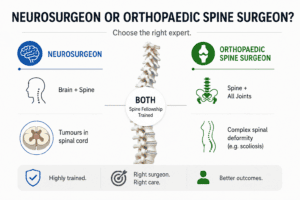
Which Surgeon Should You See for Your Spine Problem in Dubai?
Which Surgeon Should You See for Your Spine Problem in Dubai? Is a neurosurgeon always more qualified than an orthopaedic surgeon for spine conditions? No. Both pathways, when combined with

Can Calcium Supplements Cause Kidney Stones?
Can Calcium Supplements Cause Kidney Stones? If I have osteoporosis, should I take calcium supplements? This should be discussed specifically with your doctor, who will assess your individual dietary calcium

What Precision Medicine Means for Pain Management in Dubai
What Precision Medicine Means for Pain Management in Dubai How accurate is pharmacogenomic testing? Pharmacogenomic testing for well-established genetic variants, including CYP2D6 metaboliser status, is highly accurate and based on