
How Do Doctors Screen for Scoliosis in UAE? Expert Guide by Dr. Sherief Elsayed
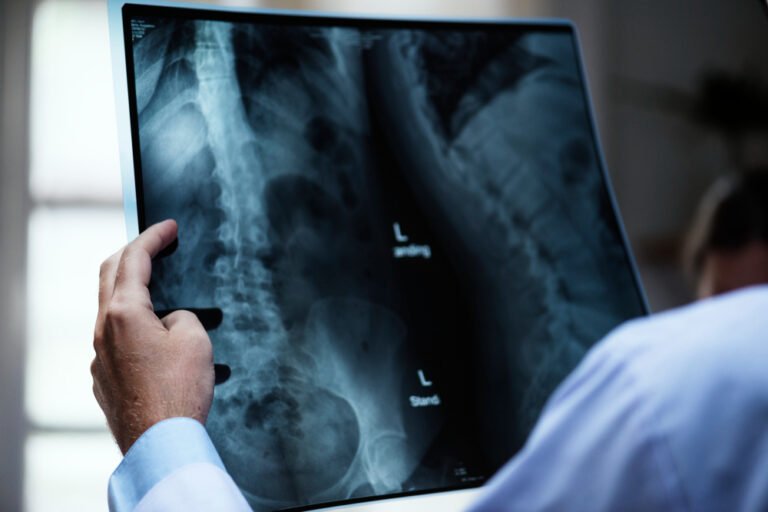
Table of Contents
At what age should children be screened for scoliosis?
Is scoliosis screening painful or uncomfortable?
Can scoliosis be prevented with good posture or exercises?
If my child has a small curve, will it definitely get worse?
Do all children with scoliosis need to wear a brace?
Should I be worried if scoliosis runs in my family?
Scoliosis is a sideways curvature of the spine that can develop in children, teenagers, or adults. If you’ve noticed that your child’s shoulders look uneven, or you’ve been told that someone in your family might have a curved spine, you’re probably wondering how doctors actually check for this condition.
In the UAE, where families come from diverse backgrounds and children grow up in a fast-paced environment with heavy school bags and lots of screen time, understanding scoliosis screening is more important than ever. Dr. Sherief Elsayed, a senior UK-trained spinal surgeon with over 25 years of experience in medicine, sees patients with spinal concerns regularly in the UAE. His approach focuses on thorough assessment, early detection, and personalised care that goes beyond just looking at X-rays.
This guide will walk you through exactly how doctors screen for scoliosis, what parents and patients should watch for, and when to seek expert assessment. Remember, early detection can make a significant difference in managing scoliosis effectively.
What Exactly Is Scoliosis and Why Does It Matter?
Scoliosis is a condition where the spine curves sideways instead of running straight down the middle of your back. The curve can look like a “C” or an “S” shape when viewed from behind. While everyone’s spine has natural curves when viewed from the side (in your neck and lower back), scoliosis refers to abnormal sideways curvature.
The condition most commonly develops during the growth spurt just before puberty, but it can also appear in younger children or adults. In some cases, the cause is unknown (called idiopathic scoliosis). In others, it may be related to conditions affecting muscles and nerves, birth defects affecting spinal development, or injuries.
Why does this matter? Small curves might not cause problems, but larger curves can lead to visible changes in posture, uneven shoulders or hips, back pain, breathing difficulties in severe cases, and psychological effects from visible body changes. Dr. Sherief Elsayed emphasises that “every spine is different, every treatment should be too.” This means that not everyone with scoliosis needs surgery, and many curves can be managed through observation or non-surgical methods.
What Are the Common Signs Parents and Patients Notice First?
Before visiting a doctor, many families notice something that doesn’t look quite right. Here are the most common early signs that lead people to seek scoliosis screening:
Uneven shoulders: One shoulder blade might stick out more than the other, or one shoulder sits higher than the other. This is often the first thing parents notice when their child is wearing a swimsuit or getting dressed.
Uneven waist: The spaces between the arms and body might look different on each side when the child stands with arms hanging naturally at their sides.
Uneven hips: One hip might appear higher or more prominent than the other, which can sometimes affect how clothing fits.
Leaning to one side: The child or teenager might appear to lean consistently to one side when standing, even when trying to stand up straight.
Rib hump: When bending forward at the waist with arms hanging down, one side of the back might appear higher than the other, creating a noticeable bump. This is called a rib hump and is a key sign doctors look for.
Back pain: While idiopathic scoliosis in teenagers often doesn’t cause pain, some patients do experience discomfort, especially if the curve is progressing or if it’s adult-onset scoliosis.
In the UAE, Dr. Sherief Elsayed often sees families who first noticed these signs during beach holidays or when trying on school uniforms. “Parents know their children best,” he says. “If something about your child’s posture concerns you, that’s a valid reason to get it checked.”
How Do Doctors Screen for Scoliosis During a Physical Examination?
When you visit a spine specialist like Dr. Sherief Elsayed for scoliosis screening, the examination is thorough but straightforward. The physical exam is crucial because “we treat the person, not the scan.” Here’s what typically happens:
Standing Assessment
The doctor will ask the patient to stand naturally and will observe from behind. They’ll look at shoulder height, hip alignment, the spacing between the arms and body, and whether the head is centred over the pelvis. They might use a simple tool called a plumb line (a weighted string) dropped from the base of the neck to see if it falls in line with the groove between the buttocks. In scoliosis, this line often falls to one side.
The doctor will also look at the spine from the side to check the natural curves in the neck and lower back. Sometimes these can become too straight or too curved when scoliosis is present.
The Adam’s Forward Bend Test
This is the most important screening test for scoliosis and takes just a few seconds. The patient bends forward at the waist with feet together, knees straight, and arms hanging down with palms together. The doctor views the back from behind and from the front.
In a straight spine, both sides of the back are symmetrical when bending forward. With scoliosis, one side of the rib cage or lower back appears higher than the other, creating that visible “rib hump” or “lumbar prominence.” This happens because the spine’s rotation causes the ribs on one side to stick out more.
Dr. Sherief Elsayed uses this test in all his scoliosis screenings because it’s simple, non-invasive, and highly effective at detecting curves that need further investigation.
Measuring the Curve with a Scoliometer
If the Adam’s test shows asymmetry, the doctor might use a tool called a scoliometer. This is a small, level-like device placed on the back during the forward bend test. It measures the angle of trunk rotation in degrees. Generally, a reading of 5 to 7 degrees or more suggests the curve should be evaluated with X-rays.
Checking Range of Motion and Flexibility
The doctor will ask the patient to bend forward, backward, and to each side. This helps assess how flexible the spine is and whether the curve is structural (stays curved even when bending) or functional (straightens out during certain movements).
Neurological Examination
This is especially important because Dr. Sherief Elsayed focuses on finding the root cause. The doctor will test muscle strength in the arms and legs, check reflexes using a small hammer, and test sensation by lightly touching different areas of the skin. This helps rule out underlying neurological conditions that might be causing or contributing to the scoliosis.
Growth and Development Assessment
For children and teenagers, the doctor will consider growth stage because curves tend to progress more during periods of rapid growth. They might ask about the onset of puberty, recent height changes, and family history of scoliosis.
When Do Doctors Recommend X-Rays and Imaging for Scoliosis?
Not everyone who has a screening exam needs X-rays. Dr. Sherief Elsayed follows a personalised approach: if the physical examination shows signs suggesting a significant curve, or if there are symptoms that need further investigation, he’ll recommend imaging.
Standing X-Ray of the Whole Spine
This is the standard imaging test for scoliosis. The patient stands naturally while X-rays capture images of the entire spine from neck to pelvis, both from the front and side. These X-rays allow the doctor to measure the curve precisely using something called the Cobb angle, which tells us how many degrees the spine is curved. They also show the spine’s rotation and maturity of the bones (skeletal maturity), which helps predict whether a curve in a growing child might get worse.
Generally, curves less than 10 degrees are considered within normal variation. Curves between 10 and 25 degrees are mild scoliosis. Curves between 25 and 40 degrees are moderate. Curves over 40 to 50 degrees are considered severe and may need more intensive treatment.
When Are MRI Scans Needed?
In most cases of typical adolescent idiopathic scoliosis, an MRI is not necessary. However, Dr. Sherief Elsayed will recommend an MRI if there are unusual features such as pain that’s worse at night or not improving with rest, neurological symptoms like weakness, numbness, or bladder problems, curves in younger children (under 10 years old), curves that bend to the left (these are less common and more likely to have underlying causes), or rapid progression of the curve.
An MRI can reveal problems within the spinal cord, tumours, infections, or structural abnormalities that might be causing the scoliosis.
Advanced Imaging
In some complex cases, CT scans might be used to look at the bone structure in detail, especially if surgery is being considered. However, because CT scans involve radiation, they’re used selectively.
What Happens After Scoliosis Is Detected in the UAE?
Finding scoliosis during screening is just the beginning. Dr. Sherief Elsayed’s approach emphasises that “surgery is not the first step, it is the right step only when necessary.” Here’s what typically happens:
Observation and Monitoring
For small curves (under 25 degrees) in children and teenagers who are still growing, the most common approach is careful observation. This means regular check-ups every 4 to 6 months with repeat physical exams and X-rays to see if the curve is staying stable or getting worse. Many curves don’t progress and require no treatment beyond monitoring.
During this phase, Dr. Sherief Elsayed and his team also look at lifestyle factors. In the UAE, heavy school bags, long hours sitting in air-conditioned classrooms, and reduced physical activity can affect posture and spine health. Simple adjustments to posture, ergonomics, and activity levels can support overall spine health, though they don’t change the scoliosis curve itself.
Bracing
For moderate curves (25 to 40 degrees) in children who are still growing, a back brace might be recommended. The brace doesn’t straighten the spine, but it can prevent the curve from getting worse during the growth years. The type of brace and how many hours per day it needs to be worn depends on the curve’s size and location.
In the UAE, Dr. Sherief Elsayed works with specialised orthotists who create custom-fitted braces. He understands that wearing a brace can be challenging for teenagers, especially in a warm climate, so he focuses on clear communication about why it’s important and how it can prevent the need for surgery later.
Physiotherapy and Exercise
While exercise doesn’t correct scoliosis curves, it’s an important part of comprehensive care. Physiotherapy can help improve posture, strengthen core and back muscles, increase flexibility, and reduce any pain or discomfort. Some patients in the UAE benefit from specific scoliosis exercises or programs under the guidance of trained therapists.
Dr. Sherief Elsayed’s root-cause approach means he looks at the whole picture including how the person moves, sits, and carries themselves in daily life. This might include recommendations for ergonomic changes at school or work, appropriate sports and activities, and exercises to maintain spine flexibility and strength.
When Is Surgery Considered?
Surgery is considered for curves over 40 to 50 degrees, curves that are progressing despite bracing, curves causing significant pain or breathing problems, or in adults with curves causing severe symptoms. The most common surgery is spinal fusion, where the curved vertebrae are joined together with bone grafts and metal rods or screws to hold the spine straight while it heals. In some cases, newer techniques like growing rods (for young children) or vertebral body tethering might be options.
Dr. Sherief Elsayed has extensive experience in complex spine surgery from his training at the Centre for Spinal Studies & Surgery in Nottingham and his years as Lead Clinician for Spinal Surgery in the NHS. He uses modern technology including robot-assisted spine surgery and minimally invasive techniques when appropriate. However, he always emphasises that surgery is reserved for cases where it’s truly needed.
How Often Should Children Be Screened for Scoliosis in the UAE?
Many countries have school-based scoliosis screening programs, though these vary by location. In the UAE, where the international school system is diverse, systematic screening programs may not be in place at all schools.
Dr. Sherief Elsayed recommends that parents and pediatricians watch for signs of scoliosis during routine check-ups, particularly during the growth spurt years (ages 10 to 15 for girls, 12 to 16 for boys). If there’s a family history of scoliosis, or if any signs are noticed, it’s worth getting a formal assessment sooner rather than later.
Regular screening doesn’t mean frequent X-rays, which involve radiation. It means periodic physical examinations by a healthcare provider who knows what to look for. The Adam’s forward bend test can be done quickly during routine appointments without any radiation exposure.
What Makes Dr. Sherief Elsayed’s Approach Different?
Dr. Sherief Elsayed brings a comprehensive, patient-centred approach to scoliosis screening and care. Here’s what sets his practice apart:
Thorough assessment: He doesn’t rely on X-rays alone. Every patient receives a detailed history, lifestyle review, and complete physical examination. He wants to understand not just the curve, but the person behind it.
Conservative first: His treatment philosophy follows a clear pathway starting with observation and conservative care unless there are warning signs that require more urgent intervention. This aligns with international best practices and ensures patients aren’t overtreated.
Clear communication: Dr. Sherief Elsayed speaks both English and Arabic fluently, making it easier for families across the UAE to understand their condition and options. He believes in shared decision-making where patients and families are partners in care.
Advanced skills when needed: With fellowship training in complex spine surgery and over 20 years dedicated to spine care, he has the expertise to handle everything from routine monitoring to the most complex surgical cases. He uses robot-assisted surgery and minimally invasive techniques, offering advanced options while maintaining his conservative-first philosophy.
Research and teaching background: His involvement in scientific publications and editorial work means he stays current with the latest evidence and international guidelines for scoliosis care.
As he often reminds patients, “pain is a symptom, not a diagnosis.” This applies to scoliosis too. The curve is one finding, but understanding what it means for that individual person, at that stage of life, with their specific concerns, is what guides the best treatment.
Conclusion
Scoliosis screening in the UAE follows the same principles used worldwide but with an understanding of the unique needs of the diverse population here. Early detection through simple physical examination, particularly the Adam’s forward bend test, can identify curves that need monitoring or treatment.
Most importantly, finding scoliosis isn’t a cause for panic. Many curves are small, stable, and require only observation. When treatment is needed, options range from bracing to physiotherapy to surgery, depending on the individual situation.
If you’ve noticed signs of scoliosis in yourself or your child, or if you’re simply concerned about spinal health, a proper assessment is the safest next step. Dr. Sherief Elsayed and his team provide thorough, compassionate evaluation and personalised care plans that put the patient first.
Remember, every spine is different, and every treatment should be too. The goal is not just to address the curve, but to support overall health, function, and quality of life.