
When Does a Disc Bulge Become a Problem? Dubai Spine Surgeon Explains
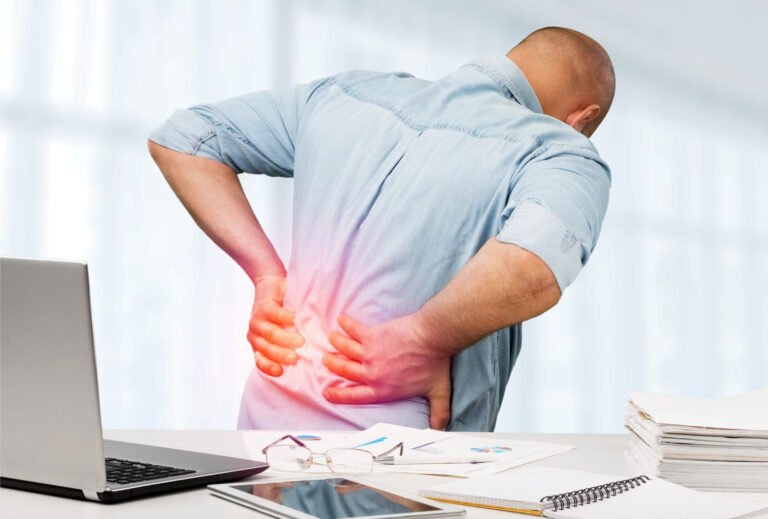
Table of Contents
Can a disc bulge heal on its own?
Does having a disc bulge mean I'll eventually need surgery?
Will my disc bulge show up on an X-ray?
Is it safe to exercise if I have a disc bulge?
How to Change my Photo from Admin Dashboard?
How long does recovery typically take?
If you’ve recently had an MRI scan and been told you have a disc bulge, you might be worried. Questions like “Is this serious?” or “Do I need surgery?” are completely natural. But here’s something that might surprise you: having a disc bulge on your scan doesn’t automatically mean you have a problem.
Dr. Sherief Elsayed, a senior UK-trained spinal surgeon practicing in Dubai, explains that disc bulges are incredibly common. Research shows that many people without any back pain at all have disc bulges visible on their MRI scans. The key question isn’t whether you have a bulge, but whether that bulge is actually causing your symptoms.
“Pain is a symptom, not a diagnosis,” Dr. Sherief often tells his patients. “We treat the person, not the scan.”
This article will help you understand when a disc bulge matters, what symptoms to watch for, and when you should seek expert assessment from a spine specialist in the UAE.
What exactly is a disc bulge and why does it happen?
Your spine is made up of bones called vertebrae, stacked one on top of another. Between each vertebra sits a soft, cushion-like structure called an intervertebral disc. Think of these discs as shock absorbers that allow your spine to bend, twist, and handle daily stress.
Each disc has two parts: a tough outer ring called the annulus fibrosus, and a soft, jelly-like centre called the nucleus pulposus. A disc bulge happens when the outer ring weakens and the disc starts to push outward, like a tire bulging when it loses some air pressure.
Several factors can contribute to disc bulges:
Age-related wear and tear: As we get older, our discs naturally lose some water content and become less flexible. This is a normal part of aging, much like getting grey hair.
Lifestyle factors: Poor posture, especially during desk work, can place extra pressure on certain discs. Many professionals in Dubai spend long hours sitting, which can increase stress on the lower back discs.
Repetitive movements: Jobs or activities that involve frequent bending, lifting, or twisting can gradually wear down disc structure over time.
Genetics: Some people are simply more prone to disc problems due to their inherited collagen structure or body mechanics.
Excess weight: Carrying extra body weight increases the load on your spine, particularly the lower back discs.
Sudden injury: While less common, a single incident like lifting something heavy with poor technique can trigger a disc bulge.
The important thing to understand is that disc bulges exist on a spectrum. Some are tiny and insignificant, while others may press on nearby nerves and cause real problems.
How can I tell if my disc bulge is actually causing my symptoms?
This is where Dr. Sherief Elsayed’s approach becomes particularly valuable. He doesn’t just look at scan images. Instead, he starts with a comprehensive assessment that includes your story, your lifestyle, and a detailed physical examination.
“Every spine is different. Every treatment should be, too,” he explains.
A disc bulge becomes problematic when it starts to compress nearby structures, particularly spinal nerves. Here are the signs that suggest your disc bulge might be the actual source of your symptoms:
Radiating pain down your leg or arm: If you have a lumbar disc bulge, you might feel pain that travels from your lower back down through your buttock, thigh, and into your calf or foot. This is often called sciatica. Similarly, a cervical disc bulge in your neck might cause pain radiating down your arm.
Numbness or tingling: When a disc presses on a nerve, it can create unusual sensations. You might feel pins and needles, numbness, or a burning sensation in specific areas of your leg, foot, arm, or hand.
Weakness: Nerve compression can affect your muscle strength. You might notice difficulty standing on your toes, lifting your foot, or gripping objects firmly.
Pain patterns: Pain from a disc bulge typically worsens with certain positions or activities. Sitting often makes lumbar disc problems worse, while standing or walking may provide some relief. Coughing, sneezing, or bending forward might trigger sharp pain.
One-sided symptoms: Disc bulges usually affect one side more than the other, so your symptoms may be primarily on your left or right side.
Dr. Sherief Elsayed emphasises that the physical examination is crucial. During assessment, he checks for specific neurological signs, tests your reflexes, evaluates your muscle strength, and performs special tests that help identify whether a disc is truly the problem.
Many patients are surprised to learn that their back pain might actually stem from other sources like tight muscles, poor posture, or facet joint irritation, even when their scan shows a disc bulge. This is why examining the whole person, not just reviewing the scan, matters so much.
What are the warning signs that mean I should see a spine specialist urgently?
While most disc bulges can be managed conservatively without rushing to surgery, certain symptoms require immediate medical attention. Dr. Sherief Elsayed wants all patients to be aware of these red flags:
Loss of bladder or bowel control: This could indicate cauda equina syndrome, a serious condition where the nerves at the base of your spine become severely compressed. This is a surgical emergency.
Numbness in your inner thighs or groin area: Often called saddle anaesthesia, this suggests significant nerve compression affecting the lower spinal nerves.
Progressive weakness: If your leg or arm is getting noticeably weaker over days or weeks, this suggests ongoing nerve damage that needs urgent assessment.
Severe pain after an accident or fall: This could indicate a fracture or spinal instability that requires immediate evaluation.
Symptoms in both legs: While disc problems usually affect one side, symptoms affecting both legs simultaneously can suggest more serious spinal cord compression.
If you experience any of these warning signs, contact a spine specialist immediately. In Dubai and across the UAE, Dr. Sherief Elsayed and his colleagues can provide urgent assessment when needed.
For symptoms that don’t fall into the emergency category, you should still seek professional evaluation if your pain is severe, not improving after a few weeks of conservative care, or significantly affecting your daily life and work.
What treatment options are available for disc bulges in Dubai?
One of Dr. Sherief Elsayed’s core principles is that “surgery is not the first step. It is the right step only when necessary.” His treatment approach follows a logical progression, always starting with the most conservative options.
Step 1: Conservative Care
Most disc bulges improve significantly with non-surgical treatment. This initial phase typically includes:
Physiotherapy: Targeted exercises can strengthen the muscles supporting your spine, improve flexibility, and reduce pressure on the affected disc. A skilled physiotherapist can teach you proper movement patterns and posture corrections specific to your lifestyle.
Medications: Anti-inflammatory medications can reduce swelling around the affected nerve. Muscle relaxants may help if spasm is contributing to your pain. In some cases, nerve pain medications can be helpful.
Lifestyle modifications: Simple changes like adjusting your workstation ergonomics, taking regular breaks from sitting, and avoiding activities that aggravate your symptoms can make a significant difference.
Posture and movement education: Learning how to lift properly, maintain neutral spine positions, and move efficiently can prevent further irritation and promote healing.
Activity modification: You don’t need complete bed rest, but temporarily avoiding activities that worsen your symptoms allows the inflammation to settle.
Step 2: Minimally Invasive Interventions
If conservative care doesn’t provide adequate relief after a reasonable trial period (usually several weeks to months), Dr. Sherief Elsayed may recommend targeted injections:
Epidural steroid injections: These deliver anti-inflammatory medication directly to the area around the affected nerve, often providing significant relief and allowing you to participate more effectively in physiotherapy.
Nerve root blocks: These diagnostic and therapeutic injections can help confirm which nerve is affected while providing symptom relief.
Radiofrequency ablation: For certain types of pain related to facet joints rather than the disc itself, this technique can provide longer-lasting relief.
Step 3: Surgical Options
Surgery becomes appropriate when conservative treatment has been tried without success, when nerve compression is causing progressive weakness, or when red flag symptoms are present. Dr. Sherief Elsayed specialises in both traditional and advanced surgical techniques:
Microdiscectomy: A minimally invasive procedure where the portion of the disc pressing on the nerve is carefully removed. This is often performed for lumbar disc bulges causing sciatica.
Endoscopic discectomy: An even less invasive approach using a tiny camera and instruments through a small incision.
Disc replacement: In carefully selected cases, particularly in the cervical spine, the damaged disc can be replaced with an artificial one that maintains motion.
Fusion procedures: When instability is present or disc replacement isn’t suitable, fusion techniques like ACDF (for the neck) or ALIF and TLIF (for the lower back) may be recommended.
Robot-assisted spine surgery: Dr. Sherief Elsayed uses advanced robotic technology for enhanced precision during complex procedures.
The key is personalisation. What works for one patient may not be right for another, even if their scans look similar. Dr. Sherief takes time to understand your specific situation, your goals, and your preferences before recommending any treatment path.
Why do some people with disc bulges have no pain while others suffer significantly?
This is one of the most interesting questions in spine care, and it highlights why treating scans rather than patients is problematic.
Research studies have repeatedly shown that disc bulges are present in a large percentage of people without any back pain. One famous study scanned people with no symptoms and found disc bulges in about 30% of 20-year-olds, increasing to over 80% of people in their 60s.
So why do some bulges hurt while others don’t? Several factors play a role:
Location and size of the bulge: A small bulge that doesn’t touch any nerves typically causes no symptoms. A larger bulge that compresses a nerve root will likely cause pain and other neurological symptoms.
Inflammation: When a disc bulges, it sometimes releases inflammatory chemicals that irritate nearby nerves. The degree of inflammation varies from person to person and can change over time.
Individual nerve sensitivity: Some people’s nerves are more sensitive to compression than others, possibly due to genetic factors or previous injury.
Surrounding muscle strength and flexibility: Good core strength and flexibility can compensate for a disc bulge by stabilising the spine and reducing stress on the affected segment.
Psychological factors: While your pain is absolutely real and not “all in your head,” stress, anxiety, and fear about your condition can amplify pain signals and make symptoms worse.
Activity level and posture: How you move and position yourself throughout the day significantly affects whether a disc bulge causes symptoms.
Dr. Sherief Elsayed’s thorough assessment process identifies which of these factors are most relevant to your situation. This allows him to create a treatment plan that addresses the actual cause of your symptoms rather than simply treating the bulge visible on the scan.
How does working in Dubai and the UAE affect spine health and disc problems?
Living and working in the UAE presents some unique factors that can influence spine health:
Sedentary office work: Dubai is a major business hub with many professionals spending long hours at desks. Prolonged sitting increases pressure on lumbar discs and can contribute to disc bulges.
Climate and indoor environments: The extreme heat means most people spend considerable time in air-conditioned spaces. Some patients notice that their muscles become stiffer in cold environments, potentially affecting spinal mechanics.
Reduced walking: Unlike many European cities where people walk extensively, the UAE climate and infrastructure mean many residents drive everywhere, reducing daily activity levels that help maintain spine health.
Gym culture and fitness trends: While Dubai has excellent fitness facilities, some workout trends involving heavy lifting or extreme flexibility work can stress the spine if not done with proper technique.
International travel: Many UAE residents travel frequently for business, spending hours on planes in cramped seating, which can aggravate existing disc problems.
Cultural diversity: Dubai’s multicultural population means Dr. Sherief Elsayed treats patients from varied backgrounds with different body types, genetic predispositions, and health beliefs, requiring truly personalised care.
Dr. Sherief Elsayed, who completed his training in the UK NHS system before moving to the UAE, understands both Western and Middle Eastern healthcare expectations. He speaks fluent English and Arabic, which helps ensure clear communication about complex spinal conditions.
What should I expect during my first consultation with Dr. Sherief Elsayed?
Understanding what happens during your initial assessment can help reduce anxiety and ensure you get the most from your appointment.
Your story comes first: Dr. Sherief begins by listening to your description of your symptoms. When did the pain start? What makes it better or worse? How does it affect your daily life and work? This conversation provides crucial clues that scans cannot show.
Lifestyle and ergonomic review: He’ll ask about your job, daily activities, exercise habits, and home setup. A detailed understanding of how you spend your day helps identify contributing factors.
Physical examination: This includes checking your posture, spinal flexibility, muscle strength, reflexes, and sensation. Special tests help determine whether your symptoms match the pattern expected from your scan findings.
Scan review: If you already have MRI or CT scans, Dr. Sherief will review them with you, explaining what they show in understandable terms. If you don’t have scans but they’re needed, he’ll explain why and arrange them.
Root-cause discussion: Rather than just naming your diagnosis, Dr. Sherief explains the underlying factors contributing to your problem. This might include biomechanical issues, lifestyle factors, or previous injuries.
Treatment options and shared decision-making: You’ll discuss the treatment pathway together, starting with conservative options unless urgent intervention is needed. Dr. Sherief believes in providing clear information so you can make informed decisions about your care.
Realistic expectations: He’ll give you an honest assessment of what improvement to expect and over what timeframe, whether you pursue conservative care or eventually need surgery.
The consultation typically takes adequate time to cover all these areas properly. Dr. Sherief Elsayed’s philosophy of treating the person rather than the scan means he doesn’t rush through appointments.
Conclusion
A disc bulge on your MRI scan doesn’t automatically mean you have a serious problem or need surgery. What matters most is whether that bulge is actually causing your symptoms and affecting your quality of life.
Dr. Sherief Elsayed’s approach focuses on understanding the root cause of your pain, not just treating scan findings. His comprehensive assessment looks at your whole picture, including your lifestyle, work environment, physical examination findings, and scan results.
Most disc bulges improve with conservative treatment including physiotherapy, lifestyle modifications, and appropriate medical management. When these approaches aren’t sufficient, minimally invasive interventions or surgery performed with advanced techniques including robot-assisted technology can provide excellent results.
The most important step is proper assessment by an experienced spine specialist who will take time to understand your specific situation. Whether your disc bulge requires simple lifestyle adjustments or more advanced treatment, having a clear diagnosis and personalised plan makes all the difference.
If you’re experiencing back or neck pain in Dubai or elsewhere in the UAE, don’t let uncertainty cause unnecessary worry. Seek assessment from a specialist who treats the person, not just the scan.