
Scoliosis
Treatment in Dubai
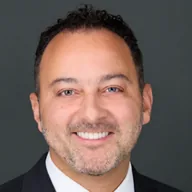
Who you'll see
Dr Sherief Elsayed
Consultant Spinal Surgeon, FRCS (Tr & Orth), UK-trained
Clinics: OrthoPro Clinic, Dubai Science Park, and UPANDRUNNING, Al Wasl Road
Most major insurance accepted. Please check with reception.

Scoliosis Overview
Scoliosis is referred to as an S-shaped or C-shaped abnormal side curvature of the spine that occurs due to angular deflection of one vertebra over the other. It is a three-dimensional spine deformity whose deviation can be measured in angles. It is prevalent among kids and adolescents and noticeable only after the significant progression of the disorder.
Typically, there are many types of Scoliosis, but a few common types include:
- Degenerative Scoliosis – It typically occurs in adults due to degeneration of the spine’s facet joints or intervertebral discs. The degeneration progresses slowly, resulting in spinal asymmetry.
- Adolescent Idiopathic Scoliosis – Idiopathic means “no definite cause.” Idiopathic Scoliosis is more common in children than in adults. According to SRS (Scoliosis Research Society), girls are eight times more prone to develop it than boys in 80% to 90% of these cases.
Scoliosis can be managed with conservative treatment approaches like braces and exercises in its nascent stages; however, in later stages, with a considerable angular deflection in vertebrae, doctors may suggest scoliosis surgery in Dubai as the most appropriate treatment.
Also, if scoliosis is not treated in adolescence, the condition may deteriorate; hence scoliosis treatment for adults becomes important.
What causes scoliosis?
Adult scoliosis causes differ based on the type of scoliosis. Adult scoliosis is most commonly degenerative (the spine curves as you age). Adult scoliosis could be an instance of pediatric scoliosis that went undetected until maturity.
Adolescent scoliosis may cause symptoms with age and necessitate treatment in some circumstances.
Idiopathic (caused by an unknown factor) scoliosis is frequently detected during childhood or adolescence.
Understanding what causes scoliosis is crucial for both prevention and treatment options. The condition can be managed efficiently by identifying potential risk factors early on.
Symptoms
Scoliosis symptoms are unclear in the early stages. Moreover, paediatric spine surgeons can guide the patient by indicating Scoliosis in its preliminary stage. The following are common Scoliosis signs:
- Uneven shoulders
- One shoulder blade is slightly higher than the other
- One hip higher than the other
- Head and spine not aligned centrally
Diagnosis
A pediatric or orthopaedic spine surgeon may recognize Scoliosis in the early stages by physically examining the back. The doctor will ask for the following tests to diagnose Scoliosis for curved spine treatment:
- Adam’s Bend Test
- X-ray
- MRI or neurological tests
The correct diagnosis paves the way for better scoliosis pain management and treatment.
How is adult scoliosis diagnosed?
Diagnosing adult scoliosis can be a complex process involving medical history, physical examination, and diagnostic tests.
If adult scoliosis is detected, your doctor may take a history before recommending scoliosis treatment. This may involve inquiries about:
- Family history
- The date when you first detected a difference in your spine
- Curve progression (with the help of X-rays)
- Pain presence and location, if any
- Any bladder, bowel, or motor dysfunction that could indicate more significant nerve injury or pressure caused by scoliosis
During a physical exam, the doctor will examine your back to determine the structure of your spine and how you move. Reflex, sensory, and muscle-strength tests may also assess your nerves.
Scoliosis Treatment:
Scoliosis or curved spine treatment depends on the severity of the condition. In the early to mild stage, scoliosis starts with back pain, for which the doctor may provide scoliosis back pain relief treatment.
Scoliosis can be treated with conservative or non-invasive approaches. However, in case of increasing angular deflection in the back, the surgeon recommends Scoliosis surgery in Dubai.
Here is a brief about the treatments.
Conservative Approaches
The conservative approach focuses on scoliosis pain management and curve correction.
- Observation
If the Scoliosis is less than 25°, the doctor may recommend observing the case intermittently. If the progression of Scoliosis is found to be more than 10° in consecutive visits to the doctor’s office, the doctor will ask for further steps for scoliosis correction.
- Braces
If the scoliosis back pain persists, or the angular bend in Scoliosis is more than 25° or the progression is very fast, the doctor may prescribe a customised brace to correct Scoliosis providing scoliosis back pain relief.
Medication:
- Over-the-counter pain medications to manage pain
Exercise:
- Core-strengthening exercises for the abdomen and back
- Low-impact exercises like swimming
- Daily stretching exercises
Posture Improvement:
- Working to improve posture to help alleviate symptoms
Lifestyle Changes:
- Staying active
Quit Smoking:
- Quitting smoking is emphasized as it has been shown to speed up the degenerative process
Physical Therapy:
- Physical therapy can help strengthen the back and relieve pain
Injections:
- Epidural or nerve block injections may be recommended if pain persists despite conservative measures
Surgery
Our doctor recommends Scoliosis surgery in Dubai when the spinal deflection progresses fast, and the spine contorts. Surgery is also indicated for scoliosis treatment for adults. Depending on the spine’s condition, the surgeries can include the following:
- Spinal Fusion:
The spine has vertebrae stacked on one another, with spinal discs present between them. The discs provide stability and flexibility and hold the structure together. In Scoliosis, the side bend disturbs the spine alignment confining vertebrae’s free movement. The spinal fusion surgery fuses two or more vertebrae in one fixed structure to stabilise them, redistribute pressure, and ease movement.
- Rod Installation in Spine:
During the growth years of kids, the spine grows. Therefore, there is a chance of rapid Scoliosis development. Hence, the doctor might install a prosthetic rod that adjusts and grows with the spine.
Table of Contents

Why choose
Dr Sherief for Scoliosis Treatment in Dubai?
Dr Sherief Elsayed is one of the most renowned spine surgeons in Dubai and Sharjah and performs dextrous spine surgeries, giving positive results. He is trained for spinal surgeries at one of the top Universities in the UK and is one of the limited spine surgeons worldwide to perform robot-assisted spine surgeries.
Our patient-centred and caring approach has garnered patients from all around the world. We keep patients’ information confidential and provide world-class medical services. Visit Dr Sherief Elsayed for Scoliosis and other spine treatment in Dubai.
FAQ
Scoliosis is a sideways curvature of the spine that also involves rotation of the vertebrae. Rather than running straight down your back when viewed from behind, the spine curves into a C or S shape. It’s measured in degrees using the Cobb angle on X-rays. Scoliosis most commonly develops during adolescence (idiopathic scoliosis), though it can occur in younger children or adults. Adult scoliosis may be a progression of adolescent curves or develop due to degenerative changes. Small curves often cause no problems, whilst larger curves can lead to visible asymmetry, back pain, and in severe cases, breathing difficulties.
Not necessarily. Small curves in adolescents who have finished growing rarely progress. However, curves in growing children can worsen, particularly during growth spurts, which is why monitoring is crucial during adolescence. The larger the curve when growth completes, the higher the risk of adult progression. Curves over 50 degrees tend to progress slowly throughout life. Adult degenerative scoliosis can worsen over time as discs and joints deteriorate. Risk factors for progression include curve size, skeletal immaturity, and in girls, curves detected before the first menstrual period. Regular monitoring with examinations and X-rays helps identify curves that need intervention.
Surgery is the only way to permanently straighten a scoliotic curve. However, most scoliosis doesn’t require surgery. Observation with regular monitoring is appropriate for small curves. Bracing in growing adolescents can prevent curve progression but doesn’t correct existing curvature. Once worn properly during growth, bracing can be quite effective at stopping worsening. Physiotherapy and exercises, whilst beneficial for strength and flexibility, don’t reduce curve magnitude either, though they help with symptoms and function. The goal of non-surgical treatment is preventing progression rather than correction. Surgery is reserved for large curves, progressive curves despite bracing, or curves causing significant symptoms or functional problems.
In adolescents, curves exceeding 25 to 30 degrees that are still progressing during growth usually require bracing. Curves over 45 to 50 degrees, particularly if still progressing, may need surgery. Visible deformity causing significant distress can be an indication for treatment. In adults, treatment is considered when scoliosis causes disabling pain unresponsive to conservative measures, or when neurological symptoms develop from nerve compression. Rapidly progressive curves or those causing breathing difficulties due to chest cavity restriction also warrant intervention. Treatment decisions are individualised, considering curve severity, symptoms, age, and functional impact rather than just curve magnitude alone.
Scoliosis itself, particularly in adolescents, doesn’t always cause significant pain. Many teenagers with scoliosis have minimal discomfort. However, adult scoliosis more commonly causes pain, often from muscle fatigue due to altered mechanics, degenerative changes in the curved portion of the spine, or nerve compression. Severe curves can lead to muscle imbalance and strain. That said, not all back pain in someone with scoliosis is necessarily from the scoliosis, as other spinal problems can coexist. If you have scoliosis and new or worsening pain, proper assessment is important to identify the cause and guide appropriate treatment, which often includes physiotherapy, pain management, and addressing any specific problems like nerve compression.